News Break
How to Answer a Debt Lawsuit So You Stand Out: The Responsive Pleading
November 9, 2026
Blog / News Break
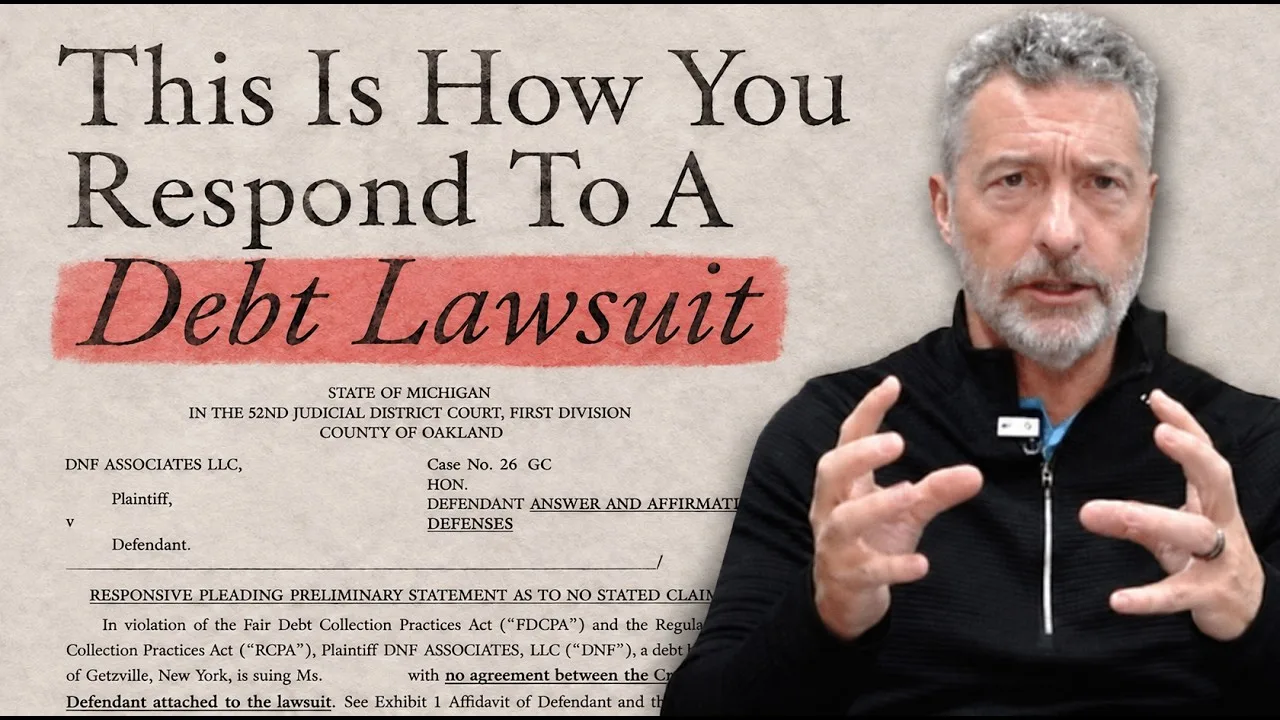
A company you never dealt with is suing you over an old credit card. Do not call and do not ignore it. Follow the RACE plan and make them prove it.
You just got served by a company you never heard of. A debt buyer is suing you over a credit card you barely remember. You want to call them. You want to ignore it. Do neither.
First, breathe. Read the papers. You have time, but the clock is running. This short video lays out the game plan Brian Parker calls RACE: read, answer, counter affidavit, and everything else.
Key Takeaways
- Read the summons today and put your deadline on your calendar. Silence is how debt buyers win.
- Do not answer "denied, denied, denied." Say what is missing and back it up.
- Their affidavit does not automatically prove the debt. File your own counter affidavit with your answer.
- Do not call the collector and admit anything. Make them prove it.
Fear is what debt buyers count on. A lot of people never respond. If you miss the deadline to respond, the plaintiff may ask the court for a default, and that can limit your chance to fight the claim.
Not sure who the company is? A debt buyer bought the account from the original creditor or from another buyer. Here is how to tell an original creditor from a debt buyer.
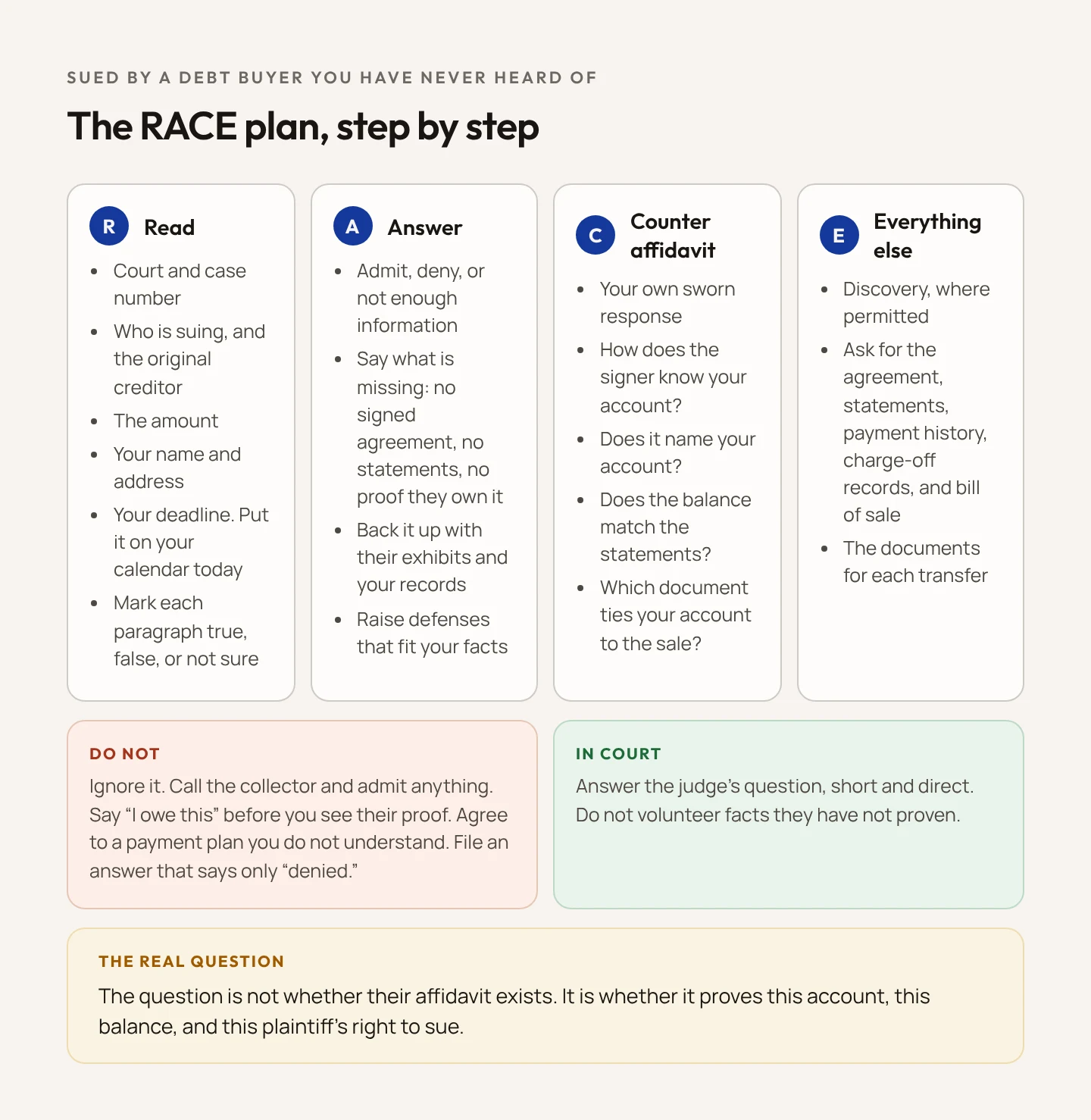
Read, read, read. On the summons, look for:
That deadline depends on your court, your state, and how you were served. Check the summons and your court's rules, and put the date on your calendar today. See how to find your deadline.
Then go through the complaint paragraph by paragraph. Mark each one true, false, or not sure. Compare every claim to the documents they attached. Is there a signed agreement? Account statements? A bill of sale that actually names your account? More on what to look for when you read the lawsuit.
Your answer is your written response to their claims. For each one, you can admit it, deny it, or say you do not have enough information to admit or deny.
Do not just deny. Say what is missing: no signed agreement, no statements that show the balance, nothing that proves they own your account. Then back it up with evidence. Use their own complaint and exhibits, and your own records, such as bank statements and payment history.
Filing a lawsuit does not prove the claim. The debt buyer has the burden to prove it owns the debt and has the right to sue you. Depending on your facts, you may also raise defenses such as lack of standing, an incorrect balance, or the statute of limitations if the debt may be too old under your state's law.
"Denied. Denied. Denied." No reasons and no proof. When a judge reads that, it does not show why the debt collector is wrong. It gives the judge nothing to work with. Brian's alternative is a responsive pleading.
Debt buyers often attach an affidavit, a sworn statement that says you owe the money. That affidavit does not automatically prove the debt, the balance, or who owns it.
Always file a counter affidavit with your answer. It is your own sworn response. Ask the hard questions about theirs:
Whether an affidavit exists is beside the point. Ask whether it proves this account, this balance, and this plaintiff's right to sue. Here is how to file a counter affidavit.
Use discovery when it is permitted. That means you formally ask for the records they rely on: the signed agreement, complete statements, payment history, charge-off records, the bill of sale, and the documents that tie your account to each transfer. If they do not answer, you can move to compel.
Avoid the big mistakes.
The video walks through a made-up example. John Doe gets sued by a debt buyer for $7,800. He does not call them. He reads the summons, marks his deadline, and reviews the complaint.
Their affidavit and bill of sale never actually name his account. So his answer does more than deny. It points out what is missing, and he backs it up with his records. He files a counter affidavit and asks for the documents.
Nothing is guaranteed. But now the debt buyer has to prove its case. It cannot win because John stayed silent. He read, he answered, and he made them prove it.
Upload the papers you were served to ParkerGPT and ask your question in plain English. It reads the complaint with you, checks your court's rules, flags the deadlines to confirm, and lays out a plan: your answer, your defenses, and what may come next. It pulls from court opinions, court rules, and legal sources, so you can see where each point comes from, and it helps you prepare drafts.
Then get ready for court. The cheat sheets build a guide from your own case: your key arguments, what the collector's lawyer may say back, the rules that apply, your key dates, and the questions to ask. Before the real hearing, the Court Tester sets up a courtroom from your filings. You present your argument to a simulated judge and respond to opposing counsel. It is practice, and it does not predict the judge's decision.

About the author
Brian Parker
I have over 30 years of experience defending consumers against debt collection lawsuits and have seen every tactic, threat, and pressure play that collectors use. Through KillDebt and ParkerGPT, I have systematized the proven defense strategies that actually work - so consumers can respond from a position of knowledge, not fear. My approach focuses on aggressive legal defense based on documented case success rather than false hope that leads to default judgments.