
News Break
Debt Collection Lawsuit Myths: 7 Things That Won’t Save You
January 22, 2026
Blog / News Break
It's not the same lawsuit. Debt buyers are far easier to beat — but only if you know which one is suing you. Attorney Brian Parker explains how to tell the difference.
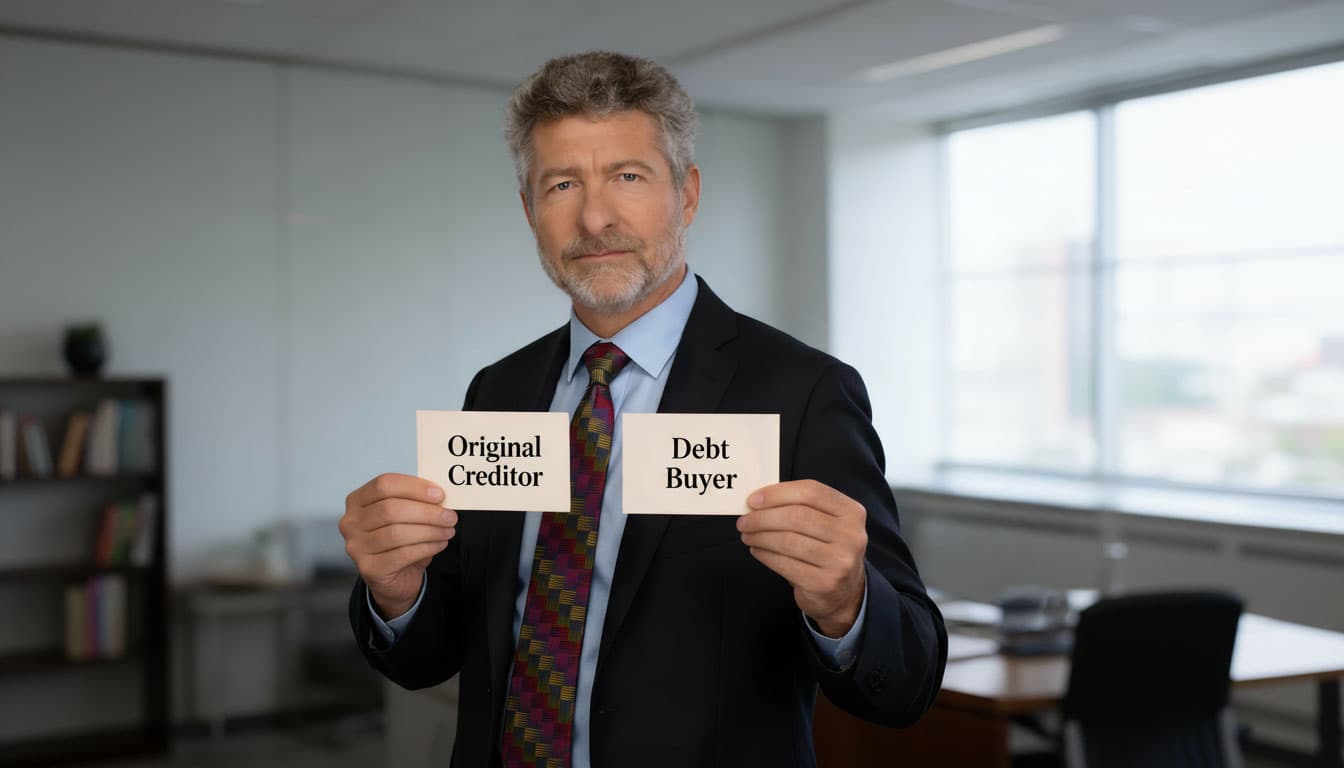
Not all debt collection lawsuits are created equal. The legal rules do not change, but the plaintiff’s ability to meet those rules does.
There are only two categories you will encounter:
They are treated very differently in court, even though the paperwork often looks similar.
An original creditor is the company that issued the credit or provided the service in the first place. Common examples include:
When original creditors sue, they usually have structural advantages:
That does not mean they always win. It means the case requires different defense pressure than a debt buyer lawsuit.
A debt buyer is a company that purchases charged-off accounts in bulk for pennies on the dollar, then sues consumers for the full balance.
Common debt buyers include:
Here’s the part most consumers never see:
Each transfer weakens the evidentiary chain.
By the time a debt buyer sues, they are often several steps removed from the original creditor and cannot prove ownership without stitching together incomplete records.
This is not theory. It is the structural reality of the debt buying industry.
Why This Difference Changes Everything
Debt buyers win cases only when people do not respond.
When forced to prove their claims, debt buyers routinely struggle with:
Original creditors may still lose, but debt buyers depend on default judgments to survive as a business model.
Through my work with KillDebt and ParkerGPT, I’ve analyzed thousands of real cases. The pattern is consistent: debt buyer lawsuits collapse when challenged correctly and early.
Identifying who is suing you is not a formality. It is the foundation of your entire defense.
Debt buyer lawsuits fail for one simple reason: they did not create the account and they do not control the evidence. Their entire business model depends on consumers not forcing proof. When proof is required, the case often collapses.
Debt buyers purchase accounts in bulk, not as individual files. What they receive is usually a spreadsheet, not a case file, which creates predictable documentation gaps. These are not technicalities. They are evidentiary requirements.
Common failures include:
Standing is the legal right to sue.
Debt buyers must prove they own the debt before the court can award anything.
From thousands of reviewed cases, the pattern is consistent:
When standing is challenged properly, many cases fail at the threshold level.
The key separation is this: You may owe a debt, but that does not mean you owe it to the party suing you. If they cannot prove ownership, the lawsuit cannot proceed.
Modern consumer debt is rarely static. Many accounts are sold, pooled, or securitized shortly after origination. This creates additional ownership defects:
What results is what I call sloppy proof. Documents that gesture toward ownership but do not legally establish it.
Debt buyers rely on default rates to avoid scrutiny of these defects. When scrutiny occurs, the weakness is exposed.
Correctly identifying the plaintiff determines your entire defense posture. This is not cosmetic. It is foundational.
Look at the full legal name on the complaint.
Original creditor indicators include:
Common examples include Bank of America, Capital One, JPMorgan Chase, Synchrony Bank, and Wells Fargo.
Debt buyer indicators include:
If you do not recognize the company from when the account was active, assume debt buyer until proven otherwise.
Original creditors usually allege:
Debt buyers usually allege:
This language difference matters. It reveals what they must prove and what they lack.
Attachments are a giveaway. If you see any of the following, you are almost certainly facing a debt buyer:
Critical point from motion practice experience: Many of these documents explicitly disclaim ownership warranties or identify no specific account at all. That language weakens, not strengthens, their claim.
Chain of title is the complete documentation showing how ownership of a debt allegedly moved from the original creditor to the party suing you. A valid chain of title requires clear, continuous, account-specific transfers, not assumptions, summaries, or generic portfolio sales.
A perfected chain of title means every transfer is supported by documents that tie your specific account forward. Anything less is a standing problem.
From my systematic approach to challenging debt buyer standing:
Document each alleged transfer in sequence. If any step cannot be documented, standing collapses.
If any step cannot be documented, standing collapses.
Look for:
Evaluate whether the transfer documents can actually be relied upon as evidence by asking:
From a recent motion to dismiss involving LVNV Funding collecting on a Cross River Bank account, the case collapsed almost immediately. After filing, opposing counsel contacted us within twenty-four hours asking how to resolve the case.
This is typical when debt buyers are forced to defend documentation instead of relying on default.
Effective chain-of-title challenges often include:
The Fair Debt Collection Practices Act generally does not apply to original creditors collecting their own debts. It does apply to debt buyers and third-party collectors.
This distinction matters.
It means:
From my analysis of systematic violations, the most common include:
FDCPA violations change the posture of the case.
They can result in:
Identifying whether the plaintiff is a debt buyer is not informational. It determines whether offensive legal tools exist at all.
Original creditors are generally tougher opponents because they usually possess:
Effective strategies against original creditors focus on legal limits, not missing paperwork:
Original creditor cases are not unwinnable, but they require precision, not blanket denial.
Debt buyers are significantly easier to defeat because their cases are built on incomplete transfers and secondhand data.
Primary defense strategies include:
From my motion to dismiss approach, these defenses are filed together. When documentation gaps are exposed early, debt buyers frequently move to dismiss or settle within 24 to 48 hours.
Based on my systematic approach, here's how to challenge debt buyer standing:
**1. Motion to Dismiss for Lack of Standing
**Challenge the plaintiff’s legal capacity to sue by demonstrating failure to prove ownership through a perfected chain of title.
Important: While federal courts follow Federal Rule of Civil Procedure 12(b)(6) for motions to dismiss and Rule 12(e) for more definite statement motions, state courts may have different motion procedures, deadlines, and standards. Research your specific court's motion practice rules before implementing this strategy.
**2. Alternative Motion for More Definite Statement
**If dismissal is denied, compel the plaintiff to produce documentation they often do not possess, increasing exposure of defects.
**3. Counter Affidavit Using Their Own Documents
**Prepare a sworn statement that highlights inconsistencies, assignment gaps, and authentication failures using the plaintiff’s exhibits.
State-Specific Procedures: The counter-affidavit strategy referenced in this approach is based on Michigan statute MCL 600.2145, which requires counter-affidavits for account stated claims. Most other states don't recognize counter-affidavit procedures, so research whether your specific jurisdiction has similar procedural tools before relying on this strategy.
The business model problem: As I explain in my analysis, debt buyers rely on the fact that 90% of cases get defaulted anyway, so they don't care about documentation quality. They put together "slopky proof" hoping nobody challenges them.
When you file these motions, you're calling them on their inadequate documentation, and they typically respond with settlement offers within 24-48 hours rather than face court scrutiny of their defective chain of title.
A critical element of the motion to dismiss strategy is educating the court about the fundamental problems with debt buyer documentation. Judges often see these cases but rarely have defendants who properly challenge the documentation problems.
By presenting a one-page chain of title synopsis and counter-affidavit, you help the court "hang its hat" on dismissing a case with obvious documentation defects.
Modern debt origination no longer follows a simple lender to borrower model. In many fintech and post two thousand ten credit products, the loan is securitized almost immediately after origination. That means the original creditor sells the debt into a trust, often before any default ever occurs.
Once securitization happens, ownership becomes fragmented. The entity servicing the account is often not the entity that owns it. When lawsuits are later filed, that distinction matters.
Common ownership failures created by securitization include:
These defects are rarely visible on the surface. They emerge only when ownership is forced to be proven, not assumed.
Securitization challenges do not rely on broad theories. They succeed by forcing precise answers to narrow questions through discovery.
Key issues to probe include:
When these questions are pressed early, documentation inconsistencies surface quickly. In many cases, the plaintiff cannot reconcile its ownership claim with the securitization record.
This strategy is particularly effective in cases involving:
These cases rely heavily on assumptions of ownership rather than proof. Once those assumptions are challenged, standing often collapses.
Although securitization implicates federal banking and trust structures, enforcement depends on state law. UCC Article Nine perfection rules, assignment formalities, and trust law requirements vary by jurisdiction. Some states demand strict proof of transfer. Others are more permissive.
Securitization challenges are most effective when tailored to the procedural and evidentiary standards of the court where the case is filed.
When you receive lawsuit papers, your first task is to determine the following:
For debt buyer cases, examine:
For original creditor cases, examine:
Based on your analysis:
If facing original creditor:
If facing debt buyer:
When you are sued for a debt, the most important question is not how much you owe. It is who is suing you.
Original creditors and debt buyers operate under the same procedural rules, but they do not enter court with the same evidence, ownership position, or litigation risk. Original creditors typically control their records and contracts. Debt buyers usually rely on secondhand data, generic affidavits, and assumed ownership.
That difference determines everything: what must be proven, which defenses apply, and whether the case can survive early scrutiny.
Debt buyer lawsuits are structurally fragile. They depend on incomplete chains of title, questionable assignments, and default rates to succeed. When standing, ownership, authentication, and FDCPA compliance are challenged early, many of these cases collapse.
Original creditor cases require a different approach. They are not defeated by missing paperwork, but by legal limits such as statutes of limitation, contract enforcement boundaries, payment accuracy, and improper securitization.
The purpose of this framework is not delay or denial. It is leverage created through proof. When ownership must be proven rather than assumed, the case changes shape.
Understanding who is suing you is fundamental to building effective defense. Your next learning priority should focus on:
What to Do When Sued by a Debt Collector: Complete First Steps Guide - Immediate action plan tailored to whether you're facing creditors or debt buyers
How to File an Answer to a Debt Collection Lawsuit: Step-by-Step Guide - Response strategies that vary significantly based on creditor vs. debt buyer opponents (Coming Soon)
Affirmative Defenses in Debt Cases: 15+ Defenses That Work - Comprehensive defense strategies with different effectiveness against creditors vs. debt buyers (Coming Soon)

About the author
Brian Parker
I have over 30 years of experience defending consumers against debt collection lawsuits. Throughout my career, I've analyzed thousands of summons and complaint documents, identifying the patterns of weakness that debt collectors rely on. My approach focuses on aggressive legal defense that challenges every element debt collectors must prove to win their cases.