
News Break
Navigating the Local Court: Your Guide to Debt Recovery
July 15, 2026
Blog / News Break
Master the legal deadline answer lawsuit: Calculate response times, extend deadlines, avoid default judgments & file your answer now!
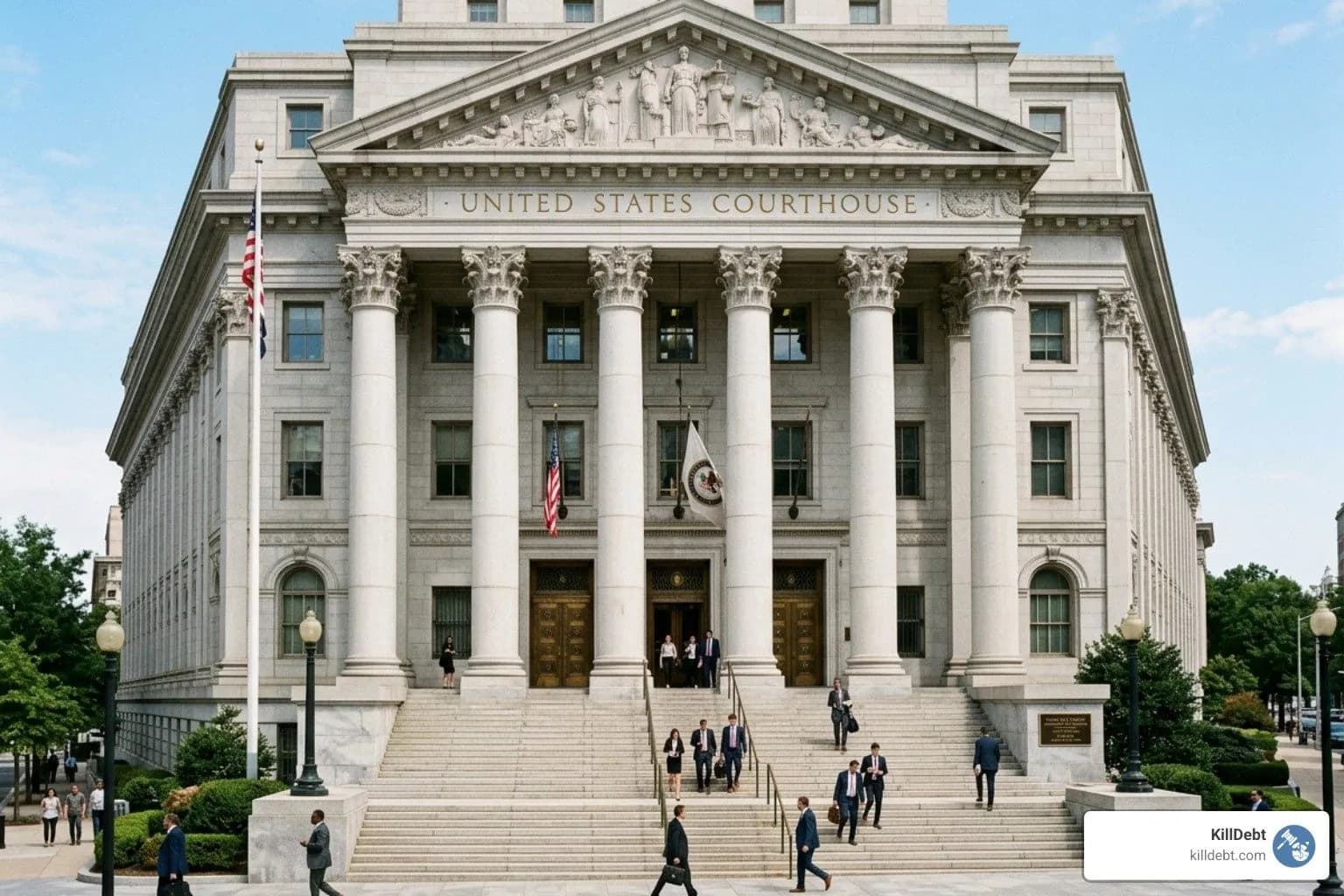
When you receive a Summons and Complaint, you are officially on the clock. In civil litigation, the legal deadline answer lawsuit is governed by specific procedural rules that vary depending on whether your case is in federal or state court.
If you are sued in a United States District Court, the Federal Rules of Civil Procedure (FRCP) 12(a) (opens in a new tab) dictate your timeline. Under FRCP 12(a)(1)(A), a defendant must serve an answer within 21 days after being served with the summons and complaint.
Federal courts are known for their strict adherence to these timelines. It is important to understand the difference between a summons and a complaint in a debt collection lawsuit; the summons is the notice that you are being sued and the deadline to act, while the complaint contains the specific allegations against you. Knowing how to answer a debt summons correctly in federal court is vital because the stakes are often higher than in local small claims cases.
State courts operate under their own sets of rules, which can be more generous or even more restrictive than federal rules. For example, in our home base of Florida, the standard deadline is 20 days. In Michigan, you generally have 21 days to file your response. These deadlines are designed to keep the legal system moving, but for a defendant, they can feel like a sprint.

Calculating your deadline isn't as simple as adding 20 days to the date on the paperwork. Errors in calculation are a leading cause of default judgments. To find your legal deadline answer lawsuit, you must first identify "Day 0."
The Golden Rule of Counting: The day you are served is "Day 0." You begin counting on the day after you were handed the papers.
Before you panic, take a breath and follow our first steps guide for when you're sued by a debt collector. Knowing the exact time to respond to a debt collection lawsuit is the foundation of your defense.
Since KillDebt focuses on helping those in Florida and Michigan, let’s look at how these rules apply specifically to you:
Sometimes, life happens. You might be ill, traveling, or simply need more time to find the records of the old debt. There are two primary ways to get more time:
If the legal deadline answer lawsuit passes and the court record shows no response from you, the plaintiff will move for a Default Judgment. This is essentially an "automatic win" for the debt collector.
A default judgment is not just a piece of paper; it is a powerful weapon. Once a judge signs it, the creditor can:
Understanding the debt collection lawsuit timeline is crucial to seeing how fast "entry of default" turns into a financial nightmare. You can find more details on what happens after the summons is ignored in our dedicated guide.

If you’ve already missed the deadline, don't give up hope, but you must act immediately. You will need to file a Motion to Set Aside Default (under Rule 55(c)) or a Motion for Relief from Judgment (under Rule 60(b)).
To win this motion, courts generally require you to prove two things:
Filing a "General Denial" is the most common way to respond. It tells the court, "I don't agree with these allegations, and I want the plaintiff to prove them." However, a strong answer does more than just deny; it includes Affirmative Defenses.
Common affirmative defenses include:
We provide a sample answer to a debt collection lawsuit and a debt summons response letter sample to help you structure your defense. In some cases, you may also need to file a counter-affidavit to challenge the "sworn accounts" debt collectors often use.

The legal deadline answer lawsuit is the first hurdle in your journey toward debt freedom. It’s a strict rule, but it’s one you can master. Whether you are in Florida or Michigan, the key is to stop the clock by filing a professional, legally sound response before the plaintiff can snatch a default victory.
At KillDebt, we believe you shouldn't lose your rights just because you can't afford a $300-an-hour attorney. Our DIY legal defense system is powered by ParkerGPT, an AI trained by Brian Parker, an attorney with over 30 years of experience in the trenches of consumer law.
We don't just give you templates; we give you a strategy. With our new Court Tester, you can even practice your defense in an AI-simulated courtroom before you ever step foot in front of a real judge. You'll face an AI judge and opposing counsel while your private AI co-counsel whispers the winning strategy in your ear.
Don't let the clock run out. Take control of your case, identify the weaknesses in their lawsuit, and fight back.
Start your defense today with KillDebt
Get started with KillDebt pricing
Important Legal Disclaimer
This educational content is based on general legal principles and my experience in debt collection defense. It is provided for informational purposes only and does not constitute legal advice. Laws vary by state and by local court. For specific legal advice, consult a qualified attorney licensed in your jurisdiction. No attorney-client relationship is created by reading this guide.
Critical Multi-State Variations: FDCPA applies uniformly at the federal level, but state consumer protection laws may provide additional rights and remedies. Statute of limitations periods vary significantly by state and debt type. What constitutes sufficient debt validation varies in practice across jurisdictions. State-specific rules on call frequency, written notice requirements, and permissible collector conduct may differ from federal minimums.

About the author
Brian Parker
I have over 30 years of experience defending consumers against debt collection lawsuits and have seen every tactic, threat, and pressure play that collectors use. Through KillDebt and ParkerGPT, I have systematized the proven defense strategies that actually work - so consumers can respond from a position of knowledge, not fear. My approach focuses on aggressive legal defense based on documented case success rather than false hope that leads to default judgments.