News Break
The FDCPA Explained: Your Legal Rights Against Debt Collectors in Plain English
April 25, 2026
Blog / News Break
Master your debt lawsuit defense guide: Respond fast, challenge standing, file answers & win against collectors!

A debt lawsuit defense guide can be the difference between keeping your paycheck and losing it to a garnishment order. Here's the short version of what you need to know right now:
Quick Answer: How to Defend a Debt Lawsuit
Between 2 and 4.7 million debt collection lawsuits are filed every year in the United States. That's roughly one in every four civil cases. And yet, somewhere between 70% and 90% of defendants never respond at all — handing an automatic win to the collector without a single piece of evidence being reviewed by a judge.
That's not a coincidence. Debt collectors count on your silence.
Many people assume that being sued means they've already lost. Or they feel so overwhelmed by the legal paperwork that doing nothing feels easier than doing something wrong. That fear is exactly what the collector's business model depends on.
The truth? You have real rights. And in many cases, the collector's evidence is surprisingly thin — especially when the debt has been bought and sold by a third-party debt buyer.
This guide walks you through every stage of your defense, step by step.
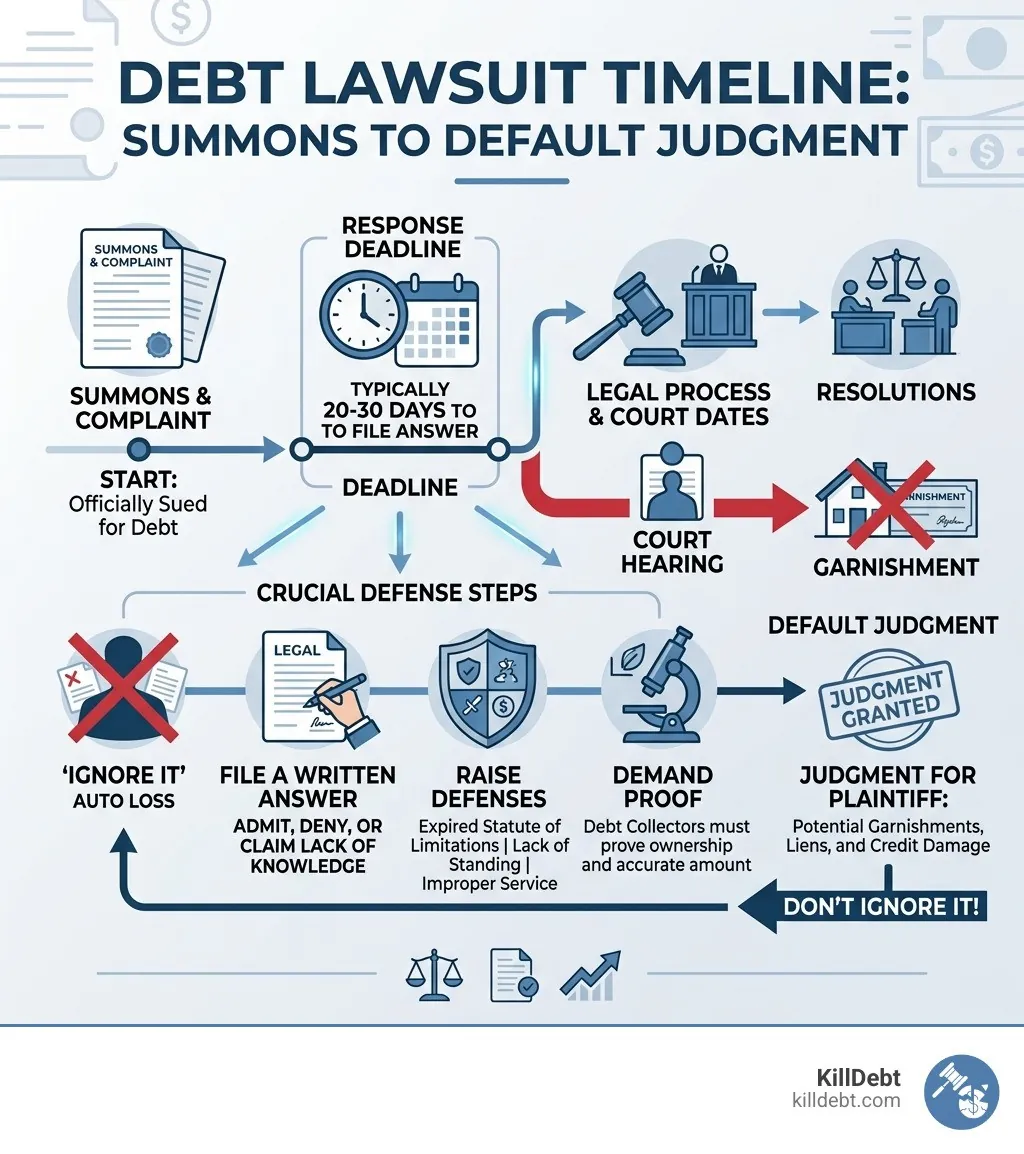
The moment a process server hands you a stack of papers or you find them taped to your door, the clock starts ticking. In Florida and Michigan, the rules are strict, and missing a deadline is the fastest way to lose a case you might have otherwise won.

The first thing you must do is distinguish between the two documents you've received. Understanding the difference between a summons and a complaint is vital. The Summons is the court’s official notice telling you that you are being sued and providing the deadline to respond. The Complaint (sometimes called a Petition) is the list of allegations the creditor is making against you—essentially their "story" of why you owe them money.
In most jurisdictions, including Florida and Michigan, the time to respond to a debt collection lawsuit is typically 20 to 30 days.
If you aren't sure exactly when you were served, or if you think you might have missed something, you can use online tools like Michigan's MiCOURT or Florida’s county clerk websites to track your case status. We recommend checking these regularly to ensure no "sewer service" (where a process server claims they served you but actually threw the papers in the trash) has occurred. If you've asked yourself, "Have you been sued by a debt collector?" and the answer is yes, checking the official court record is your first line of defense.
For a deeper dive into these initial moments, see our complete first steps guide for when you're sued.
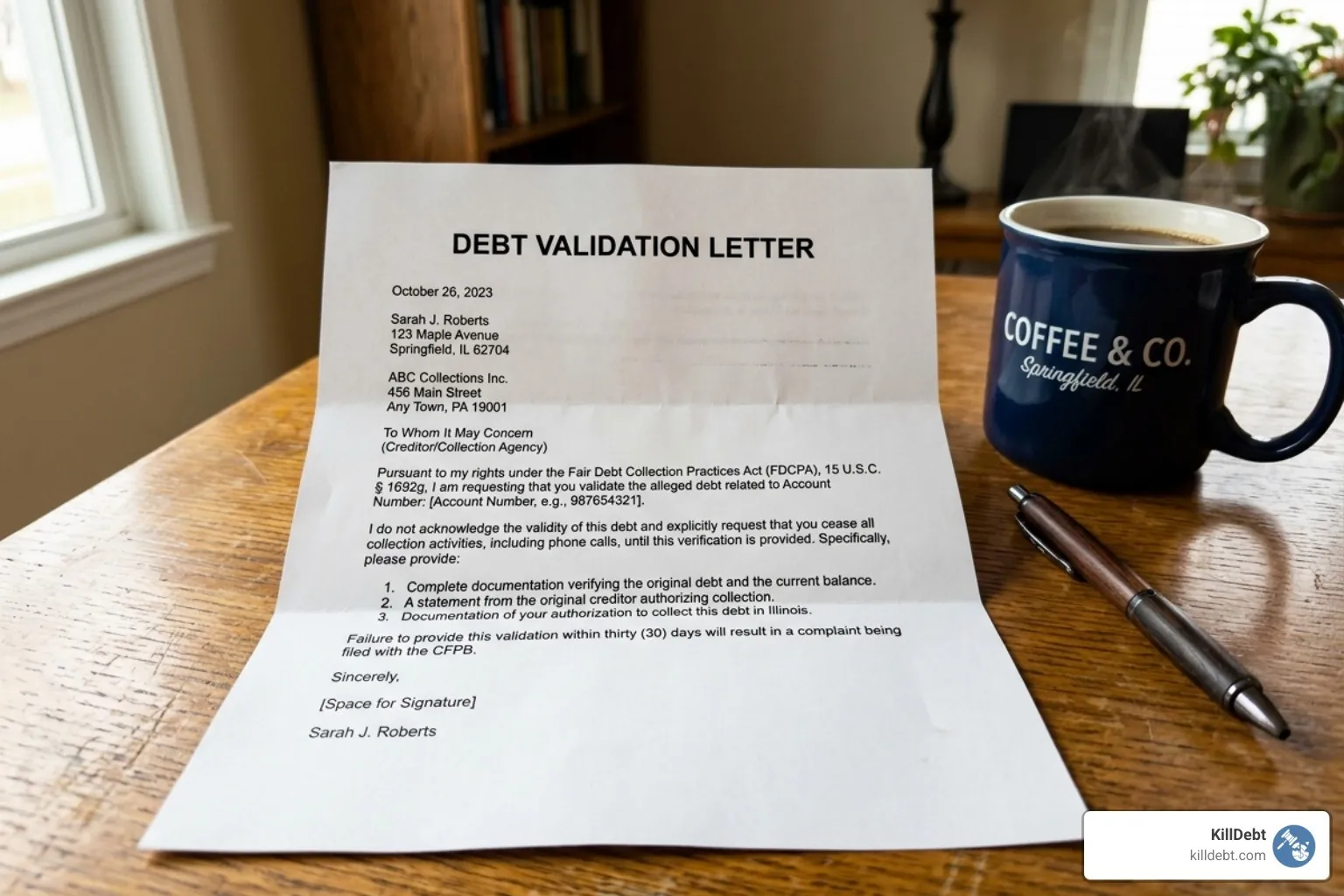
Before you admit to owing a single penny, you must verify that the plaintiff actually has the right to collect. Under the Fair Debt Collection Practices Act (FDCPA) (opens in a new tab), you have the right to demand that a third-party collector "validate" the debt.
While a debt validation letter is most effective within the first 30 days of initial contact, you can still demand proof during the lawsuit through a process called "discovery."
It is important to understand what a debt collector is under the FDCPA. Generally, the FDCPA applies to third-party agencies and debt buyers, not the original creditor (like the bank that issued your credit card). If you are struggling with debt collectors, knowing these rights allows you to flip the script and potentially countersue if they violate the law.
Defending a lawsuit isn't just about saying "I don't owe this." It's about forcing the plaintiff to meet their burden of proof. In a civil case, the plaintiff must prove "by a preponderance of the evidence" that they own the debt, that you are the person who owes it, and that the amount is exactly what they claim.
The most powerful tool in your debt lawsuit defense guide is challenging "standing." Standing is the legal right to file a lawsuit. If the company suing you is a debt buyer (like Midland Credit Management or Portfolio Recovery Associates), they didn't lend you money. They bought your "account" as part of a giant digital spreadsheet for pennies on the dollar.
To win, a debt buyer must prove a "chain of title." This means they need a signed Bill of Sale showing the debt moved from the original bank to Buyer A, then Buyer B, and finally to the plaintiff. Often, these companies lack the actual contracts or specific account attachments.
Understanding the difference between an original creditor and a debt buyer is crucial because banks sell accounts in bulk, and paperwork often gets lost in translation.
| Feature | Original Creditor (e.g., Chase, Amex) | Debt Buyer (e.g., Asset Acceptance) |
|---|---|---|
| Relationship | You opened the account with them. | You have never heard of them. |
| Documentation | Usually have the original contract. | Often rely on "affidavits" instead of contracts. |
| Purchase Price | Lent 100% of the principal. | Bought the debt for 1-4 cents per dollar. |
| FDCPA Status | Generally not covered. | Strictly regulated by the FDCPA. |
Beyond documentation, you should look for "affirmative defenses." These are legal reasons why the plaintiff should lose even if the facts in their complaint are true.
Don't fall for common debt lawsuit myths—like thinking the case will go away if you just tell the judge you're broke. Hardship is not a legal defense; you must attack the legal validity of the claim.
The "Answer" is your formal response to the Complaint. This is the most critical document you will file. If you don't file an Answer, the judge will assume everything the collector said is true and grant a default judgment.
When drafting your Answer, you must respond to every numbered paragraph in the Complaint. You generally have three choices:
In many states, if the collector attaches an "Affidavit of Debt" to their complaint, you cannot just deny it—you must file a counter-affidavit. This is a sworn statement where you dispute the accuracy of their claims under oath. A solid counter-affidavit is often the key to surviving a Motion for Summary Judgment and forcing the case to trial or a favorable settlement.
If you only found out about the lawsuit because your wages were already being garnished, you might have been a victim of "sewer service." This is improper service of process. If the plaintiff didn't follow the legal rules for notifying you, you can file a motion to dismiss.
While New York has specific protections like the Consumer Credit Fairness Act, residents in Florida and Michigan still have strong due process rights. If the paperwork wasn't handed to you or a resident of your home properly, the court may lack jurisdiction.
Once your Answer is filed, the case enters the discovery and settlement phase, where you can demand the "original media" (the actual signed contract) from the creditor.
The debt collection industry is a volume business. They file millions of lawsuits expecting you to do nothing. When you show up and fight, you break their business model.
At KillDebt, we believe that everyone deserves a fair fight in the courtroom, regardless of their bank balance. That’s why we created a DIY legal defense system powered by ParkerGPT.
Our AI isn't just a chatbot; it's a sophisticated legal tool trained on consumer debt law and real-world strategies developed over 30+ years by attorney Brian Parker. Whether you need to analyze a confusing summons, draft a strong ParkerGPT strategy for your Answer, or use our Case Searcher to track your filings, we provide the tools to level the playing field.
New: Introducing Court Tester We’ve just rolled out our most powerful tool yet: Court Tester. It’s an AI courtroom simulation built on the actual facts of your case. You can upload your real filings and, within minutes, "argue" your motion in front of an AI judge. You'll face AI opposing counsel while a private AI co-counsel whispers winning strategies only you can see. It’s like a dress rehearsal for the most important performance of your financial life.
Don't let a default judgment ruin your future. Start your defense today and show the collectors that you know your rights.

About the author
Brian Parker
I have over 30 years of experience defending consumers against debt collection lawsuits and have seen every tactic, threat, and pressure play that collectors use. Through KillDebt and ParkerGPT, I have systematized the proven defense strategies that actually work - so consumers can respond from a position of knowledge, not fear. My approach focuses on aggressive legal defense based on documented case success rather than false hope that leads to default judgments.