The Debt Buying Business Model Exposed

How the $200 to $10,000 Trap Works

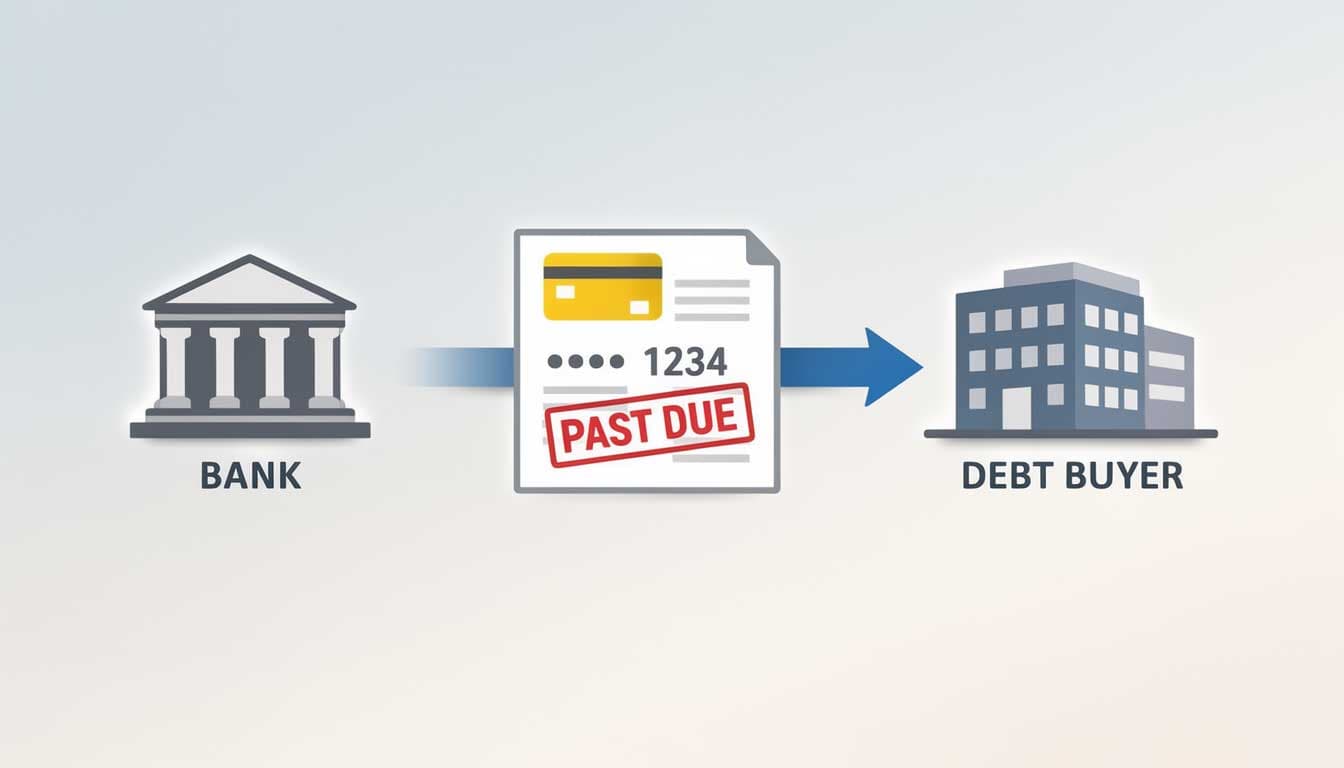
Debt buyers purchase charged-off consumer accounts in bulk for a fraction of their face value, often just a few cents on the dollar. They then pursue collection or file lawsuits seeking the full balance, along with interest, fees, and court costs.

A typical transaction looks like this:

  • Purchase price: Approximately $200 for a charged-off credit card with a $5,000 balance

  • Lawsuit demand: $7,500 to $10,000 after interest, fees, and costs

  • Default rate: 70% since majority of consumers do not respond to lawsuits

  • Return model: Profit is generated through volume, not proof


The economics do not depend on validating every account. They depend on enough people failing to respond, allowing judgments to enter by default.

Why They Target Old Debts Specifically

Older debts are particularly attractive to debt buyers because they combine low acquisition cost with higher litigation leverage:

  • Lower purchase prices: Older accounts sell for less per dollar of face value

  • Inflated claim amounts: Interest and fees accumulate over time

  • Weaker documentation: Records degrade or disappear as accounts change hands

  • Consumer uncertainty: Many people no longer remember the account details

  • Statute of limitations risk: Buyers rely on consumers not asserting time-bar defenses


By the time a lawsuit is filed, an account may have been sold multiple times. Each transfer increases the likelihood of missing assignments, incomplete records, and ownership gaps that the debt buyer hopes will never be challenged.

The Perfect Storm: Why Debt Buying Is Surging

Post Pandemic Economic Factors

The current surge in debt buying and collection litigation is not driven by a single cause. It is the convergence of economic pressure and operational efficiency.

Industry research has identified several overlapping factors:

  • End of pandemic era support: Temporary relief programs and stimulus payments have expired

  • Persistent inflation: More households rely on revolving credit to cover basic expenses

  • Rising delinquency rates: Credit card balances and missed payments have increased

  • Automation of litigation: Filing lawsuits at scale now requires minimal human involvement


Together, these conditions expand the pool of distressed accounts while lowering the cost of pursuing them.

The AI Advantage for Debt Collectors

Technology has transformed debt buying from a manual collection process into a volume driven litigation pipeline.

Modern debt buyers now rely on:

  • Automated lawsuit generation: Systems capable of producing and filing thousands of cases per month

  • Predictive targeting: Data analysis used to identify consumers most likely to pay or default

  • Lower per case costs: Automation reduces staffing and administrative expense

  • Scalable operations: A single company can manage hundreds of thousands of active accounts simultaneously


The Result: Companies like LVNV Funding can triple their lawsuit volume while maintaining the same profit margins, creating the current litigation explosion.

The Major Players and Their Strategies

The Big Three Debt Buyers

Industry filing data consistently identifies three dominant debt buyers in consumer litigation:

  • LVNV Funding LLC: Owned by Resurgent Capital Services, LVNV primarily purchases charged off credit card accounts and is known for high volume lawsuit filing.

  • Portfolio Recovery Associates: Often focuses on higher balance accounts and operates through layered corporate and servicing structures that complicate ownership analysis.

  • Midland Credit Management: Owned by Encore Capital Group, Midland purchases a wide range of consumer debts and uses large scale data analysis to drive litigation decisions.

Their Common Strategies

Despite branding differences, debt buyers rely on the same underlying tactics:

  • Volume over proof: Filing large numbers of cases knowing most will not be contested

  • Minimal evidentiary support: Using summaries, data extracts, and generic affidavits

  • Forum selection: Filing in jurisdictions that favor creditors procedurally

  • Pressure based settlement: Pushing payment agreements that exceed original balances

When challenged, these cases often collapse. In documented instances where ownership and standing were properly contested, buyers have withdrawn claims rather than expose gaps in their chain of title.

Why Their Business Model Creates Legal Vulnerabilities

The Documentation Problem

Debt buyers purchase accounts without complete files because the sale of charged off debt is designed for scale, not litigation readiness.

This happens for several structural reasons:

  • Original creditors retain limited records after charge off

  • Electronic data transfers exclude signed contracts and physical documents

  • Multiple resales create gaps in the chain of title

  • Bulk portfolio purchases prevent account level verification before acquisition

As a result, debt buyers routinely face the same evidentiary weaknesses:

  • Missing contracts: Original signed agreements are rarely transferred

  • Incomplete account history: Computer data replaces full billing records

  • Authentication failures: Affiants lack personal knowledge of the account

  • Assignment defects: Bills of sale often contain disclaimers that undercut ownership

These are not technical errors. They are predictable outcomes of how debt portfolios are bought and sold.

Standing Problems in Court

The central legal issue in most debt buyer lawsuits is standing. To sue, the plaintiff must prove it has the legal right to enforce the debt.

That requires evidence showing:

  • Ownership of the specific account through an unbroken chain of assignments

  • Accuracy of the claimed balance supported by complete account records

  • Authority to collect in the forum jurisdiction

  • Compliance with applicable statutes of limitation

When these elements are tested, many cases fail. This is why debt buyers depend on default judgments rather than contested hearings.

The Securitization Complication

Modern Debt Origination Issues

Modern credit products often involve securitization shortly after origination. This adds another layer of ownership complexity that is rarely addressed in collection pleadings.

In many cases:

  • Loans are originated and immediately sold into securitization trusts

  • Trusts hold the receivables for investor benefit

  • Servicers manage accounts without owning them

  • Debt buyers later claim ownership of accounts already subject to trust interests

When securitized debt is later purchased by a debt buyer, the chain of title becomes vulnerable because the debt buyer must prove it obtained legitimate rights from an entity (the trust) that may have restricted its ability to sell charged-off accounts.

Why Securitization Matters

This structure raises unresolved ownership questions:

  • Whether the debt was legally transferable after securitization

  • Whether assignments violated trust agreements

  • Whether the plaintiff is an owner or merely a servicer

  • Whether multiple entities claim rights to the same account

For consumers, this matters because standing depends on actual ownership. When debt buyers cannot explain how a securitized account exited a trust and entered their portfolio, their claim to enforce the debt becomes vulnerable.

The Psychology of Debt Buying Profits

Why the Default Rate Persists

Debt buyers rely on predictable consumer behavior rather than legal strength. High default rates persist because most cases never reach a point where evidence is tested.

Common factors include:

  • Avoidance: Many people delay responding to debt notices or lawsuits

  • Legal intimidation: Court filings are interpreted as final judgments rather than claims

  • Information gaps: Consumers are often unaware of procedural defenses and evidentiary requirements

  • Financial pressure: The assumption that legal help is unaffordable discourages response

The business model does not require winning contested cases. It requires consumers not engaging at all.

The "Scare Tactic" Model

Debt buyers structure their collection efforts to resolve cases before scrutiny occurs:

  • Official-looking documents create impression of legitimate claims

  • Threats of garnishment pressure quick settlements

  • Time pressure tactics prevent careful analysis of their documentation

  • Settlement offers that seem reasonable compared to sued amounts

The reality: When consumers fight back with proper legal challenges, debt buyers frequently dismiss cases rather than face discovery of their documentation problems.

How to Exploit Their Business Model Weaknesses

The Documentation Challenge Strategy

Based on 30+ years of successful debt defense:

  • Demand complete chain of title from original creditor to current debt buyer with specific account assignments, not bulk portfolio sales.

  • Challenge authentication of all documents with witnesses who have personal knowledge of your account and transaction history.

  • Force discovery of their business records showing purchase agreements, assignment procedures, and account verification processes.

  • Expose FDCPA violations in their collection practices, litigation tactics, and documentation claims.

The Standing Challenge Approach

Standing is often the weakest point in debt buyer lawsuits. Without proof of ownership, the case cannot proceed.

Standing challenges commonly focus on:

  • Incomplete assignments: Portfolio level bills of sale that omit individual account transfers

  • Mischaracterized roles: Plaintiffs asserting ownership while acting as servicers or agents

  • Securitization conflicts: Accounts subject to trust ownership claimed by debt buyers

  • Authentication failures: Witnesses without personal knowledge of original transactions

When ownership cannot be proven, dismissal or favorable settlement frequently follows.

The Counter Attack Strategy: Turning Their Profit Model Against Them

FDCPA Violation Identification

Debt buyers’ volume driven profit model produces repeatable FDCPA violations. These are not edge cases. They arise from standardized filings and automation.

Common violations include:

  • False ownership representations (§ 1692e(2)(A)) when a debt buyer misstates its legal relationship to the account or claims ownership without a provable chain of title

  • Improper venue (§ 1692e(10)) when lawsuits are filed in locations convenient for the collector rather than legally proper for the consumer

  • Inadequate validation (§ 1692g) when collectors cannot produce complete documentation after a timely written dispute

  • Mini Miranda violations (§ 1692e(11)) when debt buyers include collection language in court pleadings, such as stating that the communication is from a debt collector, even though formal legal pleadings are exempt and inclusion can itself be misleading

These violations often appear inside the same documents used to pursue judgment.

The Counterclaim Opportunity

The Carlos Bernol case illustrates how this model collapses when challenged. After LVNV Funding dismissed its lawsuit due to documentation failures, Bernol pursued FDCPA counterclaims and recovered damages exceeding the amount LVNV originally sought.

This is the counter attack framework:

  • Force standing challenges through motions to dismiss based on ownership and documentation defects

  • Identify FDCPA violations embedded in collection letters, pleadings, and validation responses

  • Assert counterclaims seeking statutory damages and attorney fees

  • Shift posture from defensive response to affirmative legal action

State Specific Counter Affidavit Procedures

Some jurisdictions provide additional procedural tools. Michigan, for example, requires counter affidavits under MCL 600.2145 for account stated claims. In the Vectara analysis involving Midland Credit Management, failure to comply with this requirement undermined the plaintiff’s case.

These procedures are not universal. Most states do not recognize counter affidavit requirements. Always confirm whether your jurisdiction authorizes similar mechanisms before relying on them.

Using KillDebt Against Old Debt Buyer Lawsuit 

I built KillDebt as a comprehensive consumer debt defense platform based on 30+ years of handling real debt collection cases. It's not limited to one tactic or one type of dispute—it's designed to solve debt collection problems the way they unfold in actual litigation. 

At the core of KillDebt is ParkerGPT, the AI analysis system trained on real debt collection cases, court filings, and litigation documents I've developed and used over decades. ParkerGPT doesn't guess or improvise. It analyzes cases by applying proven legal patterns, court-tested documents, and continuously updated procedural rules to the facts in front of it—exactly the way I would if you hired me to defend your case.

In the context of old debt buyer lawsuits, KillDebt helps by:

  • Analyzing chain of title defects across multiple debt sales and assignments\

  • Identifying standing failures where the plaintiff cannot prove legal ownership

  • Flagging documentation gaps common in aged and resold accounts

  • Surfacing statute of limitations issues tied to old charge offs

  • Integrating FDCPA defenses when collectors misrepresent ownership or amounts

KillDebt also provides access to a broader library of court tested templates, motion strategies, and procedural tools covering lawsuits, discovery, affidavits, settlement leverage, and FDCPA enforcement. Members receive ongoing updates as laws, court rulings, and collection tactics evolve, along with discounted consultations and supporting materials tied directly to my educational videos and case analyses.

The goal is to give consumers the same structured advantage that experienced debt defense attorneys use without breaking the bank

Defense Checklist Against Debt Buyer Lawsuits

Immediate Case Analysis

[ ] Identify the debt buyer type and research their typical documentation problems

[ ] Analyze the lawsuit papers for standing, venue, and FDCPA violation issues

[ ] Research the debt history including original creditor and any assignments

[ ] Calculate statute of limitations based on last payment or acknowledgment dates

Strategic Challenge Development

[ ] Demand complete chain of title documentation with specific account assignments

[ ] Challenge authentication of all business records and witness affidavits

[ ] Identify FDCPA violations in their collection and litigation practices

[ ] File comprehensive Answer with affirmative defenses and counterclaims

Discovery and Documentation

[ ] Serve targeted discovery requests exposing their documentation problems

[ ] Depose their witnesses to reveal lack of personal knowledge

[ ] Challenge business record authentication through foundation requirements

[ ] Document settlement discussions showing their willingness to dismiss weak cases

Resolution and Counter-Attack

[ ] Negotiate from strength using identified documentation problems

[ ] Pursue FDCPA counterclaims for violation damages and attorney fees

[ ] Monitor credit reports for compliance with settlement terms

[ ] Maintain documentation for future protection against similar collectors

The Economic Reality: Why Fighting Back Works

Debt buyers make money only when cases go uncontested. Their business model is built on scale, speed, and silence, not on litigating fully defended cases.

Once a consumer pushes back with proper legal challenges, the economics of the case change immediately.

Cost-Benefit Analysis for Debt Buyers

Unopposed cases are cheap and predictable. Contested cases are not.

For debt buyers, the cost structure typically looks like this:

  • Default judgment cases: Relatively low cost, often limited to filing fees, service of process, and minimal attorney involvement

  • Contested litigation: Substantially higher costs driven by attorney time, discovery obligations, evidentiary challenges, and motion practice

  • FDCPA exposure: Statutory damages and fee shifting convert collection attempts into potential liabilities

  • Operational risk: Defended cases consume resources and draw attention to documentation and compliance problems

When a case stops being easy, it stops being profitable.

The Settlement Mathematics

From my experience defending these cases, properly challenged debt buyer lawsuits often resolve in one of three ways:

  • Reduced settlements when documentation or standing problems are exposed

  • Dismissals when ownership, statute of limitations, or evidentiary defects cannot be cured

  • Consumer recoveries when FDCPA violations are identified and pursued

  • Credit report corrections removing negative tradeline information

Once litigation risk replaces default assumptions, the debt buyer’s leverage erodes quickly.

The practical takeaway is simple: fighting back does not escalate risk by default. In many cases, it removes the financial incentive for the lawsuit to continue at all.

Summary

Debt buyers profit by purchasing old, charged off accounts for pennies and pursuing the full balance through litigation, not by proving their cases in court. Their business model depends on default judgments, incomplete documentation, and consumer inaction.

When challenged, these cases often collapse. Missing contracts, broken chains of title, securitization conflicts, and authentication failures expose fundamental standing problems. Fighting back changes the economics of the lawsuit, turning a low cost collection attempt into a liability risk.

Understanding how debt buyers operate allows consumers to challenge ownership, demand proof, assert FDCPA violations, and negotiate from a position of strength rather than fear.

Next Steps in Your Debt Defense Journey

Understanding the debt buying business model is crucial to effective defense. Your next learning priority should focus on:

Who Is Suing Me? Original Creditor vs. Debt Buyer Explained - Identifying debt buyer opponents and their specific vulnerabilities

What to Do When Sued by a Debt Collector: Complete First Steps Guide - Immediate action plan specifically tailored to debt buyer lawsuit challenges (Coming Soon)

Debt Validation Letters: Your First Line of Defense Against Collectors - Pre-litigation strategies that exploit debt buyer documentation problems (Coming Soon)



About Brian Parker

I have over 30 years of experience defending consumers against debt collection lawsuits and have seen every myth, excuse, and misconception that prevents people from taking effective action. Through KillDebt and ParkerGPT, I've systematized the proven defense strategies that actually defeat debt collectors while debunking the dangerous myths that lead to default judgments. My approach focuses on aggressive legal defense based on documented case success rather than false hope that destroys financial futures.


Frequently Asked Questions (FAQ)

Why do debt collectors buy old debts instead of new ones

Old debts are cheaper to purchase, often lack complete documentation, and carry higher apparent balances due to accumulated interest and fees. This makes them more profitable when consumers do not respond to lawsuits.

Can a debt buyer sue me without proving they own the debt

They can file a lawsuit, but they cannot legally win if ownership and standing are properly challenged. Many rely on default judgments rather than proof.

Why do so many debt buyer lawsuits end in default judgments

Most consumers do not respond due to fear, confusion, or lack of information. Debt buyers rely on this inaction as part of their profit model.

What happens if I challenge a debt buyer’s standing

If the debt buyer cannot prove a valid chain of title and ownership of your specific account, the case may be dismissed or settle on favorable terms.

Are debt buyers required to have original contracts and statements

To prove their case in court, they must authenticate the debt amount and ownership. Many cannot produce original agreements or complete account histories.

Can fighting back increase my risk

Proper legal defense does not automatically increase risk. In many cases, it removes the financial incentive for the lawsuit to continue.

What role does the FDCPA play in debt buyer lawsuits

What role does the FDCPA play in debt buyer lawsuits

The FDCPA prohibits false ownership claims (§ 1692e(2)(A)), improper venue (§ 1692e(10)), inadequate validation (§ 1692g), and misleading collection practices (§ 1692e, § 1692f). Violations can create counterclaims for statutory damages up to $1,000 plus attorney fees under § 1692k.

Does the age of the debt matter legally

Does the age of the debt matter legally

Yes. Old debts may be time barred under statutes of limitation, and documentation problems increase with each resale.

How does KillDebt help in old debt buyer cases

How does KillDebt help in old debt buyer cases

KillDebt uses ParkerGPT to analyze ownership, standing, documentation gaps, statute of limitations issues, and FDCPA violations based on real litigation patterns.

Should I settle or fight a debt buyer lawsuit

Should I settle or fight a debt buyer lawsuit

That depends on the documentation, ownership proof, and procedural posture of the case. Many settlements become favorable only after weaknesses are exposed.

IMPORTANT LEGAL DISCLAIMER

This educational content is based on general legal principles and my experience in debt collection defense. It is provided for informational purposes only and does not constitute legal advice. Laws vary by state and by local court. For specific legal advice, consult a qualified attorney licensed in your jurisdiction. No attorney-client relationship is created by reading this guide.

Critical Multi-State Variations:

  • Statute of limitations periods: Vary significantly by state and debt type, affecting time-barred debt challenges

  • Standing requirements: Proof of debt ownership standards vary between jurisdictions

  • Discovery procedures: State court rules for compelling document production differ substantially

  • FDCPA enforcement: Federal law is uniform, but state consumer protection acts provide additional violation categories

  • Venue requirements: Proper lawsuit location rules vary by state for debt buyer cases

  • Authentication standards: Evidence admission requirements differ between state and federal courts
    Counter-affidavit procedures: Required in Michigan (MCL 600.2145) for account stated claims, but not recognized in most other jurisdictions

State-Specific Legal Requirements:

  • Debt collection laws, standing requirements, and business model challenges vary significantly by state and local jurisdiction

  • Specific legal requirements for challenging debt buyer ownership and documentation differ between jurisdictions

  • Individual case circumstances involving securitization and complex ownership may require different analysis than described

  • Some challenge strategies may be more or less effective in particular jurisdictions