News Break
What to Do When Sued by Debt Collector and How to Fight Back
July 31, 2026
Blog / News Break
Learn how to fight debt collectors with validation letters, FDCPA rights, and lawsuit defenses to stop harassment and win.

Knowing how to fight debt collectors can mean the difference between losing your wages and keeping them. Here are the core steps:
That call. That letter. That sick feeling when you see a court summons on your doorstep.
If a debt collector is after you right now, you're not powerless — even if it feels that way. The law gives you real tools to push back, slow them down, and in many cases, stop them cold.
The problem? Most people don't know what those tools are. They either panic and pay something they don't owe, or they ignore everything until a default judgment wipes out their bank account.
Here's the truth: one in five consumers has an error on their credit report, according to the Federal Trade Commission. That means a huge share of debt collection attempts involve wrong amounts, wrong people, or debts that have already been paid. You have every right to make them prove it.
This guide walks you through every stage — from that first threatening call to facing a judge — in plain language, with no legal degree required.
I'm Brian Parker, and for over 30 years I've been in the courtroom fighting creditors, debt buyers, and collection law firms — I've seen every trick they use and built KillDebt specifically to teach you how to fight debt collectors the same way I do. Let's get into it.
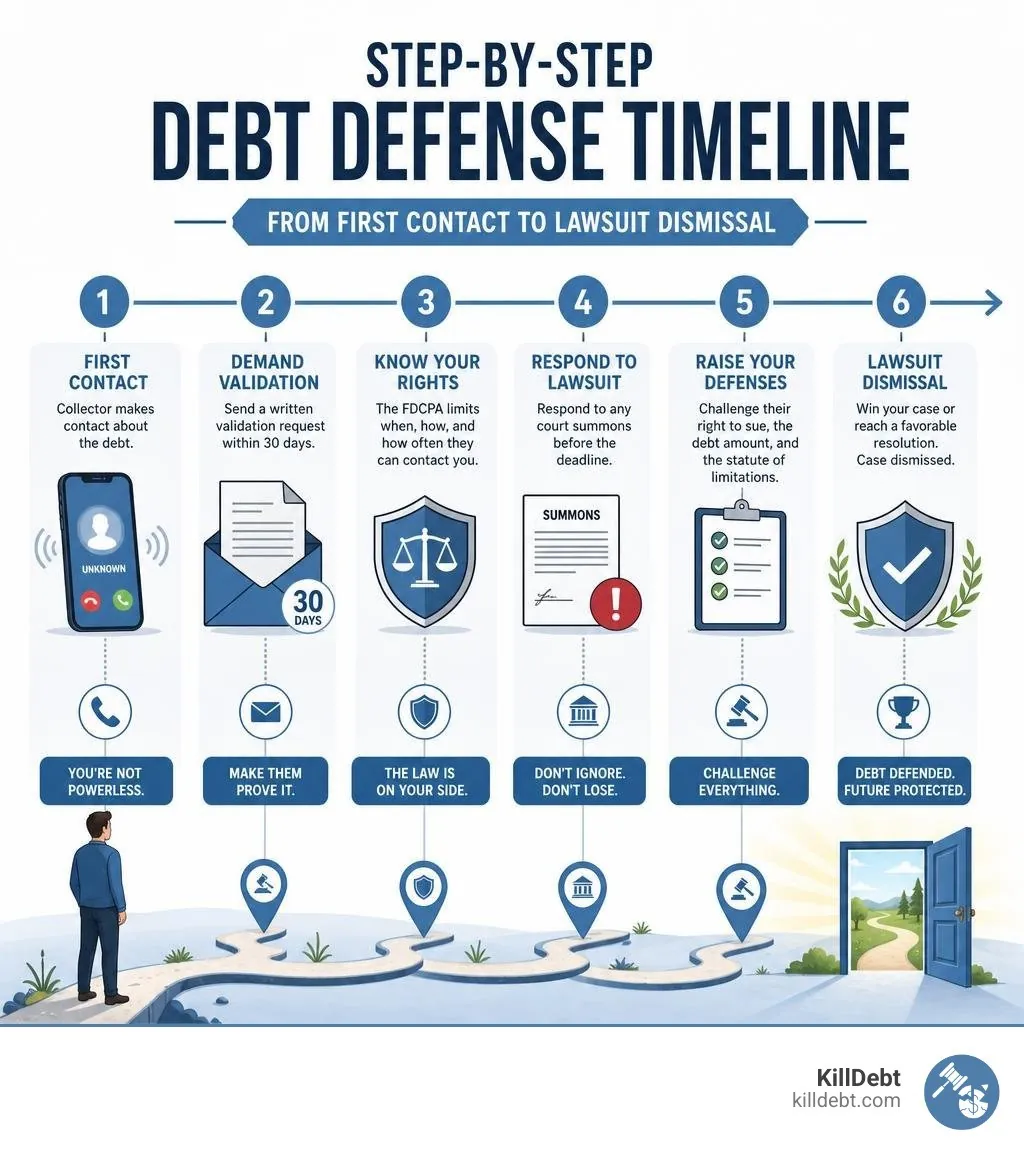
When a collector first reaches out, your immediate goal is to shift from panic mode to information-gathering mode. Do not treat first contact as a moral trial where you have to defend your character. Instead, treat it as a verification problem.
The most common mistake consumers make is paying a debt immediately just to make the anxiety stop. Unfortunately, this often backfires. Making even a small payment can revive an expired debt and confirm you agree the debt is yours. Before you pay a single dime, you must force the collector to prove they have the right to collect it.
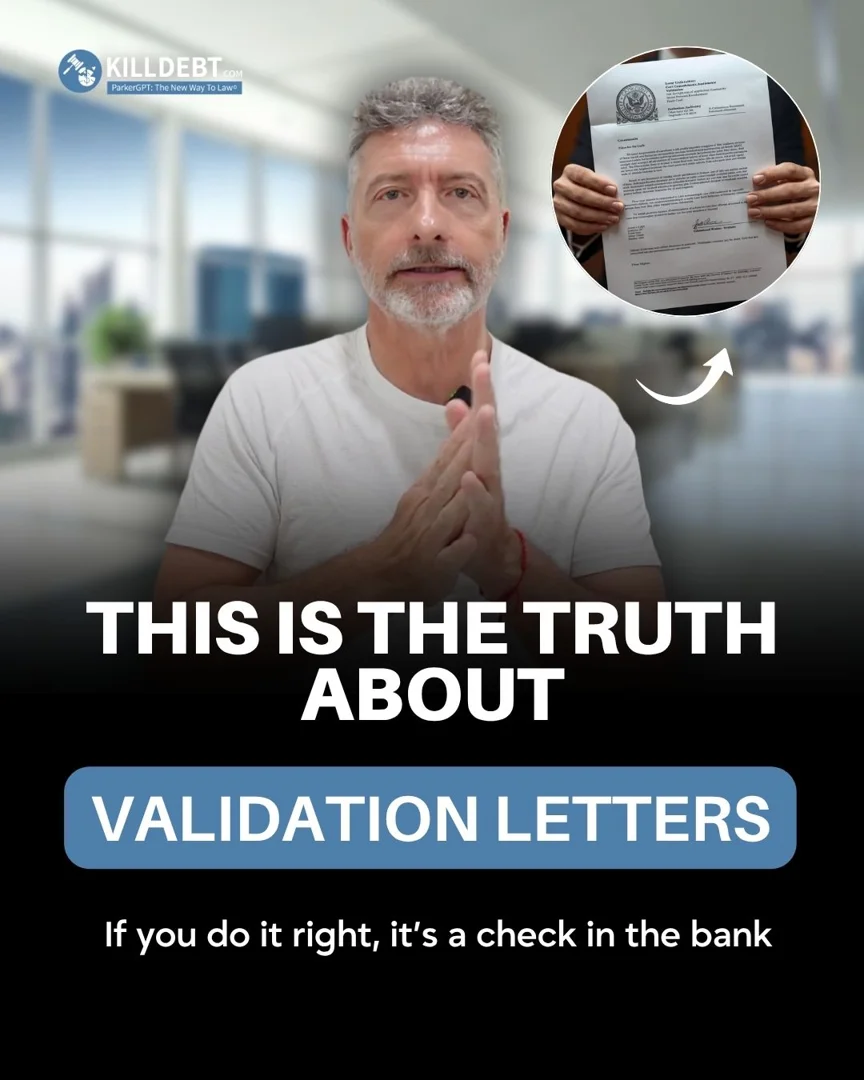
Your primary weapon at this stage is a formal dispute. You can learn more about this initial shield in our comprehensive guide on Debt Validation Letters Your First Line of Defense Against Collectors.
Under federal law, specifically the Fair Debt Collection Practices Act (FDCPA) codified at 15 U.S.C. § 1692g, a debt collector is legally required to send you a written "validation notice" either during their initial communication or within five days of first contacting you.
Once you receive this notice, a critical 30-day window begins. Within these 30 days, you have the right to send a written dispute demanding that they validate the debt. If you send this letter, the collector must stop all collection activities until they obtain and mail verification of the debt to you.
To ensure your rights are protected, your debt validation letter should demand:
Always send your validation letter via USPS Certified Mail with Return Receipt Requested. This gives you an indisputable paper trail proving they received your dispute. You can use our free Debt Validation Letter Template to draft a highly professional, legally sound dispute in minutes.
For more detailed regulatory guidance, you can also review the Consumer Financial Protection Bureau's advice on contacting debt collectors.
The debt collection industry is flooded with "zombie debt"—old, settled, or completely expired debts that have been bought and sold for pennies on the dollar. Because these accounts are purchased in bulk spreadsheets, the collectors often lack any real underlying documentation.
If a collector contacts you about a debt you already paid or settled years ago, do not panic. Gather your "truth file"—any old receipts, bank statements, or settlement agreement letters. If you send a certified dispute letter containing whatever proof you have, and the collector continues to harass you, they are likely violating the FDCPA. You can read more about what is allowed on the FTC's Debt Collection FAQs.
Furthermore, you must watch out for outright scams. Use this step-by-step process to verify if you are dealing with a legitimate agency or a scammer:
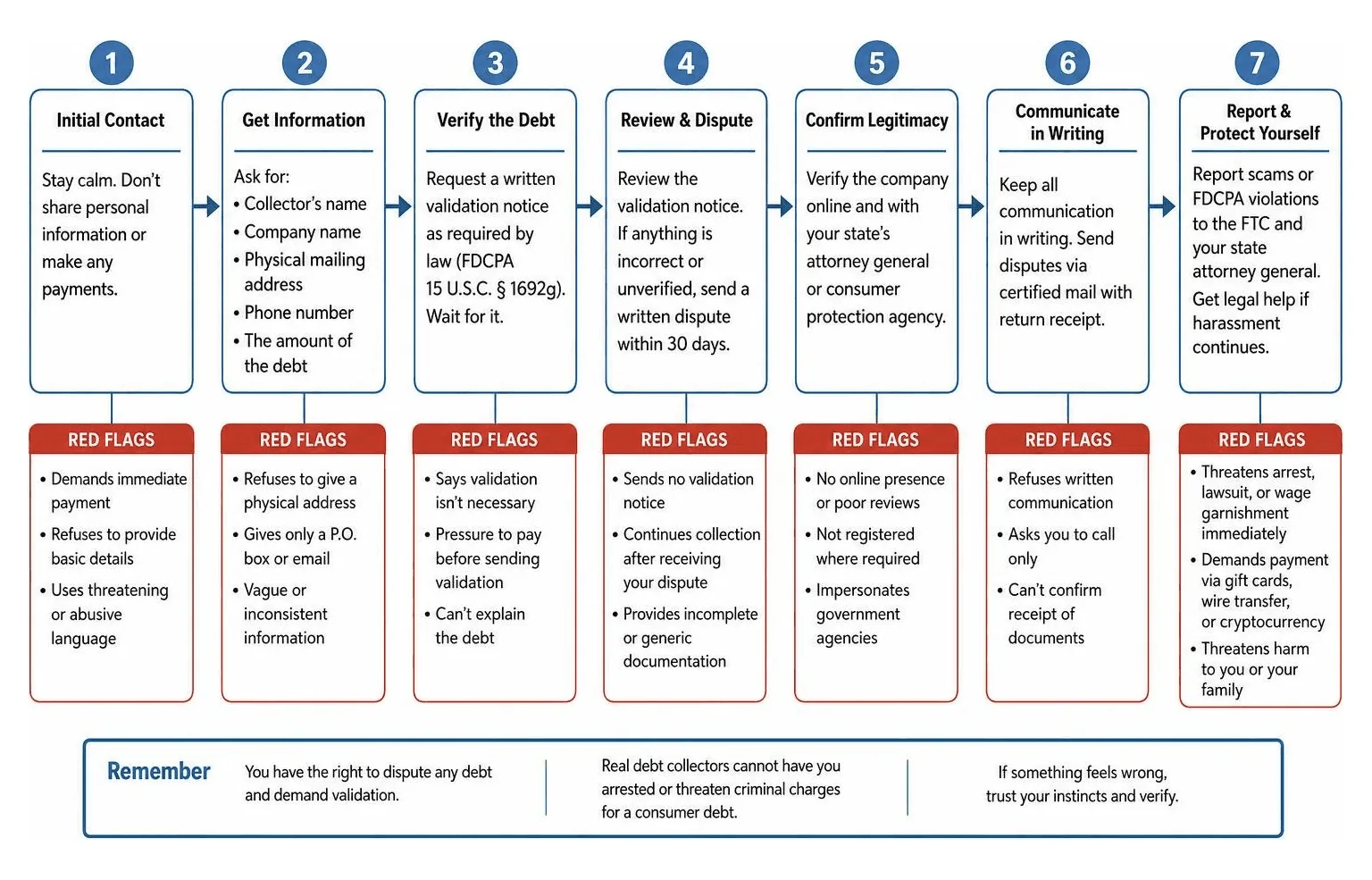
If they refuse to give you a physical mailing address, demand payment via gift cards, wire transfers, or cryptocurrency, or threaten you with immediate arrest, they are scammers. Real debt collectors cannot have you arrested for a consumer debt.
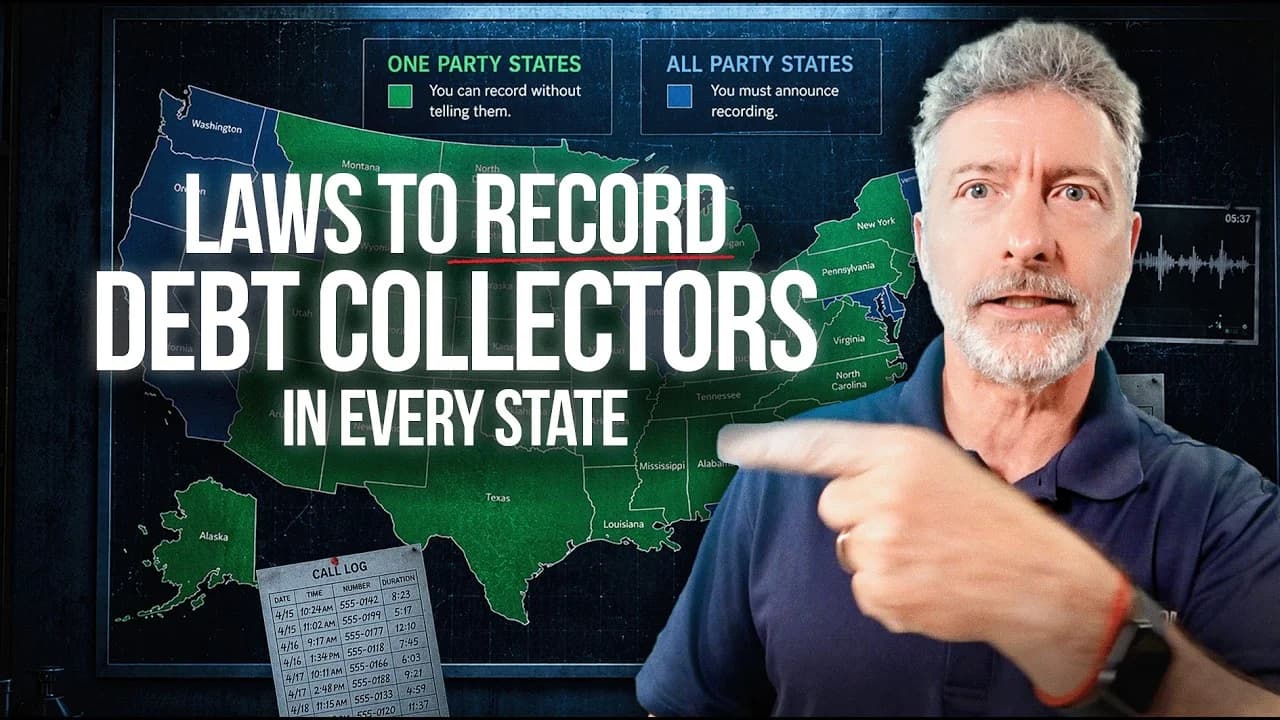
Many debt collectors rely on fear, shame, and constant harassment to break your resolve. They want you to feel so exhausted by the ringing phone that you pay them just to buy some peace. Fortunately, the law places strict boundaries around how and when they can communicate with you. If they cross these boundaries, they are committing a Debt Collector Fdcpa Violation, which can entitle you to cash damages.
The FDCPA provides incredibly strong protections for consumers. Under 15 U.S.C. § 1692c, debt collectors are strictly prohibited from:
If you want the calls to stop completely, you can send a written cease-and-desist letter. Once the collector receives this letter, they are legally barred from contacting you again, except to confirm they are stopping contact or to notify you that they are taking a specific legal action, such as filing a lawsuit.
That while a cease-and-desist stops the phone calls, it does not erase the debt itself. To understand the full scope of your phone call protections, read the CFPB guide on your rights when a collector calls.
While federal law sets the baseline, state laws can provide even more powerful shields. Since we operate in Florida and Michigan, let’s look at how these two states protect you:
If a debt collector cannot get you to pay through letters and phone calls, they may escalate the matter by filing a lawsuit. This is where many consumers make their most fatal mistake: they do nothing.
Approximately 90% of debt collection lawsuits end in a default judgment because the consumer fails to respond. A default judgment gives the collector immediate legal authority to garnish your wages, freeze your bank accounts, and place liens on your property.
If you have been served with a summons, do not ignore it. You must act quickly to protect your assets. Start by reading our What to Do When Sued by a Debt Collector Complete First Steps Guide.
To prevent a default judgment, you must draft and file a formal written Answer with the court. An Answer is not a long, emotional story about why you fell behind on your bills. It is a highly structured, paragraph-by-paragraph response to the collector's Complaint.
For every numbered paragraph in the Complaint, you must state one of three things:
Your deadline to file an Answer is incredibly strict and varies by location:
We have simplified this entire process with our step-by-step tutorial on How to Answer a Debt Summons.
When you file your Answer, you must also list your Affirmative Defenses. If you do not raise these defenses in your initial Answer, you generally lose the right to bring them up later in the case.
The most powerful affirmative defenses include:
To learn how to use these defenses to tear the collector's case apart, read our guide on How Argue Lack Evidence Lawsuit. You can also review the FTC's legal guide on what to do when sued.
Once you file your Answer, the dynamic of the lawsuit changes entirely. The collector's attorney realizes you are not going to be an easy default victory. Because active litigation costs them time and money, they are often highly motivated to settle.
| Strategy | Pros | Cons |
|---|---|---|
| Lump-Sum Settlement | • Resolves the debt permanently • Often settled for 40-60% of the balance • Avoids the stress of a trial | • Requires a large amount of cash upfront • Potential tax implications on forgiven debt |
| Active Trial Defense | • Potential for complete dismissal ($0 owed) • Forces collector to produce perfect records • Exposes collector FDCPA violations | • Unpredictable courtroom outcomes • High stress and preparation time |
To weigh these options further, read our Fight Debt Collection Lawsuit Complete Guide.
Because debt buyers purchase charged-off accounts for an average of only 4% of the original debt value, they have massive profit margins. This gives you incredible leverage to negotiate a steep discount.
When negotiating, keep these rules in mind:
For step-by-step scripts on how to negotiate like a pro, check out our guide on Debt Collection Defense.
If you cannot reach a settlement, your case will proceed toward trial. Do not let fear run the room. Many debt buyers will dismiss the case themselves the morning of the trial if they see you show up ready to fight, because they still do not have the original paperwork.
Prepare your physical "truth file," organize your exhibits (your validation requests, proof of any prior payments, or evidence of FDCPA violations), and practice your arguments. Make sure you avoid the common pitfalls highlighted in Debt Collection Lawsuit Myths 7 Things That Wont Save You.
Dealing with debt collectors can feel incredibly isolating, but you do not have to navigate this complex legal system alone.
At KillDebt, we provide a DIY legal defense platform powered by ParkerGPT—an AI trained specifically on consumer debt law and real-world courtroom strategies developed over 30+ years by myself, attorney Brian Parker. Unlike generic AI, ParkerGPT analyzes your real lawsuit documents, spots the collector's weaknesses, and generates court-ready answers and custom dispute letters.
And if you are nervous about standing in front of a judge, we have just rolled out our brand-new Court Tester courtroom simulator. Simply upload your case documents, and within minutes, you can practice arguing your motion in front of an AI judge, against AI opposing counsel, while a private AI co-counsel whispers winning strategies directly to you.
Take control of your financial future. Visit KillDebt DIY Legal Defense today and fight back with the power of professional legal tech on your side.
Get started with KillDebt pricing
IMPORTANT LEGAL DISCLAIMER
This educational content is based on general legal principles and my experience in debt collection defense. It is provided for informational purposes only and does not constitute legal advice. Laws vary by state and by local court. For specific legal advice, consult a qualified attorney licensed in your jurisdiction. No attorney-client relationship is created by reading this guide.
Critical Multi-State Variations: FDCPA applies uniformly at the federal level, but state consumer protection laws may provide additional rights and remedies. Statute of limitations periods vary significantly by state and debt type. What constitutes sufficient debt validation varies in practice across jurisdictions. State-specific rules on call frequency, written notice requirements, and permissible collector conduct may differ from federal minimums.

About the author
Brian Parker
I have over 30 years of experience defending consumers against debt collection lawsuits and have seen every tactic, threat, and pressure play that collectors use. Through KillDebt and ParkerGPT, I have systematized the proven defense strategies that actually work - so consumers can respond from a position of knowledge, not fear. My approach focuses on aggressive legal defense based on documented case success rather than false hope that leads to default judgments.