News Break
Sued the Wrong Party? A Guide to Amending Your Complaint
July 23, 2026
Blog / News Break
How to Respond to a Debt Collection Lawsuit Properly - Learn about answer credit card lawsuit.

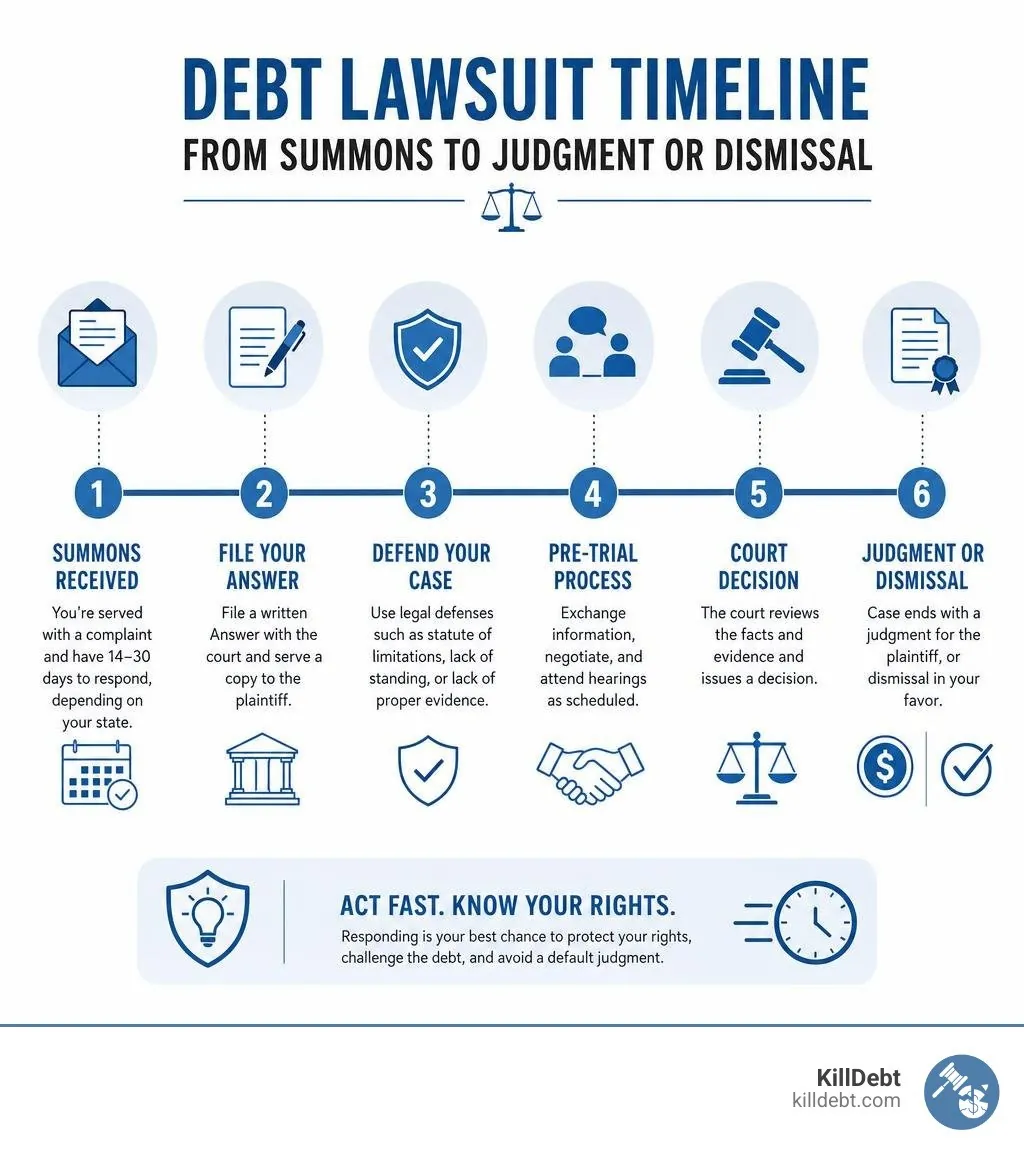
If you just received a court summons and need to answer a credit card lawsuit, here is the short version:
That's the core of it. The rest of this guide walks you through each step in detail.
Getting served with a credit card lawsuit summons is one of the most stressful pieces of mail you will ever open. Your hands might shake. You might want to throw it in a drawer and pretend it never arrived.
Don't.
More than 70% of debt collection lawsuits end in a default judgment — meaning the defendant simply never responded. The creditor wins automatically, without having to prove a single thing. That opens the door to wage garnishment of up to 25% of your disposable income, frozen bank accounts, and property liens.
Here's the thing: many of these lawsuits are filed by debt buyers — companies that purchased your old account for as little as 2 to 5 cents on the dollar. They often lack the original contract, a complete payment history, or even solid proof that they legally own your debt. The moment you file an Answer, you force them to prove their case. Many won't be able to.
The Consumer Financial Protection Bureau logged over 150,000 debt collection complaints in 2025 — and a meaningful portion involve debts consumers don't actually owe. You have real rights here, and filing an Answer is how you use them.
I'm Brian Parker, founder of KillDebt. For over 30 years I've been in courtrooms across the country defending consumers against creditors, debt buyers, and collection law firms — and I've used every defense covered in this guide to help people answer credit card lawsuits and win. Everything here is drawn from that real-world experience, broken down so you can act fast, even without a lawyer.
IMPORTANT LEGAL DISCLAIMER
This educational content is based on general legal principles and my experience in debt collection defense. It is provided for informational purposes only and does not constitute legal advice. Laws vary by state and by local court. For specific legal advice, consult a qualified attorney licensed in your jurisdiction. No attorney-client relationship is created by reading this guide.
Critical Multi-State Variations: FDCPA applies uniformly at the federal level, but state consumer protection laws may provide additional rights and remedies. Statute of limitations periods vary significantly by state and debt type. What constitutes sufficient debt validation varies in practice across jurisdictions. State-specific rules on call frequency, written notice requirements, and permissible collector conduct may differ from federal minimums.
A credit card lawsuit is a formal civil action initiated in a local court to legally force you to pay an outstanding credit card balance. But to understand why you are being sued right now, we have to look behind the scenes of the debt collection industry.
When you fall behind on your credit card payments, the original creditor (like Chase, Citibank, or Capital One) will typically try to collect the money themselves for the first few months. If they are unsuccessful, they often write off the debt as a loss and package it into a massive portfolio.
These portfolios are then sold to a debt buyer (such as Midland Credit Management, Portfolio Recovery Associates, or LVNV Funding) for pennies on the dollar — typically between 2 to 5 cents for every dollar of face value.
Once a debt buyer owns your account, they have a massive profit incentive. If they bought a $5,000 credit card debt for $150, and they can sue you and get a judgment for the full $5,000 plus interest and court costs, they stand to make an incredible return on their investment.
Because they purchase these accounts in bulk, they often receive very little actual documentation. They might get nothing more than a giant spreadsheet containing your name, address, account number, and the balance. They rarely have the original cardmember agreement, the complete statement history, or the legal chain of title proving they actually own your specific account.
Despite this lack of documentation, they file thousands of lawsuits daily, banking on the fact that most consumers will simply ignore the papers. We see this play out constantly in the CFPB complaint database, where thousands of consumers report being harassed or sued for debts they do not recognize, debts that are past the statute of limitations, or debts where the balances have been wildly inflated.
When a collector files a lawsuit, they are initiating a formal legal process. To understand your options and rights at this stage, you should read about what happens when you are sued by a creditor and review the official FTC guidance on debt collector lawsuits (opens in a new tab) to protect yourself against deceptive collection tactics.
When you are served with a lawsuit, you will receive a packet of papers. It is crucial to understand that this packet consists of two entirely different, but equally important, legal documents: the Summons and the Complaint.
The physical delivery of these documents to you is known as service of process. Process servers must follow strict state rules to serve you legally. If they simply throw the papers in your yard or leave them with a random neighbor, it may constitute improper service.
To build a strong defense, you must understand the structural difference between summons and complaint so you know exactly what claims you are responding to.
When you are ready to respond, you cannot simply call the plaintiff's attorney or write a casual letter to the judge explaining your financial hardships. The court will only recognize a formal, written response known as an Answer.
To file your response properly, follow this step-by-step sequence:
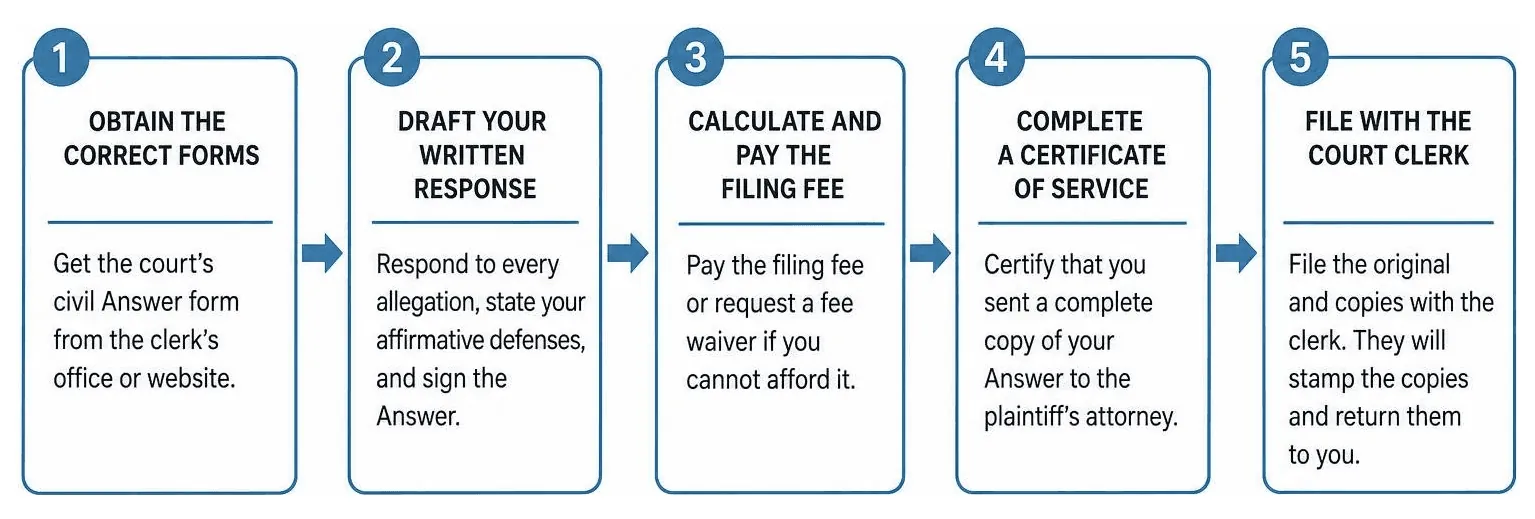
Learning how to write an answer to a credit card lawsuit is the single most important step in stopping a debt collector in their tracks.
When drafting your Answer, you must respond to every numbered allegation in the Complaint. For each paragraph, you have only three legally acceptable responses:
Under Rule 10 formatting of the rules of civil procedure, your Answer must mirror the structure of the Complaint. It must feature a "caption" at the top listing the court name, the parties, and the case number, followed by numbered responses that correspond directly to the Complaint's paragraphs.
To ensure your formatting is flawless, we recommend reviewing a sample answer to complaint before typing up your final draft.
Your deadline to file an Answer is set by state law and begins running the very day after you are physically served. Missing this deadline by even a single day can result in an immediate default.
Because our firm operates specifically in Florida and Michigan, we focus exclusively on the rules governing these two jurisdictions:
| Jurisdiction | Response Deadline | Notes & Service Variations |
|---|---|---|
| Florida | 20 Calendar Days | Deadline includes weekends. If the 20th day falls on a Saturday, Sunday, or legal holiday, the deadline extends to the next business day. |
| Michigan | 21 Calendar Days | 21 days if you were personally served in hand. If you were served by mail or outside the state of Michigan, you have 28 days to respond. |
Calculating this window accurately is non-negotiable. If you are unsure of your timeline, read our detailed guide on the legal deadline to answer lawsuit to avoid a catastrophic procedural mistake.
An affirmative defense is a legal reason why the plaintiff cannot win the lawsuit, even if the allegations in their Complaint are technically true. You must list these defenses in your initial Answer; if you fail to raise them now, you legally waive your right to use them later.
When dealing with third-party debt buyers, several powerful defenses can completely dismantle their case:
For a comprehensive breakdown of how to deploy these strategies, refer to our defending credit card lawsuit guide 2026 and consult the Florida Bar tips on small claims collection lawsuits (opens in a new tab) for localized procedural insights.
When a debt buyer sues you, they almost always claim a legal theory called account stated. This theory asserts that they sent you bills, you did not object to them, and therefore you implicitly agreed that you owe the stated balance.
To defeat an "account stated" claim, you must attack their chain of title. This means demanding that they produce:
In Michigan, if a creditor sues you on an open account or account stated, they will often attach an affidavit of account. To counter this, Michigan law requires you to draft and file a notarized Defendant's Counter Affidavit alongside your Answer. This affidavit formally swears under oath that the account stated is untrue or inaccurate, which successfully shifts the burden of proof entirely back onto the creditor.
Be sure to understand the mechanics of filing a counter affidavit when answering a debt collection lawsuit to prevent the plaintiff from winning on a technicality.
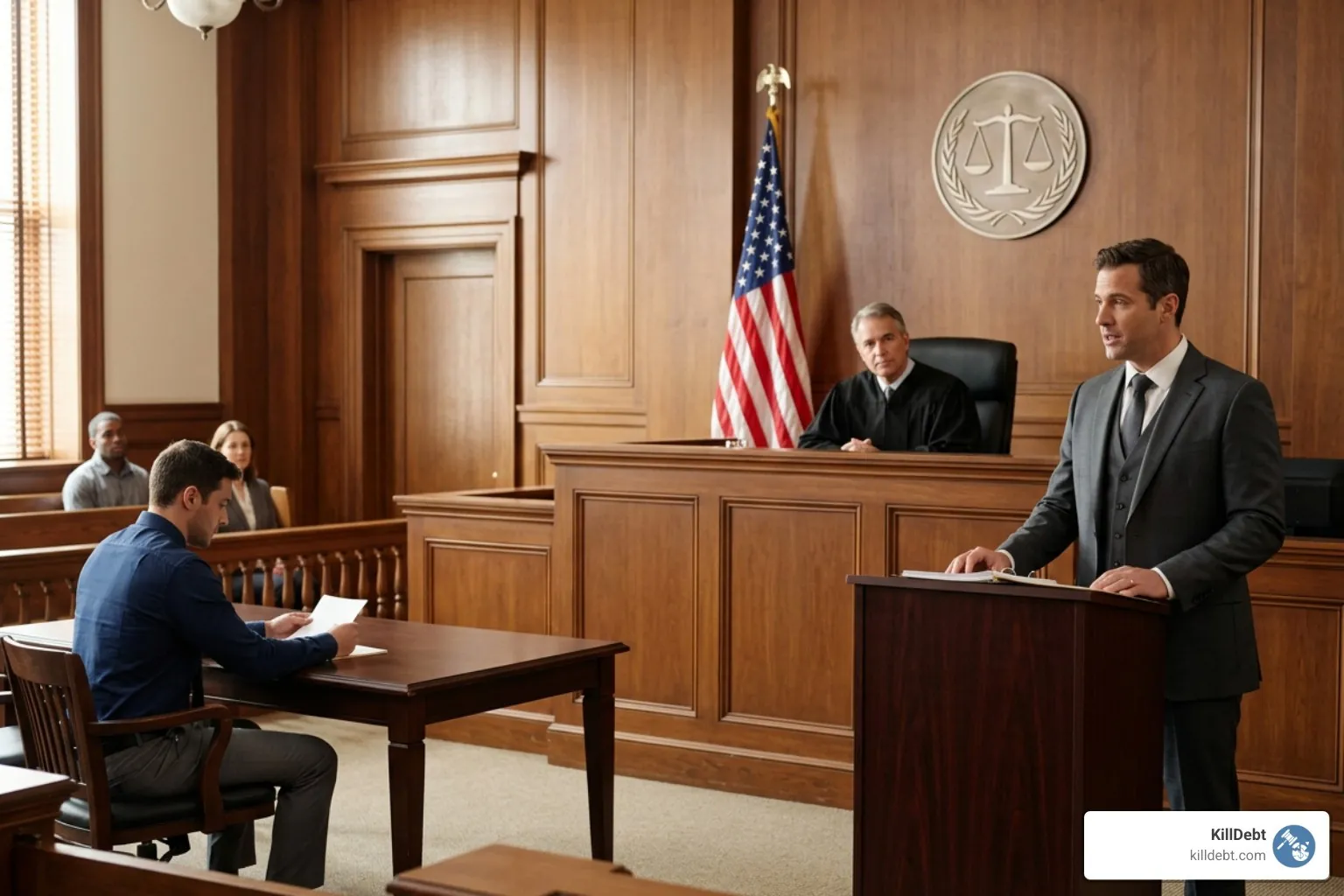
Once you file your Answer, the lawsuit enters its next phase. The case does not immediately go to a dramatic trial; instead, a structured series of legal events unfolds:
To fully prepare for these post-filing steps, read our detailed analysis of what happens after summons.
The absolute worst action you can take when served with a debt lawsuit is to do nothing.
If you ignore the summons, the plaintiff will wait for your 20-day (Florida) or 21-day (Michigan) response window to close. The moment it does, they will file a motion for a default judgment.
Because you did not file an Answer to dispute their claims, the judge will accept all of the plaintiff's allegations as 100% true. The court will sign a judgment granting the creditor everything they asked for — including the full debt balance, inflated interest rates, late fees, and their attorney's fees.
Once a default judgment is entered against you, the creditor gains devastating legal powers:
If you have just been served, you must act immediately. Read our emergency guide on being sued for a debt here's exactly what to do in the first 7 days to safeguard your income and assets.

You do not have to let debt buyers bully you into a default judgment. By understanding your rights, tracking your deadlines, and filing a formal Answer, you can level the playing field and force them to prove every single claim they make.
At KillDebt, we believe that professional, court-ready legal defense shouldn't cost thousands of dollars. We have built a DIY legal defense system powered by ParkerGPT — an AI trained specifically on consumer debt law and real-world court strategies developed over my 30+ years as a consumer defense attorney.
Unlike generic document generators, ParkerGPT analyzes your actual lawsuit filings, exposes procedural weaknesses in the debt buyer's claims, and generates a customized, court-ready Answer and step-by-step filing instructions.
Even better, we recently rolled out Court Tester — our brand-new AI courtroom simulator. When you upload your lawsuit documents, Court Tester allows you to practice your defense in a realistic, risk-free virtual courtroom. You'll argue your motion in front of an AI judge, face off against AI opposing counsel, and receive private, real-time strategic advice from an AI co-counsel whispering tips only you can see.
You can access these powerful tools, templates, and comprehensive legal resources for a fraction of the cost of hiring a private attorney. Review our simple, transparent KillDebt Pricing to find the right plan for your defense.
Don't let the clock run out on your rights. Take control of your case, prepare your Answer, and fight back today.
IMPORTANT LEGAL DISCLAIMER
This educational content is based on general legal principles and my experience in debt collection defense. It is provided for informational purposes only and does not constitute legal advice. Laws vary by state and by local court. For specific legal advice, consult a qualified attorney licensed in your jurisdiction. No attorney-client relationship is created by reading this guide.
Critical Multi-State Variations: FDCPA applies uniformly at the federal level, but state consumer protection laws may provide additional rights and remedies. Statute of limitations periods vary significantly by state and debt type. What constitutes sufficient debt validation varies in practice across jurisdictions. State-specific rules on call frequency, written notice requirements, and permissible collector conduct may differ from federal minimums.

About the author
Brian Parker
I have over 30 years of experience defending consumers against debt collection lawsuits and have seen every tactic, threat, and pressure play that collectors use. Through KillDebt and ParkerGPT, I have systematized the proven defense strategies that actually work - so consumers can respond from a position of knowledge, not fear. My approach focuses on aggressive legal defense based on documented case success rather than false hope that leads to default judgments.