
News Break
The Logistics of Justice: Where to File and Serve
August 5, 2026
Blog / News Break
Learn how to remove debt lawsuit judgment from your record with court motions, exemptions, and settlement options.

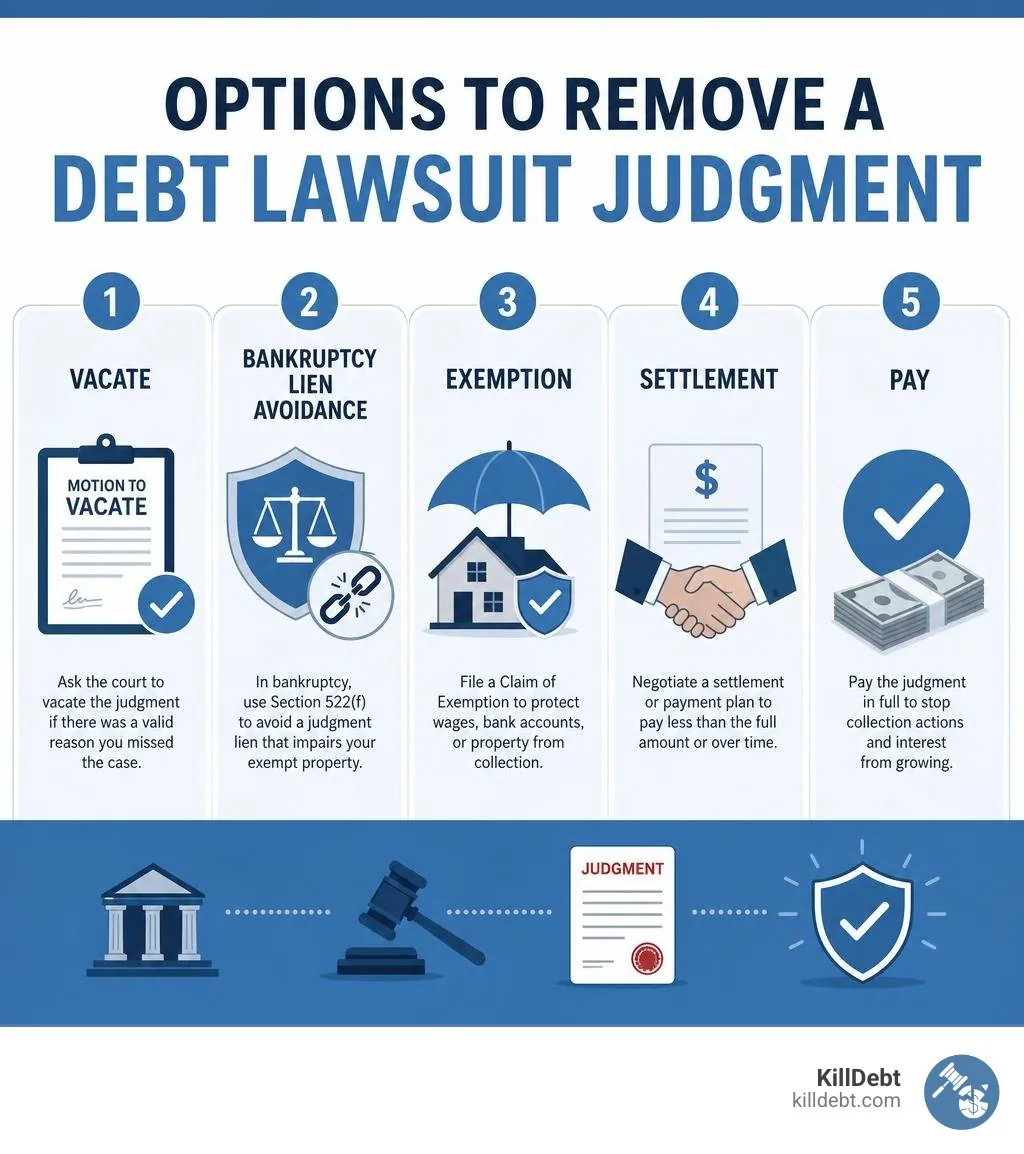
If you're trying to remove a debt lawsuit judgment from your record, here are your main options at a glance:
Ways to Remove or Reduce a Debt Lawsuit Judgment:
A judgment is a court order saying you owe money. Once one is entered against you, collectors can garnish your wages, freeze your bank account, or place a lien on your home. And if you ignore it, the debt grows — a $1,000 judgment in California accrues 10% interest per year, turning into $2,000 over ten years.
The good news: a judgment is not always the end of the road. Many people successfully fight back — especially when the judgment was entered without proper notice.
I'm Brian Parker, and for over 30 years I've helped thousands of consumers remove debt lawsuit judgments and defend against aggressive collectors in courtrooms across the country. This guide distills what I've learned into clear, actionable steps you can use right now.
When a debt collector files a lawsuit, they are seeking a formal court ruling that verifies you owe them a specific sum of money. Understanding the type of judgment you are up against is the first step toward figuring out how to neutralize or eliminate it.
A default judgment occurs when a plaintiff sues and automatically wins because the defendant fails to file a written Answer or appear in court by the deadline. Debt buyers rely heavily on default judgments; in fact, the vast majority of consumer debt judgments are entered by default simply because people are afraid, confused, or never received notice of the lawsuit.
A trial judgment, on the other hand, is entered after both sides present their arguments and evidence before a judge or jury. While challenging a trial judgment usually requires a formal appeal based on errors of law, setting aside a default judgment involves showing the court why you did not respond in time and presenting a valid defense to the original claim.
Once a court enters a judgment against you, the creditor transitions from sending polite collection letters to using state-sanctioned collection powers:
Judgments also come with heavy statutory interest rates. In states like California, unpaid judgments accrue fixed statutory interest at 10% per year. That means a $1,000 judgment automatically grows to $1,100 after just one year, and doubles to $2,000 after ten years. If left unaddressed, statutory interest turns manageable debts into permanent financial burdens.
If you are facing sudden account seizures or threats to your paycheck, learn more about how creditors operate in our guide on Can Debt Collectors Take My Wages and Bank Account and review immediate emergency defenses in Stopping a Wage Garnishment.

The most direct way to eliminate a judgment is to ask the court that issued it to throw it out. Legally, this is called asking the judge to vacate or set aside the judgment.
When a judge vacates a default judgment, it effectively presses the "rewind" button on the lawsuit. The judgment disappears, active wage garnishments and bank freezes are lifted, and the court case reopens back at the beginning. This gives you the official opportunity to file an Answer, demand proof, and assert your legal defenses.
To learn more about the formal mechanics of these filings, check out our dedicated walkthroughs on How to Vacate Judgment and Setting Aside Default Judgment.
Courts will not erase a judgment simply because paying it is inconvenient. You must present valid legal grounds. The two most common grounds for vacating a debt judgment are excusable default and lack of personal jurisdiction due to improper service.
1. Excusable Default To win a motion based on excusable default, you must demonstrate two distinct elements to the judge:
In many states, such as New York, there is a strict time limit: you generally have up to one year from the date you were served with a copy of the judgment to ask the court to vacate based on excusable default. However, if you were never served with a copy of the actual judgment, that one-year clock does not start.
2. Improper Service ("Sewer Service") In the debt collection industry, unscrupulous process servers sometimes engage in what is commonly called "sewer service"—throwing lawsuit summonses in the trash while filing false affidavits claiming they served you in person.
If you were never properly served with the Summons and Complaint, the court never acquired personal jurisdiction over you in the first place. Under federal constitutional law and state civil procedure rules, a judgment entered without personal jurisdiction is legally void.
Crucially, when filing a motion to vacate based on improper service or lack of jurisdiction, there is usually no statutory time limit. Whether the bad service happened six months ago or six years ago, a void judgment remains void and can be challenged at any time.
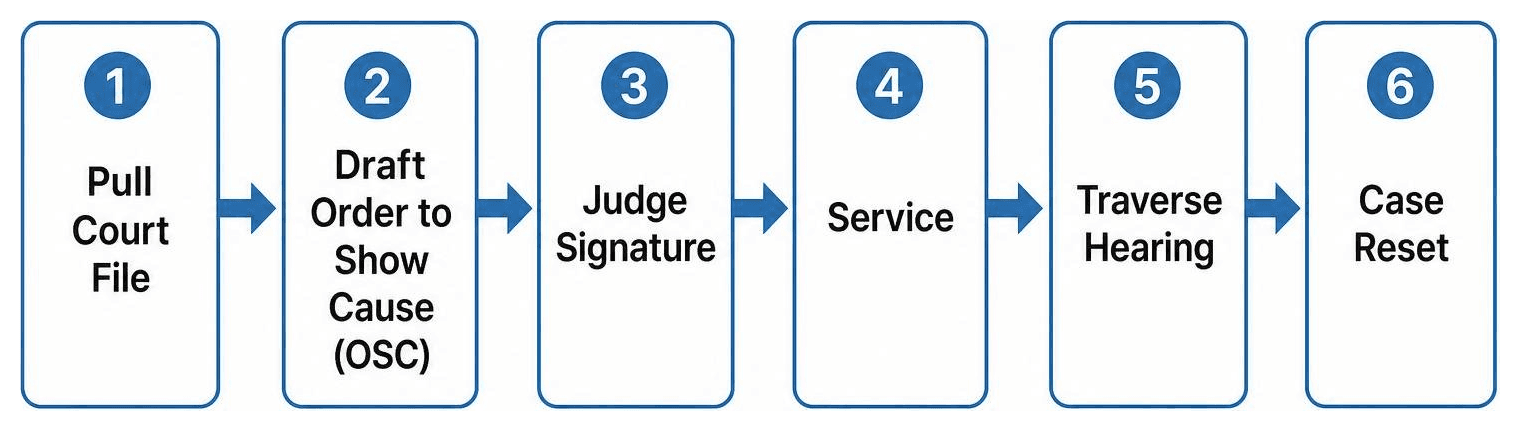
Removing a judgment through the court system requires following a precise procedural path:
Even if a judgment remains valid on the civil docket, creditors face strict limitations on what assets they can actually touch. Furthermore, federal law provides powerful mechanisms to strip judgment liens entirely if you seek bankruptcy relief.
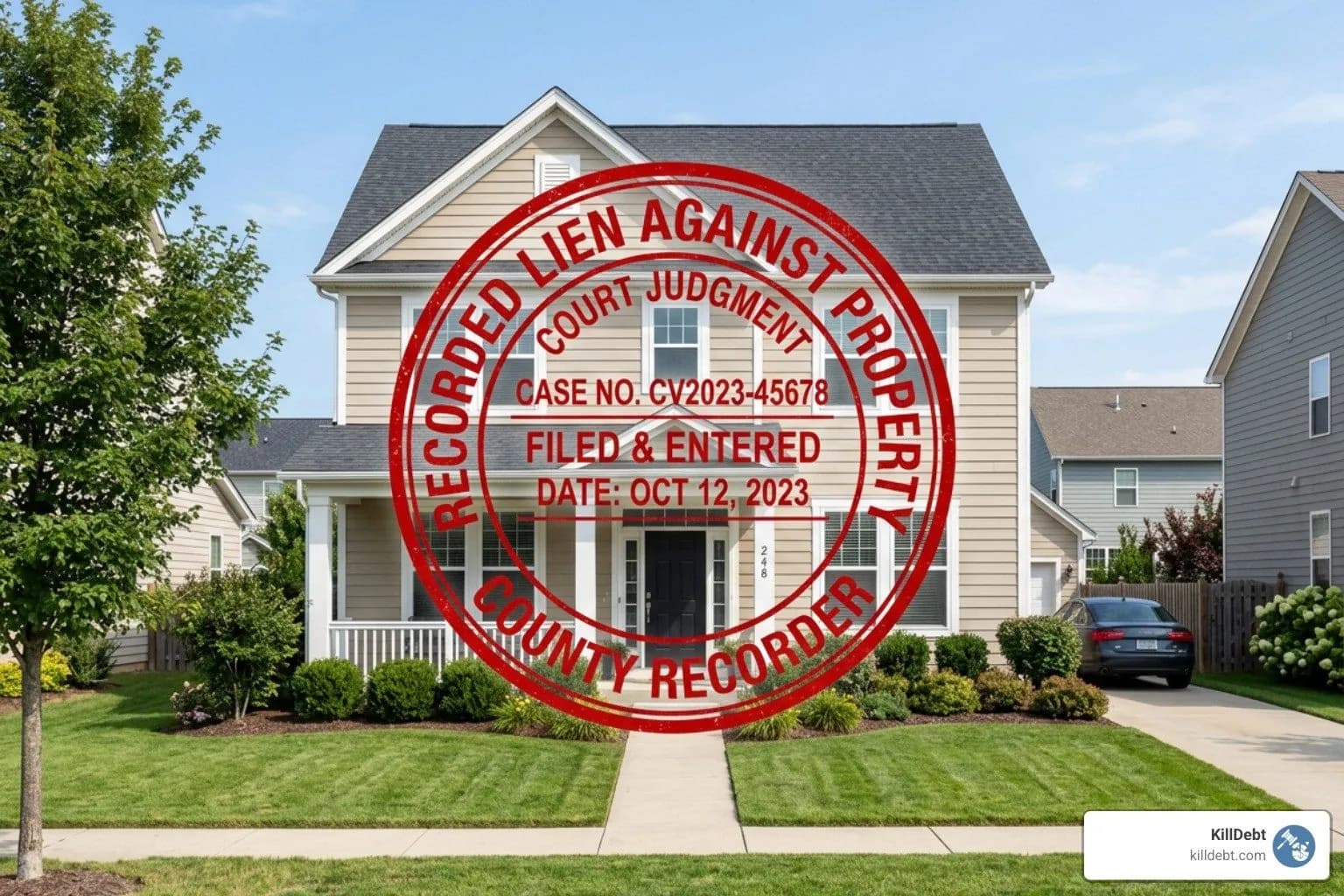
When a creditor records a money judgment in county land records, it becomes a judicial lien attached to your real estate. If you later file for bankruptcy, simply receiving a general discharge does not automatically clear the land records. You must take an active procedural step using Section 522(f) of the Bankruptcy Code.
Under 11 U.S.C. § 522(f), a debtor can file a motion to avoid a judicial lien to the extent that the lien impairs an applicable statutory property exemption (such as your homestead exemption).
To determine whether a judicial lien can be stripped under federal bankruptcy rules, courts apply a straightforward mathematical formula:
$$\text{Judicial Lien} + \text{All Senior Liens (Mortgages)} + \text{Statutory Exemption} > \text{Fair Market Value of Property}$$
If the total sum of the judicial lien, prior mortgages, and your allowable homestead exemption exceeds the current market value of your home, the judicial lien impairs your exemption and can be wiped out entirely by court order.
For detailed analysis on how these bankruptcy provisions operate, consult authoritative resources such as Nolo's guide on Judgment Liens, review post-discharge strategy at Bankruptcy.Blog, and review statutory rules at LienStripping.org.
If a creditor has already initiated post-judgment collection actions—such as garnishing your paycheck or freezing your bank account—you can protect essential income by filing a Claim of Exemption directly with the court or local levying officer.
Federal and state laws prohibit debt collectors from seizing funds required for basic human survival or funds derived from protected public assistance programs. Protected income sources and exempt assets generally include:
When you receive notice of a bank levy or wage garnishment, you must act fast—often within 10 to 30 days depending on local rules. Fill out the court's Claim of Exemption forms, list your necessary monthly living expenses, identify protected income sources, and file the documents immediately. Once filed, the court schedules an emergency hearing to review your financial hardship and release frozen funds.
To understand how homestead protections interact with wage orders, see our guide on Homestead Exemption Wage Garnishment.
When deciding how to handle a debt lawsuit judgment, weighing the strategic pros and cons of each path is critical:
| Option | Pros | Cons | Best Used When |
|---|---|---|---|
| Motion to Vacate | Wipes out the judgment entirely; unfreezes bank accounts; reopens the case to present defenses. | Requires filing court paperwork; requires valid legal grounds; case reopens for active litigation. | You were never served, or had an emergency and have a strong defense. |
| Settlement / Payment Plan | Resolves the debt for less than full balance; avoids bankruptcy; resolves judgment permanently. | Requires upfront cash or regular monthly payments; debt buyer gets paid on questionable debt. | Judgment is legally valid, but collector is open to discounted lump-sum cash payoff. |
| Lien Avoidance (§ 522f) | Permanently strips judicial lien off real estate title; preserves home equity during sale or refi. | Requires filing federal bankruptcy proceedings; strict statutory math criteria. | You own real estate encumbered by a judicial lien and qualify for bankruptcy relief. |
| Pay in Full | Immediately stops collection actions, garnishments, and statutory interest accrual. | Full monetary loss; expensive; gives up leverage if collector lacked original proof. | Balance is small, judgment is valid, and you need an immediate satisfaction recorded. |
If vacating the judgment is not viable, negotiating a post-judgment settlement is often the next best alternative. Debt collectors frequently buy judgments for pennies on the dollar and may accept a lump-sum settlement of 30% to 50% of the judgment balance to close the book.
If you reach a settlement or pay off the judgment, always secure a formal Satisfaction of Judgment executed by the creditor and ensure it is filed with the court clerk and recorded in county land records. This official filing legally certifies that the debt is dead.
To learn more about how judgment buyers collect and negotiate, review Default Judgement Collections and Civil Judgement Collection Agency.
Facing a court judgment can feel overwhelming, but you have real, enforceable legal rights. Whether you choose to remove a debt lawsuit judgment by filing an Order to Show Cause based on bad service, stripping a judicial lien using federal bankruptcy provisions, or filing emergency exemption papers to protect your family's essential income, taking action quickly is the key to protecting your financial future.
At KillDebt, we believe everyone deserves access to practical court tools without paying astronomical attorney fees. That’s why we created ParkerGPT—an AI defense platform trained specifically on consumer debt law and real court strategies developed over my 30+ years as a trial attorney.
With ParkerGPT, you can upload your lawsuit filings, identify service flaws or legal defects, and generate custom, court-ready responses in minutes. And with our Court Tester, you can run an AI courtroom simulation based on your exact case—arguing your motion in front of an AI judge against opposing counsel while receiving real-time strategic advice from a private AI co-counsel.
Don't let debt collectors write the final chapter on your financial record. Visit KillDebt today and take control of your court defense.
Get started with KillDebt pricing
IMPORTANT LEGAL DISCLAIMER
This educational content is based on general legal principles and my experience in debt collection defense. It is provided for informational purposes only and does not constitute legal advice. Laws vary by state and by local court. For specific legal advice, consult a qualified attorney licensed in your jurisdiction. No attorney-client relationship is created by reading this guide.
Critical Multi-State Variations: FDCPA applies uniformly at the federal level, but state consumer protection laws may provide additional rights and remedies. Statute of limitations periods vary significantly by state and debt type. What constitutes sufficient debt validation varies in practice across jurisdictions. State-specific rules on call frequency, written notice requirements, and permissible collector conduct may differ from federal minimums.

About the author
Brian Parker
I have over 30 years of experience defending consumers against debt collection lawsuits and have seen every tactic, threat, and pressure play that collectors use. Through KillDebt and ParkerGPT, I have systematized the proven defense strategies that actually work - so consumers can respond from a position of knowledge, not fear. My approach focuses on aggressive legal defense based on documented case success rather than false hope that leads to default judgments.