
News Break
How to Fight LVNV Funding in Michigan and Win
July 16, 2026
Blog / News Break
Why validate old debt to stop zombie collectors and protect your rights under the FDCPA.

Why validate old debt before doing anything else? Because it's the single most powerful move you can make when a collector comes calling about a debt that may be years — or even decades — old.
Here's the short answer:
A staggering 53% of people contacted by debt collectors report being pursued for debts they don't believe they owe or for the wrong amount. And over 35% of debt collection lawsuits filed by third-party debt buyers in Georgia bankruptcy courts were dismissed in 2024 — simply because collectors couldn't prove they owned the debt.
That's not a technicality. That's your legal right working exactly as it was designed to.
I'm Brian Parker, founder of KillDebt, and for over 30 years I've fought debt buyers and collection law firms in courtrooms across the country — which means I've seen how often why validate old debt becomes the difference between a dismissed case and an unjust judgment. If you've just received a collection letter, a summons, or a call about an old account, this guide gives you the same defense strategy I've used to protect thousands of consumers.
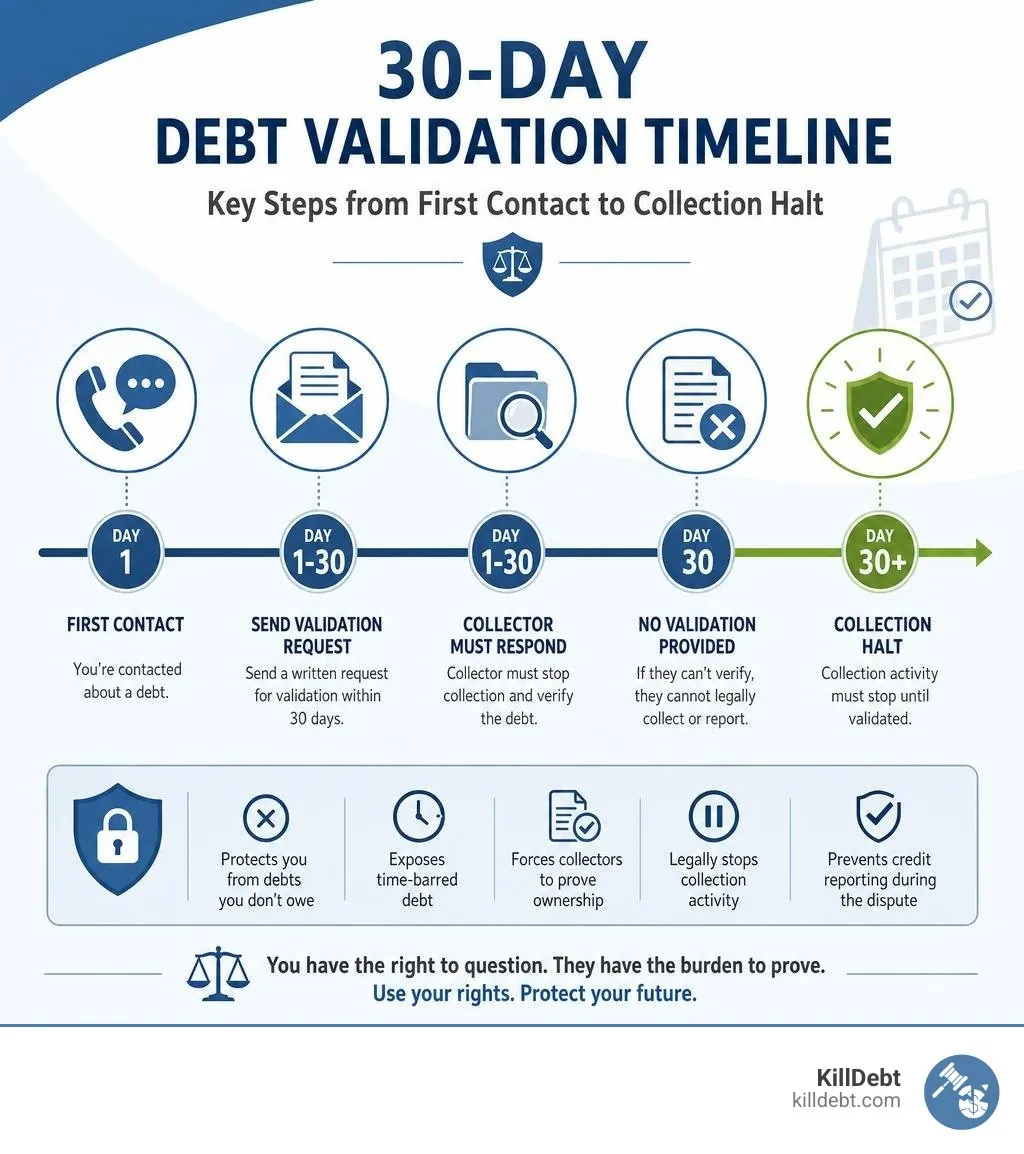
At its core, debt validation is the legal process that shifts the burden of proof off your shoulders and places it squarely on the debt collector. Under the Fair Debt Collection Practices Act (FDCPA), a federal law enacted to shield you from abusive collection tactics, collectors cannot simply demand money because they have your name on a spreadsheet. They must prove you owe the money, that they have the legal right to collect it, and that the amount they are demanding is 100% accurate.
Think of it like a game of tennis. When a collector sends you a letter, they have hit the ball into your court. If you ignore it, you lose by default. If you write back demanding validation, you are hitting the ball back over the net with some serious spin. Now, the game stops. They cannot serve again, call you, or report the debt to credit bureaus until they can prove their case.
Using Debt Validation Letters: Your First Line of Defense Against Collectors allows you to assert this federal right. If the collector cannot produce the required documentation, they must walk away. To explore how the federal courts view these protections, you can Learn more about FDCPA rights (opens in a new tab).
It is incredibly easy to get confused by the terminology of debt collection, but understanding the difference between these two terms is your secret weapon:
When you send a verification request, you are telling the collector, "Show me the contracts, show me the payment history, and prove you actually own this account."

As time passes, debts are packaged, sold, and resold in massive portfolios. The older the debt, the more hands it passes through, and the more likely it is to turn into "zombie debt." Zombie debt is old, expired, or settled debt that collectors buy for pennies on the dollar and attempt to bring back to life.
Why do they do this? Because the economics of debt buying are incredibly lucrative. Debt buyers typically buy old portfolios for just 4 to 7 cents per dollar. If they buy a $10,000 delinquent credit card debt for $400, and they can scare or guilt you into paying even a fraction of it, they make a massive profit. To understand this business model better, you can read about Why Debt Collectors Buy Old Debts.
But here is the catch: because these debts have been sold so many times, the collector rarely has the original contract, the signing documents, or an accurate payment ledger. When you ask why validate old debt, the answer is simple: it forces the collector to realize they do not have the paperwork to back up their claims, which often causes them to quietly close the file and go away. If you want to dive deeper into how to handle these sudden calls about 10-year-old bills, check out Zombie Debt: What to Do When a Collector Calls About a 10-Year-Old Bill (opens in a new tab).
Every state has a "statute of limitations" on debt. This is the legal time limit a creditor or collector has to sue you in court to collect a debt.
Once this time limit expires, the debt becomes "time-barred." The collector can still call you and ask you to pay (depending on state law), but they cannot legally sue you. If they do sue you, you have an absolute defense: the debt is expired.
But here is the ultimate trap: making even a $5 payment or verbally admitting that the debt is yours can instantly restart the statute of limitations clock.
Suddenly, an old, legally unenforceable debt is brought back to life, and the collector has a brand-new window of several years to sue you. This is why you must never make a payment, promise to pay, or negotiate a settlement on an old debt without first sending a validation letter. To protect yourself from this trap, learn more about the Expired Debt Statute Defense.
We are currently seeing a massive rise in a very specific, dangerous type of old debt: zombie second mortgages. More than 600,000 second mortgages (often home equity lines of credit, or HELOCs) from before the 2008 financial crisis remain outstanding.
During the housing crash, many homeowners were told by their banks that these second mortgages were forgiven or written off. In reality, the banks simply stopped sending statements because the homes were underwater. Now, in 2026, third-party debt buyers have bought these old, forgotten loans for pennies. They are suddenly contacting homeowners, demanding the original balance plus 15 to 18 years of accumulated interest, and threatening foreclosure if they aren't paid.
Because these are secured debts, the stakes are incredibly high. Validating this debt is your first line of defense to see if the collector actually has the original promissory note and the legal right to foreclose. For a complete guide on how to survive this specific threat, read our breakdown of Zombie Mortgage Debt.
When you receive that first written validation notice from a collector, a clock starts ticking. You have exactly 30 days to dispute the debt in writing.
If you miss this window, the FDCPA states that the collector is legally allowed to "presume" the debt is valid. They can continue calling you, sending letters, reporting the account to credit bureaus, and moving forward with a lawsuit without having to stop and answer your questions first.
But if you send your dispute letter within that 30-day window, you trigger a powerful federal pause button. The law requires the collector to halt all collection efforts immediately. They cannot call you. They cannot mail you collection letters. They cannot report the debt to Equifax, Experian, or TransUnion. They must stop everything until they obtain verification of the debt from the original creditor and mail it to you. To understand this timeline in detail, read about the Debt Validation Dispute Process.
Once your written dispute lands on the collector's desk, they are faced with a choice:
Because debt buyers purchase these accounts in bulk, they often do not have direct access to the original creditor's records. If they continue to contact you, call you, or report the debt to credit bureaus after receiving your timely dispute—but before mailing you the verification—they have committed a direct violation of the FDCPA. You can use this violation to file a complaint, hire an attorney, or even countersue them for statutory damages. For step-by-step instructions on making them prove their case, read How to Make Collectors Prove You Owe Them (opens in a new tab).
Many consumers believe that if a collector sends back a computer printout of their name, address, and an outstanding balance, the debt has been validated. It has not.
A simple printout from the collector's own internal database is not legal validation. Proper validation requires documentation that originates from the original creditor. For a comprehensive look at what collectors must produce, read A Step-by-Step Guide to Debt Validation for Old Collection Accounts (opens in a new tab) and our guide on drafting a Validation of Debt Letter.
The table below outlines the difference between what collectors want you to accept versus what the law actually requires them to show when challenged:
| Insufficient Documentation (What they send) | Sufficient Documentation (What the law requires) |
|---|---|
| An internal computer screen printout | The original signed contract or credit agreement |
| A copy of a recent collection statement | Complete itemized billing statements showing how the balance was calculated |
| A simple letter stating "you owe $5,000" | A complete, unbroken chain of title proving how the debt went from the original creditor to the current buyer |
| Verbal statements over the phone | Verification directly from the original creditor |
When a debt is sold multiple times, the legal "chain of title" often breaks. Think of chain of title like the deed to a house. If you buy a house, you need a clear paper trail showing who owned it first, who they sold it to, and how it eventually became yours.
If a debt buyer cannot prove every single step of that transfer, they do not have the legal standing (called "standing to sue") to collect a dime from you. This is why third-party debt buyers lose so many cases when consumers show up and fight. They rely on the fact that 90% of consumers ignore collection lawsuits, allowing the debt buyers to win by default.
When you ask why validate old debt, you are actively looking for these chain of title gaps. If they paid 4 cents on the dollar for your debt, they likely received nothing more than an electronic spreadsheet. Forcing them to produce the actual chain of title is the ultimate defense. To understand why collectors sue on these weak cases in the first place, read Why Sue for Old Debt.
When you are ready to write your letter, keep it simple, direct, and formal. You do not need to explain your life story, why you fell behind on payments, or whether you plan to pay in the future. In fact, admitting any relationship to the debt can work against you.
We recommend using our proven templates to ensure you do not accidentally say the wrong thing. You can find an Example Debt Validation Letter and use our customizable Debt Validation Letter Template to get started.
Crucial Rule: Always send your letter via USPS Certified Mail with Return Receipt Requested. This gives you a physical green card signed by the collector, proving exactly when they received your dispute. This paper trail is your insurance policy if they violate the law and you need to take them to court.
Your letter should include the following core elements to protect your rights:
To make sure your letter is legally airtight, read our Credit Debt Validation Letter Guide 2026.
If a debt collector receives your timely written dispute and continues to contact you, threaten you, or report the debt to credit bureaus without sending validation, they are in direct violation of the FDCPA.
Under federal law, you can sue a debt collector for these violations. If you win, the court can award you:
Often, when a collector realizes they cannot validate a debt and have violated the law, they will completely drop the collection effort, delete the account from your credit report, and walk away rather than risk a federal lawsuit. To learn how to turn these violations into a winning legal strategy, read How Win Zombie Lawsuit.
Under the Fair Credit Reporting Act (FCRA), debt collectors are prohibited from reporting inaccurate or unverified information to credit bureaus.
Furthermore, collectors often engage in an illegal practice called "re-aging." Negative items can only remain on your credit report for 7 years from the date of the first delinquency. To keep an old debt on your report and pressure you into paying, some collectors will change the date of delinquency to make the account look brand new.
Sending a validation letter forces them to state the actual date of first delinquency in writing, giving you the exact evidence you need to dispute the account and have it permanently deleted from your credit files.
When a debt collector contacts you about an old bill, they are betting that you will panic, ignore the letter, or make a quick payment out of fear. But now you know the truth: why validate old debt is your ultimate shield. By forcing them to prove their claims, you take control of the situation and protect your hard-earned money.
At KillDebt, we built our DIY legal defense system to give you the exact tools you need to fight back without spending thousands on a lawyer. Powered by ParkerGPT—an AI trained specifically on consumer debt law and real-world court strategies developed over 30 years—our platform analyzes your collection letters or lawsuit documents, uncovers critical weaknesses (like chain of title gaps or expired statutes of limitations), and generates court-ready responses.
We've also just rolled out our brand-new Court Tester, an AI courtroom simulation built on your actual case. You can upload your real filings and, within minutes, practice arguing your motion in front of an AI judge against AI opposing counsel, while a private AI co-counsel whispers winning strategies directly to you.
Don't let zombie debt haunt your financial future. Take control of your case and Protect your rights with KillDebt today.
Get started with KillDebt pricing
IMPORTANT LEGAL DISCLAIMER
This educational content is based on general legal principles and my experience in debt collection defense. It is provided for informational purposes only and does not constitute legal advice. Laws vary by state and by local court. For specific legal advice, consult a qualified attorney licensed in your jurisdiction. No attorney-client relationship is created by reading this guide.
Critical Multi-State Variations: FDCPA applies uniformly at the federal level, but state consumer protection laws may provide additional rights and remedies. Statute of limitations periods vary significantly by state and debt type. What constitutes sufficient debt validation varies in practice across jurisdictions. State-specific rules on call frequency, written notice requirements, and permissible collector conduct may differ from federal minimums.

About the author
Brian Parker
I have over 30 years of experience defending consumers against debt collection lawsuits and have seen every tactic, threat, and pressure play that collectors use. Through KillDebt and ParkerGPT, I have systematized the proven defense strategies that actually work - so consumers can respond from a position of knowledge, not fear. My approach focuses on aggressive legal defense based on documented case success rather than false hope that leads to default judgments.