News Break
Your Debt Lawsuit Defense Guide for Beating the Collectors
April 27, 2026
Blog / News Break
Download your example debt validation letter template. Stop debt collectors legally under FDCPA. Protect your rights & wallet now!
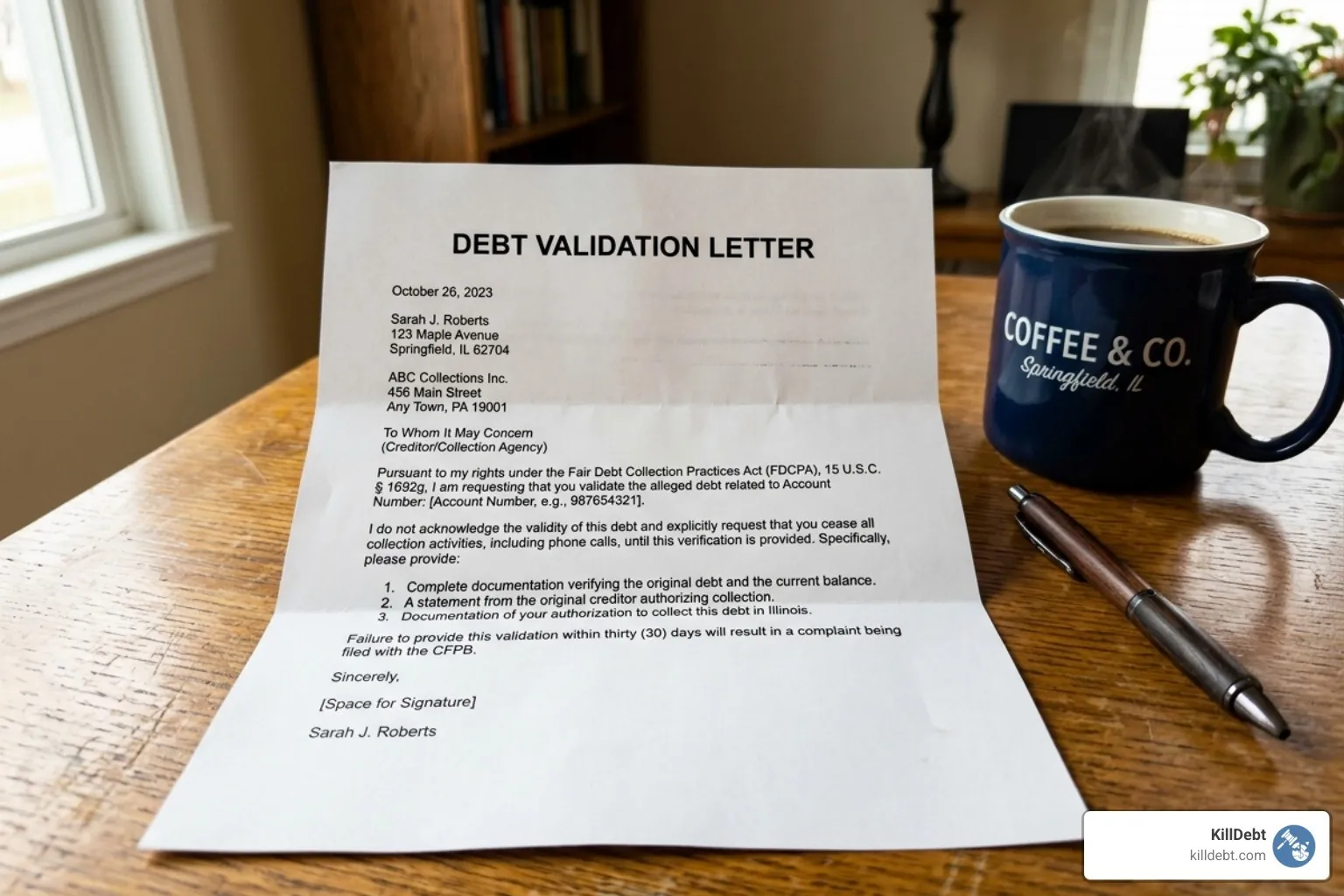
An example debt validation letter is a written request you send to a debt collector demanding they prove the debt is real, accurate, and legally theirs to collect. Here's what it does at a glance:
What a debt validation letter does:
If you just need a quick template, here's the core structure:
Getting a letter from a debt collector is stressful. You might not even recognize the debt. You're not alone — according to the Consumer Financial Protection Bureau (CFPB), 53% of consumers who receive debt collection letters don't believe they actually owe the debt.
That's more than half of all people contacted.
The problem is, most people don't know they have the right to demand proof before paying anything. Under federal law, you can put the burden of proof back on the collector — in writing — and they have to stop collection activity until they respond.
That's exactly what a debt validation letter does.
At its core, a debt validation letter is your shield. When a third-party collector contacts you, they are often working with data purchased for pennies on the dollar. This data is frequently incomplete, outdated, or flat-out wrong. By using an example debt validation letter, you are exercising your rights under the Fair Debt Collection Practices Act (FDCPA), specifically Section 809.
The FDCPA is a federal law designed to protect you from abusive, deceptive, and unfair debt collection practices. One of the most powerful tools this law gives us is the right to dispute a debt. When you send this letter, you shift the "burden of proof." Instead of you having to prove you don't owe the money, the collector must prove that you do.
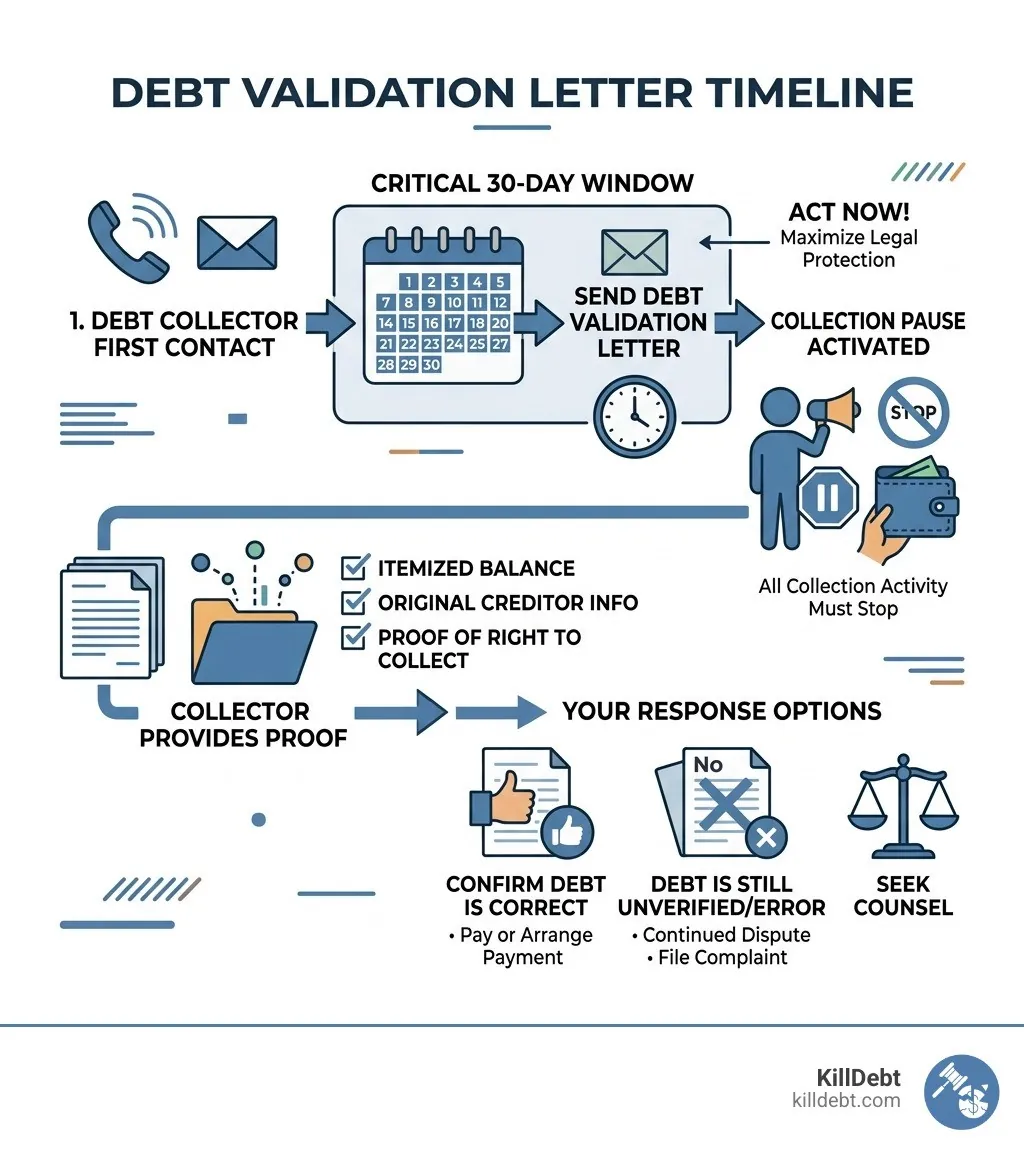
Why is this so important? Because the moment the collector receives your written dispute, they must cease all collection activities. This means the phone calls must stop, the letters must stop, and they cannot report the debt to credit bureaus as a "verified" account until they provide the proof you requested. As we discuss in our guide on Debt Validation Letters: Your First Line of Defense Against Collectors, this pause gives you the breathing room needed to evaluate the situation without being hounded.
If the collector cannot provide the required documentation—which happens more often than you’d think—they cannot legally continue to collect from you. You can find more technical details on what constitutes a valid request in this Sample Verification Letter from the NCLC Digital Library (opens in a new tab).
Writing this letter doesn't require a law degree, but it does require precision. You want to be firm, clear, and avoid saying anything that could be interpreted as admitting you owe the debt. We’ve seen collectors try to use a consumer's own words against them in court, so "I'm not sure if I owe this" is much safer than "I can't pay this right now."
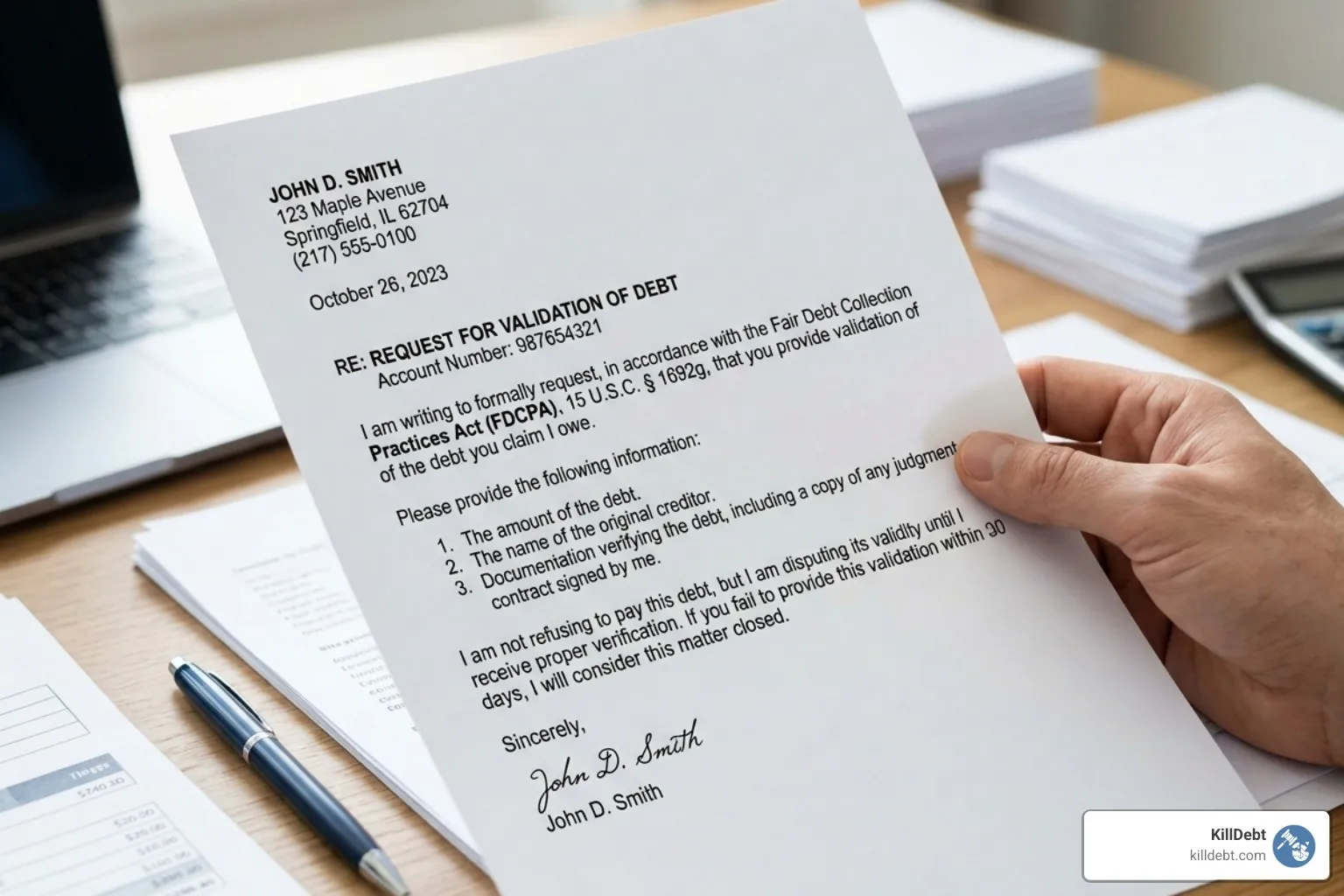
When drafting your letter, your goal is to make the collector work. You aren't just asking if the debt exists; you are asking for the "receipts."
In Michigan and Florida, where we focus our efforts, collectors must adhere strictly to these federal guidelines. If they are an out-of-state agency, you should also demand proof that they are licensed to collect debt in your specific state.
To ensure your letter carries legal weight, it must include several key elements:
If you are currently Struggling with Debt Collectors, getting these details is the first step toward taking back control.
Timing is everything. Federal law gives you a 30-day "validation period" starting from the day you receive the initial notice from the collector. If you send your letter within this window, your legal protections are at their peak. The collector must stop all activity until they validate.
If you miss the 30-day window, you can still send the letter, but the collector isn't legally required to stop collecting while they process it. However, it’s still worth sending to create a paper trail.
Crucial Tip: Use Certified Mail Never send a debt validation letter via standard mail. Always use USPS Certified Mail with a Return Receipt Requested.
Why? Because debt collectors have a "habit" of losing mail. If you end up in court, that green "return receipt" card with their signature on it is your "get out of jail free" card. It proves exactly when they received your dispute.
While people often use these terms interchangeably, there is a technical difference in debt defense:
| Feature | Debt Validation | Debt Verification |
|---|---|---|
| Source | Sent by the Consumer to the Collector | Sent by the Collector to the Consumer |
| Purpose | To demand proof of the debt's legitimacy | To provide the "proof" (often just a statement) |
| Legal Basis | FDCPA Section 809(b) | FDCPA Section 809(a) |
| Deadline | Within 30 days of initial contact | Within 5 days of initial contact (Notice) |
Once the collector receives your example debt validation letter, they have a few choices:
If the collector responds with inadequate validation—like just a printout of their own internal screen—that is often not enough to satisfy the law. If they continue to harrass you without providing real proof, they may be committing an FDCPA violation. You could be entitled to $1,000 in statutory damages, plus actual damages and attorney fees.
If you find yourself in a situation where the collector ignores your letter and moves straight to a lawsuit, don't panic. Check out our What to Do When Sued by a Debt Collector: Complete First Steps Guide for an immediate action plan.
Sending an example debt validation letter is the single most effective way to stand up for yourself when a debt collector comes knocking. It costs less than five dollars in postage, but it can save you thousands in illegitimate or unproven debts.
At KillDebt, we believe you shouldn't have to be a lawyer to defend your wallet. We provide a DIY legal defense system powered by ParkerGPT, our specialized AI. ParkerGPT isn't just a chatbot; it's trained on over 30 years of real-world court strategies from attorney Brian Parker. It analyzes your specific situation, identifies the collector's weaknesses, and helps you generate the documents you need to win.
We’ve even introduced the Court Tester, an AI courtroom simulation. You can upload your actual filings and "practice" your motion in front of an AI judge, with a private AI co-counsel whispering strategy only you can see. Whether you're sending your first validation letter or preparing for a day in court, we are here to provide the tools you need at a fraction of the cost of a traditional attorney.
Don't let debt collectors bully you into paying money they can't prove you owe. Take the first step today and visit KillDebt.com to arm yourself with the best defense technology available.

About the author
Brian Parker
I have over 30 years of experience defending consumers against debt collection lawsuits and have seen every tactic, threat, and pressure play that collectors use. Through KillDebt and ParkerGPT, I have systematized the proven defense strategies that actually work - so consumers can respond from a position of knowledge, not fear. My approach focuses on aggressive legal defense based on documented case success rather than false hope that leads to default judgments.