
News Break
Step-by-Step Guide to Why Sue for Old Debt
July 10, 2026
Blog / News Break
Learn how to write a credit debt validation letter that stops collectors, meets FDCPA deadlines, and protects you from lawsuits and wage garnishment.

A credit debt validation letter is one of the most powerful — and most underused — tools you have when a debt collector contacts you. Before you pay anything, pick up the phone, or panic, this one letter can legally force the collector to prove the debt is real, accurate, and actually yours.
Here's what a debt validation letter does for you, fast:
Over 300,000 debt collection complaints were filed with the CFPB in 2025 alone. Studies consistently show that a significant share of debts in collection contain errors — wrong amounts, already-paid balances, or debts belonging to someone else entirely.
You have 30 days from the collector's first contact to send this letter and trigger the strongest legal protections under the Fair Debt Collection Practices Act (FDCPA). Miss that window, and you lose critical leverage.
I'm Brian Parker, and for over 30 years I've defended consumers against debt collectors, debt buyers, and collection law firms in courtrooms across the country — including cases where a single well-written credit debt validation letter stopped a lawsuit cold. In this guide, I'll show you exactly how to write one that works.
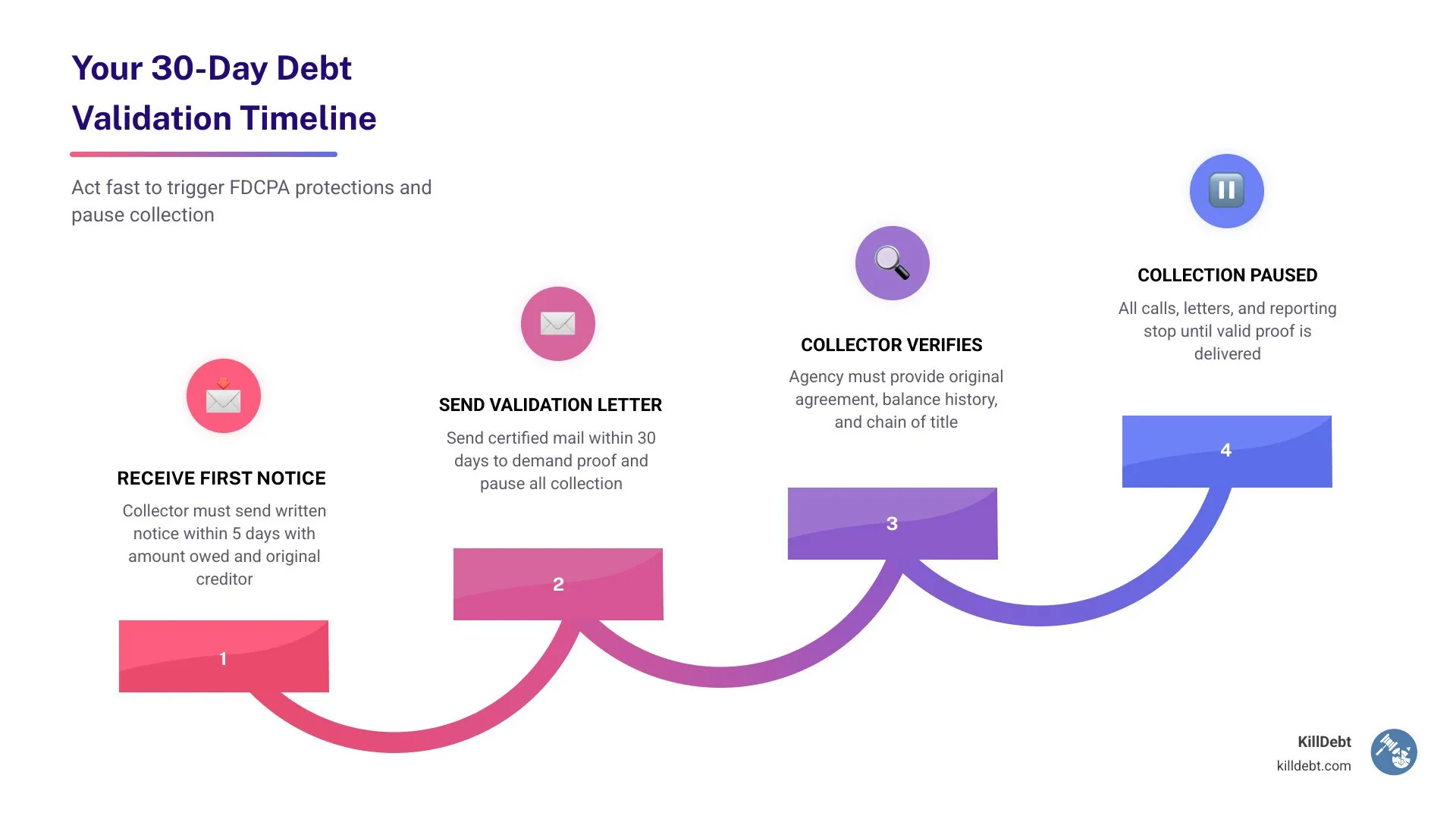
Under federal law, specifically FDCPA Section 809 and the CFPB’s Regulation F, you have the right to demand that a debt collector prove the debt they are hounding you for is actually yours. A credit debt validation letter is a formal written request sent to a collection agency demanding "competent evidence" of the alleged debt.
Think of it as shifting the burden of proof. In the United States, you aren't required to just take a collector's word for it. Because the debt collection industry is a massive $20 billion machine where debts are bought and sold for pennies on the dollar (often as little as 4% of face value), records frequently get lost, garbled, or attached to the wrong person.
By sending a Debt Validation Letter - Free Template & Guide [2026] (opens in a new tab), you are asserting your rights and telling the collector, "Show me the paperwork, or stop calling me." This is often your First Line of Defense Against Collectors because many agencies simply don't have the original contracts or itemized statements needed to back up their claims.
It is common to hear these terms used interchangeably, but there is a subtle legal distinction you should know:
If you send your written dispute within that magic 30-day window, the collector must cease all collection efforts until they mail you the verification. This includes stopping those annoying phone calls and pausing any credit reporting. For more on these nuances, check out How to Request Debt Validation from Debt Collectors (opens in a new tab).
As of May 2026, the CFPB rules are very strict about what a collector must tell you in their initial notice. They can't just send a vague postcard. The notice must include:
If a collector fails to provide these specifics, they may be in violation of federal law. You can find more detail on these requirements at the CFPB website (opens in a new tab).
In debt defense, the calendar is your best friend or your worst enemy. The law gives you a 30-day dispute period starting from the day you receive the initial validation notice.
If you send your credit debt validation letter within this timeframe, the collector is legally barred from continuing to collect until they provide the proof. This "legal pause" is a massive advantage. It gives you time to breathe, research the debt, and determine if the statute of limitations has expired. For a deeper dive into this process, see our guide on how to Dispute Invalid Debt Notice.
What happens if you wait 31 days? You don't lose all your rights, but you lose the most powerful ones.
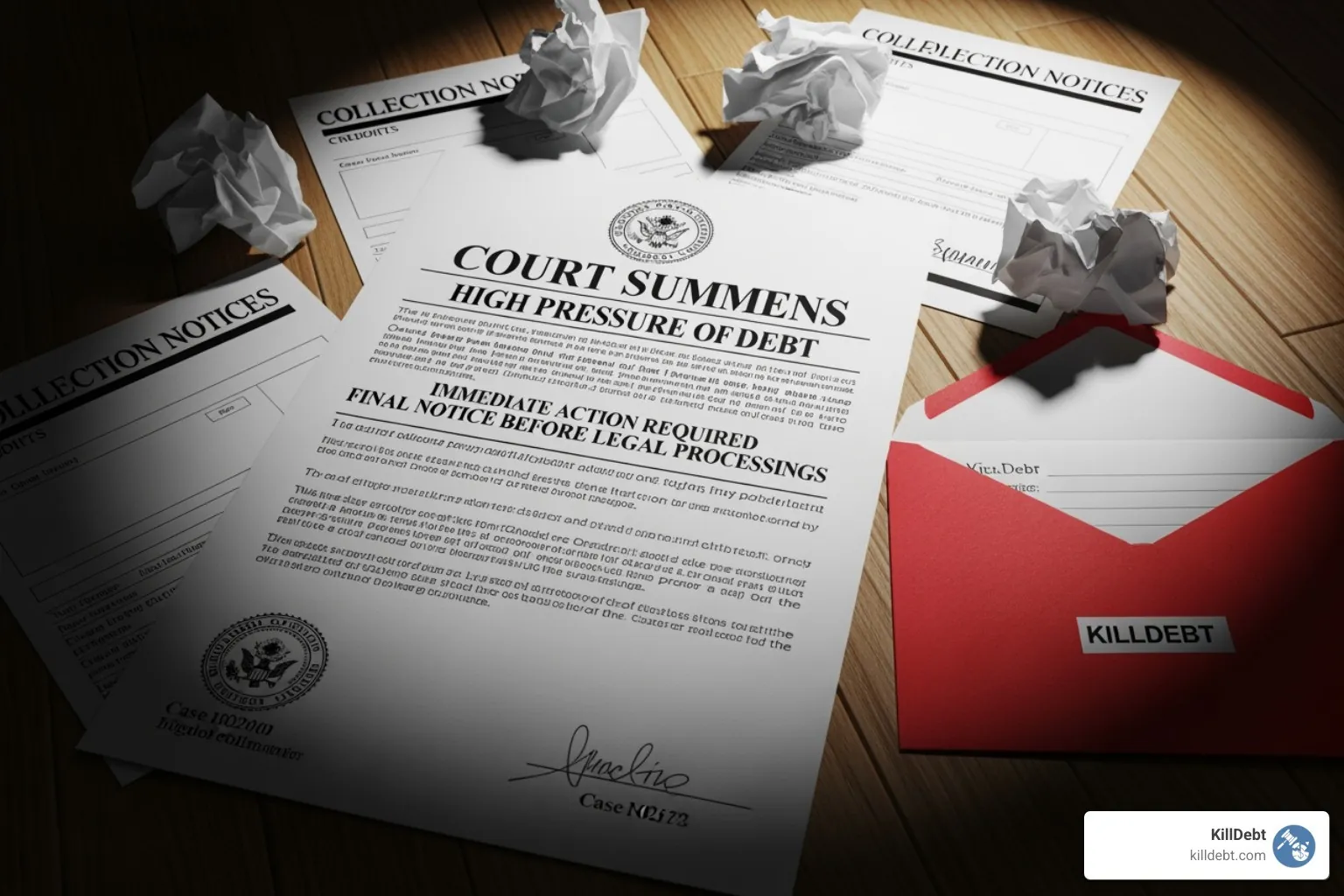
If you missed the 30-day window, don't despair. You can still send a validation request, but the collector isn't legally required to stop collection activity while they respond.
However, in Florida and Michigan, there are specific state protections to consider. For example, under Michigan Compiled Laws Section 339.918, collectors have specific obligations regarding how they communicate and verify debts. Always check if the debt is "time-barred." If the statute of limitations has passed, the collector can no longer successfully sue you for the money, though they might still try to trick you into making a small payment—which could "reset" the clock. For more on Michigan-specific rules, see MCL - Section 339.918 (opens in a new tab).
Drafting the letter doesn't require a law degree, but it does require precision. You want to be firm, formal, and clear. Avoid being overly emotional or sharing your life story. The goal is to create a professional record that would look good in front of a judge.
We recommend using a Debt Validation Letter Template to ensure you don't miss any legal citations.
The "Golden Rule" of Mailing: Always send your letter via USPS Certified Mail with Return Receipt Requested. This gives you a green card signed by the collector, proving they received your dispute. In a courtroom, this piece of paper is worth its weight in gold.
Don't just ask "Is this mine?" Demand specific evidence. A strong credit debt validation letter should ask for:
For a comprehensive list of what to include, see this Sample Request for Validation (opens in a new tab).
In our 30+ years of experience, we've seen consumers accidentally hand the win to the collector by making these mistakes:
Review an Example Debt Validation Letter to see the correct tone and structure.
Once that certified letter hits the collector's desk, the ball is in their court. Legally, they have three choices:
| Collector Response | Your Next Step |
|---|---|
| No Response | Keep your certified mail receipt. If they keep calling, they are violating the FDCPA. |
| Inadequate Proof | Send a follow-up letter stating the validation is insufficient. |
| Full Validation | Evaluate the debt. Is it yours? Is it within the statute of limitations? |
| Lawsuit Filed | You must file an Answer in court immediately. Do not ignore a summons. |
For more on navigating these scenarios, see our Letter of Debt Validation resource.
If a collector responds with just a computer printout of your name and an amount, that is usually not adequate validation. Judges today increasingly require more—like itemized accounting and proof of ownership.
If they fail to provide real proof but keep hounding you, you should:
Learn more about dealing with these bad-faith actors at Credit Repair Companies (opens in a new tab).
Validation is your best shield against "zombie debt"—debts that are too old to be collected or have already been paid. It also protects you from identity theft. If a collector can't provide a signed contract, there’s a good chance the debt is an error.
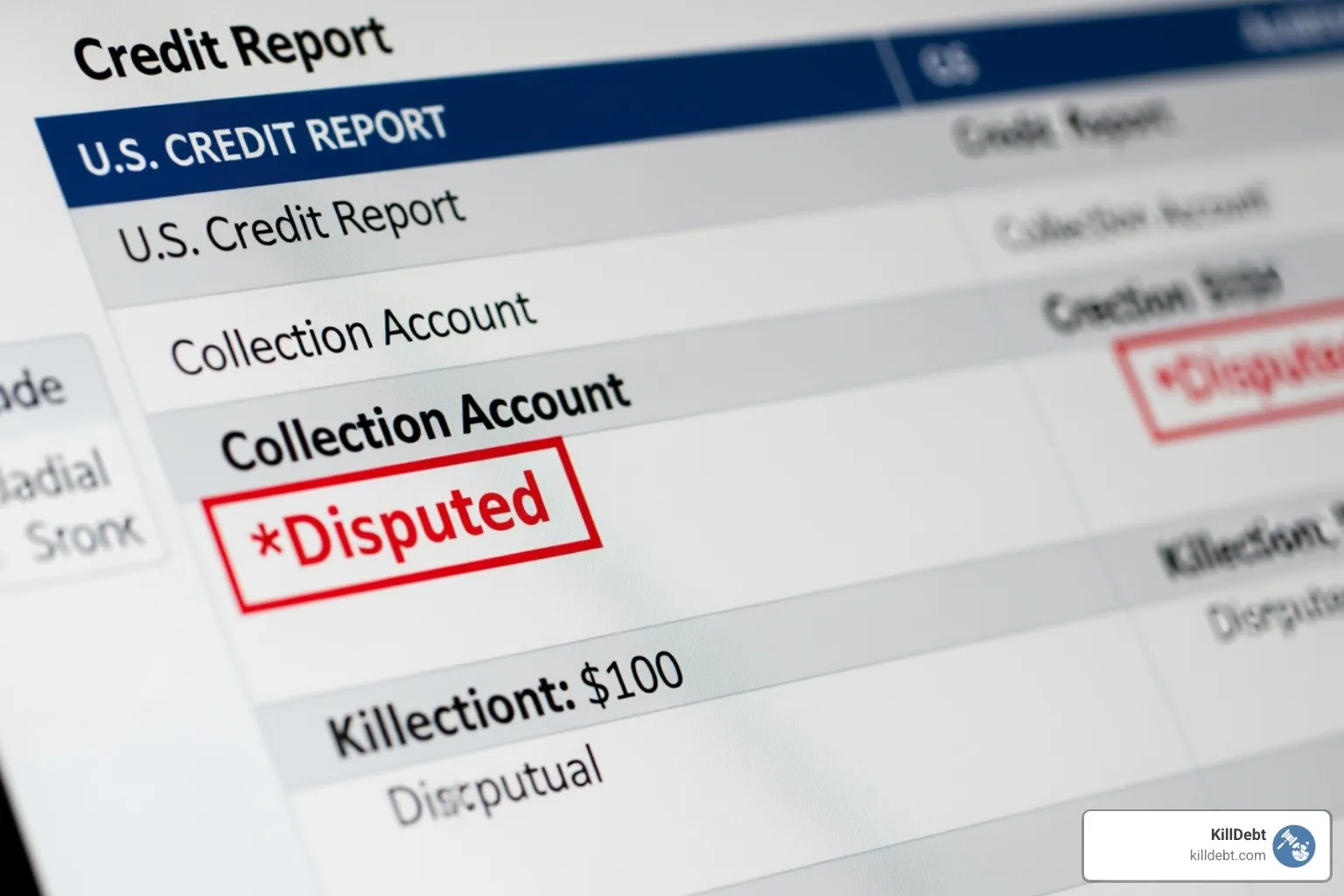
Always check your credit report after sending a dispute. The collector is required to mark the account as "disputed" with the credit bureaus. If they don't, that’s another legal violation you can use as leverage.
Dealing with debt collectors is stressful, but you don't have to do it alone or unarmed. The credit debt validation letter is your first step toward taking control. By demanding proof, you force the collector to play by the rules—rules that are designed to protect you.
At KillDebt, we’ve taken the 30+ years of experience from attorney Brian Parker and built it into ParkerGPT, a DIY legal defense system. Unlike generic templates, ParkerGPT analyzes your specific collection letters and lawsuit documents to identify the exact weaknesses in the collector's case.
If you’re worried about how to handle a collector in court, we’ve just rolled out our Court Tester. This AI courtroom simulation allows you to upload your actual filings and "practice" your motion in front of an AI judge and opposing counsel. It’s like having a private co-counsel whispering strategy in your ear, ensuring you're ready for the real thing.
Don't let collectors bully you into paying money you may not even owe. Start with a validation letter, and if they push back, use the power of AI to fight back.
Visit us at https://killdebt.com/ to start your defense today.
Get started with KillDebt pricing
Important Legal Disclaimer
This educational content is based on general legal principles and my experience in debt collection defense. It is provided for informational purposes only and does not constitute legal advice. Laws vary by state and by local court. For specific legal advice, consult a qualified attorney licensed in your jurisdiction. No attorney-client relationship is created by reading this guide.
Critical Multi-State Variations: FDCPA applies uniformly at the federal level, but state consumer protection laws may provide additional rights and remedies. Statute of limitations periods vary significantly by state and debt type. What constitutes sufficient debt validation varies in practice across jurisdictions. State-specific rules on call frequency, written notice requirements, and permissible collector conduct may differ from federal minimums.

About the author
Brian Parker
I have over 30 years of experience defending consumers against debt collection lawsuits and have seen every tactic, threat, and pressure play that collectors use. Through KillDebt and ParkerGPT, I have systematized the proven defense strategies that actually work - so consumers can respond from a position of knowledge, not fear. My approach focuses on aggressive legal defense based on documented case success rather than false hope that leads to default judgments.