News Break
How to Vacate Judgment: Because Everyone Deserves a Do-Over
June 1, 2026
Blog / News Break
Learn how to answer summons from debt collector: beat default judgment, file your answer, use defenses & avoid wage garnishment.

When you are served with legal papers, it usually comes in a two-part package: the Summons and the Complaint. Understanding the difference between summons complaint in debt collection lawsuit is your first step toward a solid defense.
The Summons is the formal notice from the court. It tells you that you are being sued and, most importantly, it provides the deadline for your response. It will list the Court Division (such as a County or Circuit court) and a unique Case Number. Think of the Summons as the "Who, Where, and When."
The Complaint (sometimes called a Petition) is the "Why." It contains a series of numbered paragraphs called Allegations. These are the claims the Plaintiff (the debt collector) is making against you, the Defendant. They might allege that you opened an account on a certain date, defaulted on a specific amount, and that they now own the legal right to collect it.
As noted in How to answer a debt collection summons: A practical rights guide (opens in a new tab), you must treat every numbered paragraph as a separate claim that requires a response. If you don't address a paragraph, the court may assume you agree with it.
In debt litigation, silence is a white flag. Statistics show that between 70% and 90% of people sued for debt don't respond, and as a result, they lose automatically by Default Judgment.
A default judgment is essentially a "blank check" from the judge to the debt collector. Once they have it, they don't need your permission to take your money. In Florida and Michigan, a judgment creditor can pursue:
The time to respond debt collection lawsuit is strictly enforced. In Florida, you typically have 20 calendar days from the day you were served to file your Answer. In Michigan, the deadline is generally 21 days if you were served in person, or 28 days if you were served by mail or outside the state.
Missing these deadlines by even one day can be the difference between fighting the debt and having your bank account emptied.
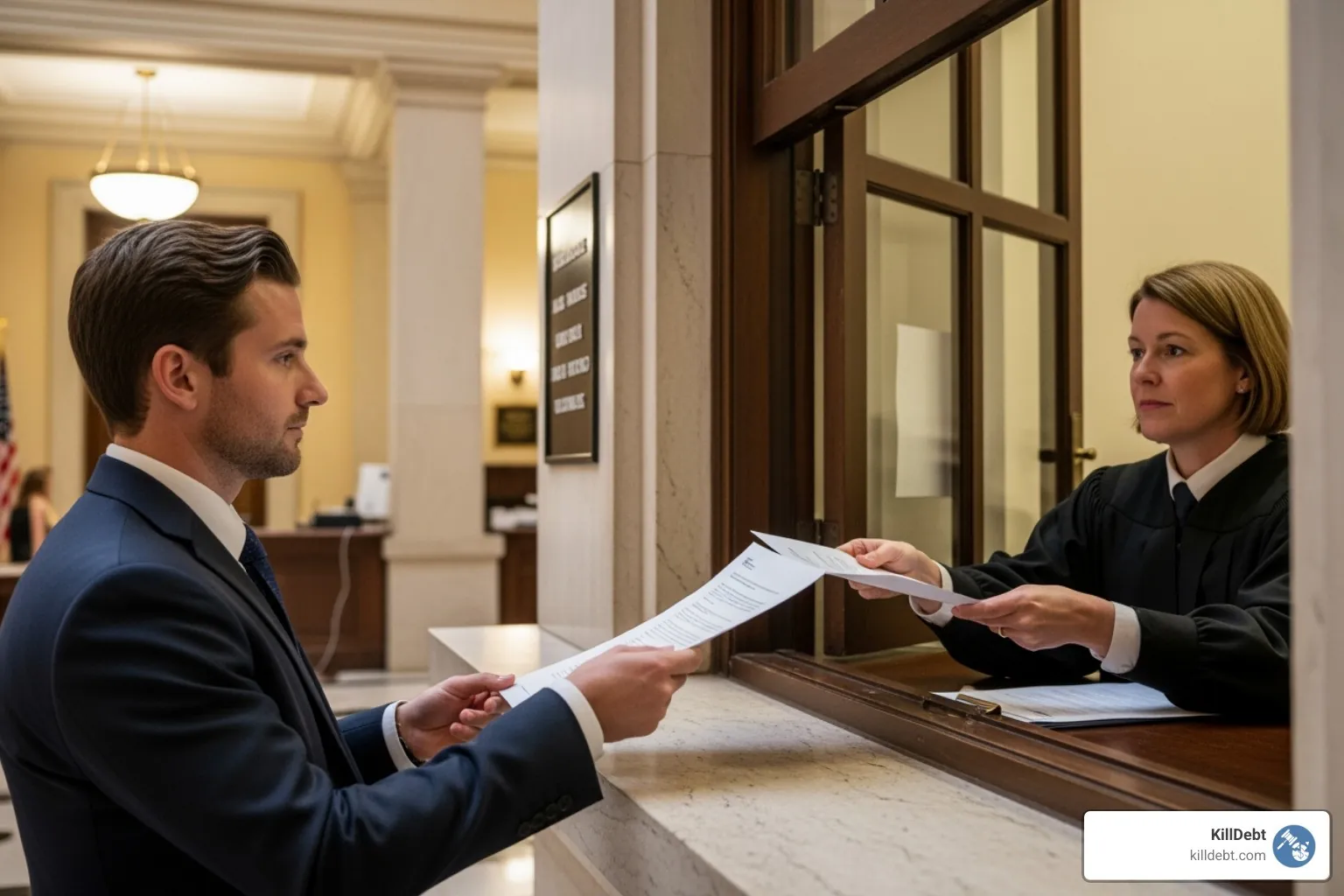
Learning how to answer a debt summons isn't about writing a long, emotional story. It’s a formal procedural step. You are essentially telling the court, "I'm here, I dispute these claims, and I demand the Plaintiff prove their case."
Start your document by copying the "Caption" from the Summons. This includes the court name, the parties' names, and the case number. This ensures the clerk files it in the right folder.
For every numbered paragraph in the Complaint, you must provide one of three responses:
You can find a sample answer to debt collection lawsuit on our blog to see exactly how this looks on paper.
Once your Answer is drafted and signed (use a "wet signature" with a pen!), you must:
While the logic is the same across the country, the paperwork varies.
If you cannot afford the filing fee: Don't let a lack of cash stop you from responding. You can file a motion for a fee waiver (often called In Forma Pauperis status). If the court approves it, you can file your Answer for free.
We see the same errors over and over again. Avoid these to keep your defense alive:
This is where you go on the offensive. An Affirmative Defense is a reason why, even if the debt was originally yours, the collector should still lose the case.
| Valid Legal Defense | Invalid Personal Reason |
|---|---|
| Statute of Limitations: The debt is too old to sue over. | "I lost my job and can't afford it." |
| Lack of Standing: The collector can't prove they own the debt. | "I think the interest rate is unfair." |
| Identity Theft: You never opened the account. | "I'm going through a divorce." |
| Prior Payment: You already paid this debt. | "The collector was mean to me on the phone." |

Once you file your Answer, the "Default" threat is gone. You've officially entered the game. So, what happens after summons?
The case enters the Discovery Phase. This is a formal information exchange. You can send the collector a Request for Production, demanding they show you the original signed contract and a full statement of account. You might also receive Interrogatories (written questions) from them.
According to our debt collection lawsuit timeline what happens next after youre served, this is often when debt collectors give up. If they realize you are going to make them work for it—and they don't have the paperwork—they may dismiss the case.
If they do have the paperwork, filing an Answer gives you leverage to negotiate a settlement. Collectors are much more likely to accept 40% or 50% of the debt if they know a trial will cost them thousands in legal fees. Our fight debt collection lawsuit complete guide explains how to ensure any settlement results in a Dismissal with Prejudice, meaning they can never sue you for that debt again.
Receiving a summons is scary, but it’s also an opportunity. It’s the moment you stop being a victim of debt collection and start becoming a litigant. By learning how to answer a summons from a debt collector, you’ve already done more than 70% of people in your shoes.
At KillDebt, we believe no one should lose their livelihood just because they couldn't afford a lawyer. That’s why we created ParkerGPT. Our AI was trained by Brian Parker, an attorney with over 30 years of experience specifically in debt defense.
When you upload your summons to KillDebt, ParkerGPT doesn’t just give you a template; it analyzes the collector's claims, finds the specific legal holes in their story, and generates a professional, court-ready Answer tailored to Florida or Michigan law.
And if you’re nervous about going to court? Try our new Court Tester. It’s an AI courtroom simulation where you can practice your arguments against an AI judge and opposing counsel. Your private AI co-counsel will even whisper strategy tips to you, so you know exactly what to say when it counts.
Don't let a debt collector take your hard-earned money by default. Stop your debt lawsuit today and fight back with the power of AI.

About the author
Brian Parker
I have over 30 years of experience defending consumers against debt collection lawsuits and have seen every tactic, threat, and pressure play that collectors use. Through KillDebt and ParkerGPT, I have systematized the proven defense strategies that actually work - so consumers can respond from a position of knowledge, not fear. My approach focuses on aggressive legal defense based on documented case success rather than false hope that leads to default judgments.