News Break
How to Beat the Lawsuit Deadline
July 15, 2026
Blog / News Break
Master the Statute of limitations Florida with this guide to civil and criminal deadlines, debt defense, and key legal timelines.

The statute of limitations Florida sets strict deadlines for filing lawsuits — and if you're facing a debt collection lawsuit or a court summons, knowing these deadlines could be your strongest defense.
Quick Answer: Key Florida Statute of Limitations Deadlines
| Claim Type | Time Limit | Clock Starts |
|---|---|---|
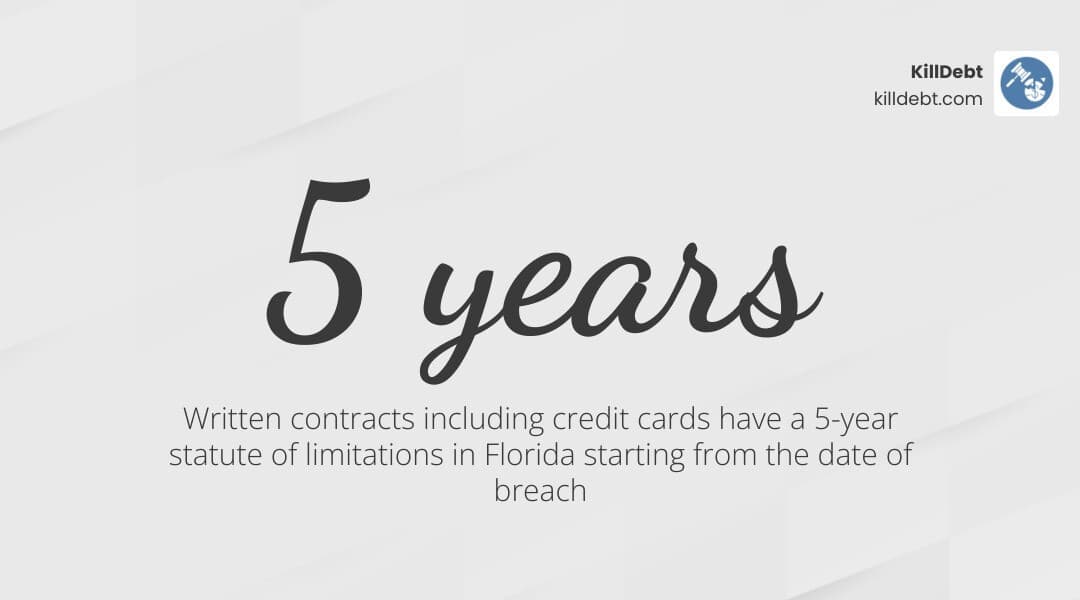
| Written contracts (incl. credit cards) | 5 years | Date of breach |
| Oral contracts / fraud | 4 years | Date of breach or discovery |
| Medical debt (third-party collection) | 3 years | Date of referral |
| Personal injury / negligence | 2 years | Date of incident |
| Wrongful death | 2 years | Date of death |
| Medical malpractice | 2 years (4-year max) | Date of discovery |
| Florida court judgments | 20 years | Date of judgment |
| First-degree felony (criminal) | 4 years | Date of offense |
| Most other felonies (criminal) | 3 years | Date of offense |
| First-degree misdemeanor (criminal) | 2 years | Date of offense |
If you've been served with a debt lawsuit, the debt collector must have filed within the applicable window — often 5 years for credit cards. If they missed that deadline, you may be able to get the case dismissed entirely.
These deadlines aren't just legal trivia. Miss one and you lose your right to sue. Ignore one being used against you and you could face a default judgment — even on a debt that's legally too old to collect.
Florida law governs these limits primarily through two statutes: Florida Statutes § 95.11 (civil actions) and Florida Statutes § 775.15 (criminal prosecutions). Both set firm deadlines, but both also have important exceptions that can extend — or reset — the clock in ways that surprise people.
I'm Brian Parker, and I've spent over 30 years in courtrooms fighting debt collectors, debt buyers, and collection law firms — including cases where the entire defense came down to the statute of limitations in Florida. At KillDebt, I've taken that experience and built tools that let you use the same strategies I've used for thousands of consumers.

When we talk about civil lawsuits, we are usually looking at money—who owes it, who lost it, and who has to pay for it. The statute of limitations Florida exists to ensure that legal disputes are resolved while evidence is still fresh and witnesses can actually remember what happened. It provides a sense of "repose," meaning after a certain amount of time, you don't have to look over your shoulder wondering if someone will sue you for a decades-old mistake.
Most civil deadlines are codified in Florida Statutes § 95.11 (opens in a new tab). This statute acts as the rulebook for how long a person or company has to initiate a lawsuit. If they wait too long, the law says they’ve essentially sat on their rights, and the court will likely bar the claim.
For those of us dealing with contracts, the distinction between "written" and "oral" is huge. Under Florida law:
In our Debt Lawsuit Defense Guide, we emphasize that identifying the type of contract is the first step in calculating your deadline.
If you are reading this because a debt collector is breathing down your neck, pay close attention. For most consumer debts—including credit cards, auto loans, and personal loans—the statute of limitations Florida is 5 years.
However, there is a specific rule for medical debt that catches many people off guard. As of recent updates to Florida law, an action to collect medical debt must be commenced within 3 years if the debt has been referred to a third party for collection. This is a shorter window than the standard contract limit, providing extra protection for patients.
Before you pay a dime on an old debt, we recommend sending a Letter of Debt Validation. Why? Because collectors often buy "zombie debt" that is past the statute of limitations. If you've already been served, check out our guide on what to do if Have You Been Sued by a Debt Collector to see if the "too old to sue" defense applies to you.
Florida’s legal landscape shifted significantly in March 2023. Previously, you had four years to file a negligence or personal injury claim (like a car accident or slip and fall). That has changed.
The current statute of limitations Florida for negligence is now only 2 years. This major reduction means victims must act much faster to secure their rights. Other tort-related deadlines include:
You can find the full list of these time limits in the Statutes on Limitations of Actions (opens in a new tab).

Knowing the number of years isn't enough; you have to know when to start counting. In legal terms, this is called "accrual."
In most cases, the clock starts on the date of the incident or the date of the breach. For a car accident, it’s the day of the crash. For a credit card debt, it’s usually the date you missed your last payment or the date the account was "charged off."
However, there is the "Discovery Rule." This applies when an injury isn't immediately obvious (like a surgical error discovered months later). In these cases, the clock starts when you knew—or reasonably should have known—about the harm.
If you’ve received a summons, the first thing we look at is whether the "accrual date" is more than five years ago. If it is, the collector might be out of luck. Learn more about How to Answer a Debt Summons and the strict Time to Respond Debt Collection Lawsuit requirements (usually 20 days in Florida!).
The law isn't always a straight line. Sometimes the clock stops (this is called "tolling") or even resets entirely. Florida Statute § 95.051 (opens in a new tab) lists the very specific reasons why a clock might pause:
This is why we tell people: don't make a "good faith" $20 payment on a 6-year-old debt! You might just be handing the collector a fresh 5-year window to sue you. Instead, use Debt Validation Letters: Your First Line of Defense Against Collectors to verify the age of the debt first.
While KillDebt focuses on civil debt defense, it's important to understand the broader context of the statute of limitations Florida. In criminal law, these limits exist to prevent the government from hanging a charge over someone's head forever—unless the crime is severe.
Under Florida Statute § 775.15 (opens in a new tab), the time limits depend on the severity of the crime:
There are also "DNA extensions." If evidence contains DNA that can identify a suspect, the window for prosecution can be extended. Just like in civil cases, the "prosecution commencement" (filing the charge) must happen within these windows, or the defendant can move to have the charges dismissed.
Here is the most important thing we can tell you: The court will not dismiss an expired debt case for you.
If a debt collector sues you for a credit card debt that is seven years old, the judge won't look at the file and say, "Oh, this is too old, case dismissed." Instead, the statute of limitations Florida is what we call an affirmative defense. This means you (the defendant) must bring it up in your "Answer" to the lawsuit.
If you don't raise this defense in your initial response, you might "waive" it, meaning you lose the right to use it later. This is how many people end up with judgments for debts they shouldn't have to pay. If you ignore the summons, you risk a default judgment, which allows the collector to garnish your wages or seize bank accounts.
If you're wondering What to Do When Sued by a Debt Collector: Complete First Steps Guide, your first priority is the 20-day deadline. We often get asked, "Can a Debt Collection Agency Take You to Court?" The answer is yes, but only if they follow the rules. Our Debt Collector Suing Me Advice is simple: check the dates, file your Answer, and assert your rights.
There is one massive exception to the 5-year debt rule: Judgments.
If a creditor actually wins a lawsuit against you and gets a final judgment, the statute of limitations Florida for that judgment is 20 years.
This is why it is so critical to prevent the judgment from happening in the first place. Once that 20-year clock starts, it’s much harder to stop. Understanding the Debt Collection Lawsuit Timeline: What Happens Next After You're Served can help you intercept the process before it reaches this stage.
Navigating the statute of limitations Florida can feel like walking through a minefield. One wrong payment or one missed deadline can be the difference between financial freedom and twenty years of wage garnishment.
But you don't have to do this alone. At KillDebt, we provide a DIY legal defense system powered by ParkerGPT. This isn't just a chatbot; it’s an AI trained on the real-world court strategies I’ve developed over 30 years as an attorney.
We can help you:
Don't let an old debt haunt your future. Whether you're in Florida or Michigan, we give you the tools to fight back at a fraction of the cost of a traditional lawyer.
Take the first step in your defense today at KillDebt.com.
Get started with KillDebt pricing
Important Legal Disclaimer
This educational content is based on general legal principles and my experience in debt collection defense. It is provided for informational purposes only and does not constitute legal advice. Laws vary by state and by local court. For specific legal advice, consult a qualified attorney licensed in your jurisdiction. No attorney-client relationship is created by reading this guide.
Critical Multi-State Variations: FDCPA applies uniformly at the federal level, but state consumer protection laws may provide additional rights and remedies. Statute of limitations periods vary significantly by state and debt type. What constitutes sufficient debt validation varies in practice across jurisdictions. State-specific rules on call frequency, written notice requirements, and permissible collector conduct may differ from federal minimums.

About the author
Brian Parker
I have over 30 years of experience defending consumers against debt collection lawsuits and have seen every tactic, threat, and pressure play that collectors use. Through KillDebt and ParkerGPT, I have systematized the proven defense strategies that actually work - so consumers can respond from a position of knowledge, not fear. My approach focuses on aggressive legal defense based on documented case success rather than false hope that leads to default judgments.