
News Break
Predicting Debt Lawsuit Outcomes and What the Data Says About Your Case
April 18, 2026
Blog / News Break
Master legal letters for debt collection: FDCPA tips, templates, validation, cease & desist, and lawsuit defenses.
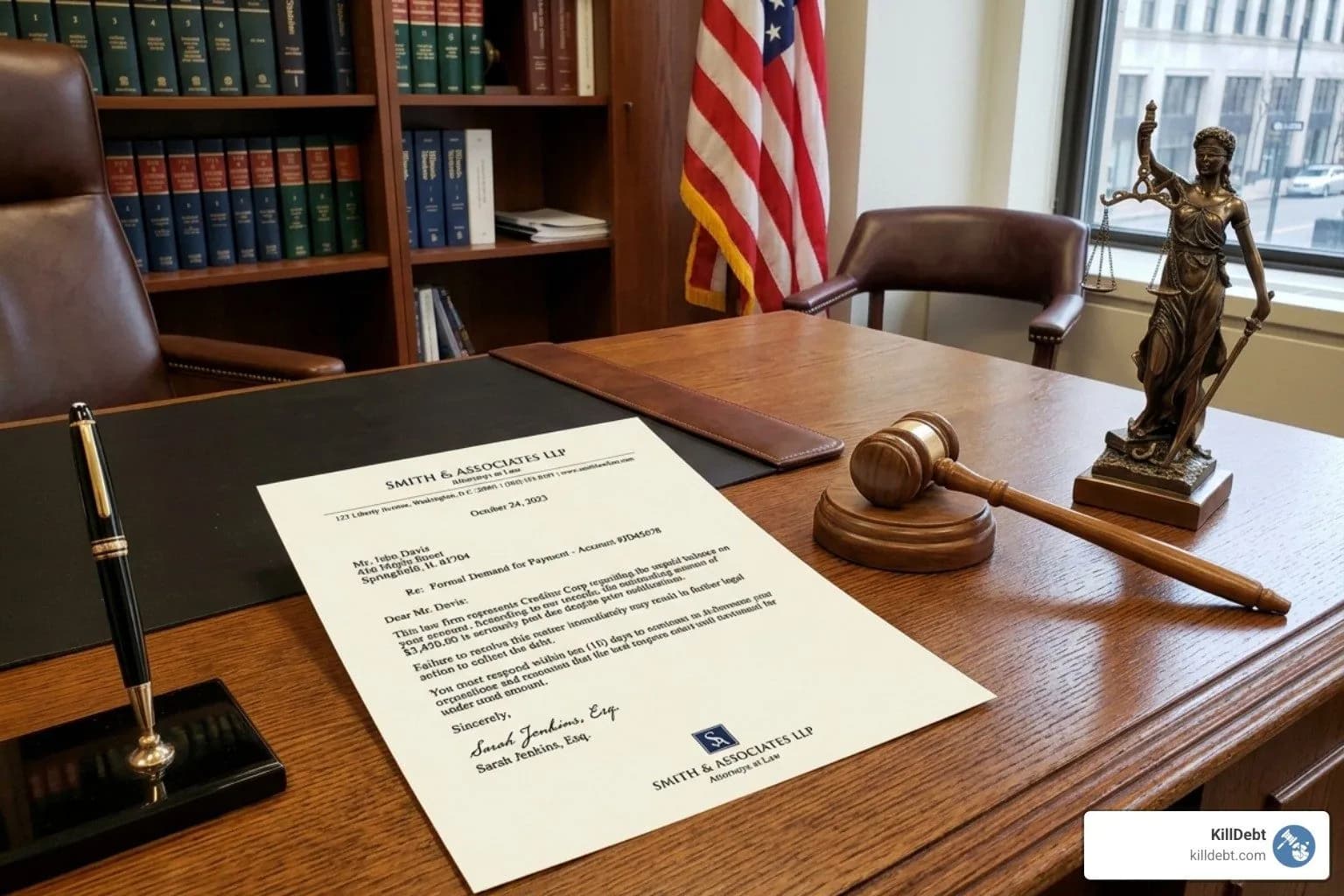
Legal letters for debt collection are formal written notices used to demand payment, dispute a debt, or protect your rights under federal law.
Whether you're a creditor trying to recover money or a consumer facing a collector, the right letter — sent the right way — can change everything.
Here's a quick overview of the most common types:
| Letter Type | Who Sends It | Purpose |
|---|---|---|
| Demand Letter | Creditor / Collector | Request payment before legal action |
| Debt Validation Letter | Consumer | Force collector to prove the debt is valid |
| Cease and Desist Letter | Consumer | Stop all collector contact |
| Dispute Letter | Consumer | Challenge the debt amount or ownership |
| Settlement Offer Letter | Either party | Negotiate a reduced payoff |
Debt collection is stressful. Collectors call at inconvenient times, send threatening notices, and sometimes pursue debts that aren't even valid. According to FTC data, nearly half of all complaints about debt collectors involve attempts to collect debts that aren't actually owed or have the wrong amount.
The good news? A single well-written letter can stop harassment, trigger legal protections, or open the door to a settlement — often without a lawyer.
But most people don't know where to start. They're not sure which letter to send, what to include, or what happens next. That confusion can be costly. Ignoring a collector or sending the wrong letter at the wrong time can lead to a lawsuit, a default judgment, or even wage garnishment.
This guide covers everything — templates, legal requirements, state-specific rules, and what to do if a letter doesn't work.
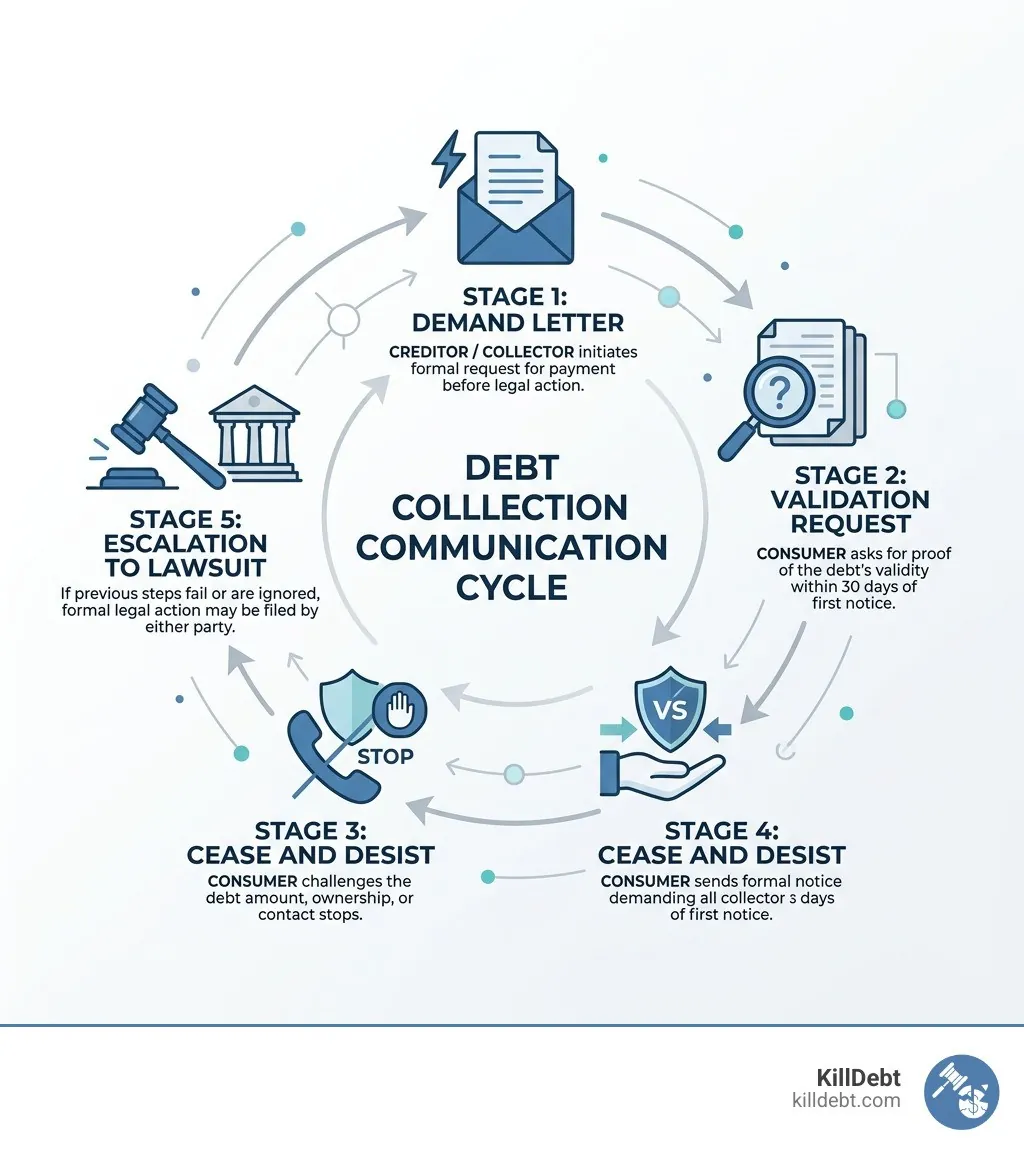
When we talk about legal letters for debt collection, we are referring to the formal paper trail that defines the relationship between a person who owes money (the debtor) and the person or company trying to collect it (the creditor or collector). These letters aren't just polite reminders; they are legal tools that carry weight in a courtroom.
A formal demand or debt notice is typically the first step in the collection process. For a creditor, it’s a way to signal that they are serious about a delinquency before spending thousands on a lawsuit. For a consumer, receiving one of these letters is the "starting gun" for their legal rights.
It is vital to understand What is a Debt Collector Under the FDCPA? Your Rights Explained because the rules change depending on who is sending the letter. If you are Struggling with Debt Collectors, knowing when to use a specific letter can be the difference between a resolved account and a frozen bank account.
Generally, these letters should be used when:
The Fair Debt Collection Practices Act (FDCPA) is the "rulebook" for third-party debt collectors. If a collector sends you legal letters for debt collection, they must follow strict federal guidelines. For a reliable overview of the law itself, you can also review the Federal Trade Commission's debt collection guidance (opens in a new tab).
One of the most important requirements is the 30-day validation window. Within five days of their first contact with you, a collector must send a written notice containing:
This is often called the "Validation Notice." It must also include the "Mini-Miranda" disclosure: "This is a communication from a debt collector. This is an attempt to collect a debt and any information obtained will be used for that purpose."
Sending Debt Validation Letters: Your First Line of Defense Against Collectors during this 30-day window is incredibly powerful. Once you send a written dispute, the collector must stop all collection efforts until they provide you with proof of the debt. If they keep calling or writing before sending that proof, they are violating federal law, and you might be able to sue them for up to $1,000 in statutory damages.
Whether you are drafting a demand for payment or a response to one, certain elements must be included to ensure the letter is legally effective. We recommend keeping these letters professional, direct, and factual. Avoid emotional language or threats you don't intend to carry out.
For a Creditor's Demand Letter:
For a Consumer's Response Letter:
Using a professional template can help ensure you don't miss these technical details. Similarly, reviewing a standard demand letter example can provide a roadmap for the tone and structure required to get results.
Receiving a collection notice can feel like an attack, but your response is your shield. You have several options depending on your situation.

The most common response is the Debt Validation Letter. This forces the collector to prove they actually have the right to collect from you. This is especially important because Why Debt Collectors Buy Old Debts is often because they buy them for pennies on the dollar (sometimes as low as 4% of the value) and may not have the original paperwork to prove the debt in court.
Other types of responses include:
For those in Michigan, there are resources tailored to common collection issues that can help you draft your response.
While the FDCPA is a federal law that applies everywhere, many states have their own additional protections.
| State | Key Protection | Unique Requirement |
|---|---|---|
| Michigan | Michigan Regulation of Collection Practices Act | Strict licensing for agencies |
| Florida | Florida Consumer Collection Practices Act (FCCPA) | Prohibits "harassing" communication even by original creditors |
| Texas | Texas Debt Collection Act | Prohibits "fraudulent" or "deceptive" threats |
You don't need to be a lawyer to write an effective letter, but you do need to be precise. Using a debt collector response template is a great start, but customization is key.
Tips for Customizing:
A professional collection letter template can help you draft a document in minutes.
We see people make the same mistakes over and over when dealing with legal letters for debt collection. These mistakes can turn a winnable case into a guaranteed loss.
Understanding Who is Suing Me? Original Creditor vs. Debt Buyer Explained is crucial here. Debt buyers often have much less documentation than original creditors. If you know Credit Card Debt Collection: How Banks Sell Your Account, you can better challenge their right to sue you.
Sometimes, despite your best efforts with legal letters for debt collection, the collector decides to sue. This usually happens if the debt is large enough to justify the legal fees.
If you receive a summons and complaint, do not panic, but do not wait. You must file a written "Answer" with the court, usually within 20 to 30 days. If you don't, the collector wins by default. This allows them to get a judgment, which can lead to:
Check out our What to Do When Sued by a Debt Collector: Complete First Steps Guide for a roadmap on how to handle the court process. You should also find out Can Debt Collectors Take My Wages and Bank Account? based on the laws in Michigan or Florida.
If the case goes to court, your letters become evidence. This is why we emphasize being professional. If you sent a validation request and the collector ignored it but sued you anyway, that is a powerful defense.
One of the most effective tools in a debt lawsuit is the Counter-Affidavit. In many states, including Michigan, if a collector files an "Affidavit of Account" (a sworn statement saying you owe the money), you must file a Key to Strong Answer in a Collection Lawsuit: Solid Counter-Affidavit to challenge it.
Without a Filing a Counter-Affidavit When Answering a Debt Collection Lawsuit, the judge might accept the collector's word as fact. By filing one, you force the collector to bring actual evidence—like the original signed contract—to court. Since many debt buyers don't have this, it often leads to the case being dismissed.
Navigating legal letters for debt collection doesn't have to be a headache. Whether you are sending a demand for payment or defending yourself against a junk debt buyer, the key is to be proactive, documented, and professional.
At KillDebt, we believe that everyone deserves a fair fight. That’s why we created a DIY legal defense system powered by ParkerGPT. This isn't just a generic chatbot; it's an AI trained on consumer debt law and real-world strategies developed over 30 years by attorney Brian Parker.
If you’re facing a lawsuit, our Court Tester tool can be a game-changer. It’s an AI courtroom simulation where you can upload your actual filings and "practice" your motion in front of an AI judge. You'll face AI opposing counsel while a private AI co-counsel whispers strategy in your ear. It’s the ultimate way to build confidence before you ever step foot in a courtroom.
You might be wondering, Do I Need a Lawyer for a Debt Collection Lawsuit? While a lawyer can be helpful, they are also expensive. For many, a DIY approach backed by powerful AI tools is the most effective and affordable way to get a case dismissed or settled for pennies on the dollar.
Ready to take control of your debt? Visit us at https://killdebt.com/ to see how ParkerGPT can help you turn the tables on debt collectors today.

About the author
Brian Parker
I have over 30 years of experience defending consumers against debt collection lawsuits and have seen every tactic, threat, and pressure play that collectors use. Through KillDebt and ParkerGPT, I have systematized the proven defense strategies that actually work - so consumers can respond from a position of knowledge, not fear. My approach focuses on aggressive legal defense based on documented case success rather than false hope that leads to default judgments.