
News Break
Sued for a Debt? Here's Exactly What to Do in the First 7 Days
May 12, 2026
Blog / News Break
Stop debt collector harassment now: Send a cease and desist creditor letter to ban calls under FDCPA. Free template & guide inside!

Sending a cease and desist creditor letter is one of the fastest, most powerful moves you can make to stop debt collector harassment — and it costs less than a cup of coffee.
Here's the quick answer:
If you're getting calls at work, late at night, or multiple times a day, you are not powerless. The law is on your side — you just need to use it.
Debt collectors count on you not knowing your rights. A single, well-written letter can stop the harassment cold and put you in a much stronger legal position if things escalate.
I'm Brian Parker, and for over 30 years I've fought creditors, debt buyers, and collection law firms in courtrooms across the country — I've used the cease and desist creditor letter as a frontline tool to protect thousands of consumers from relentless harassment. At KillDebt, I've built everything I know into tools and guides so you can do the same, without needing to hire an expensive attorney.
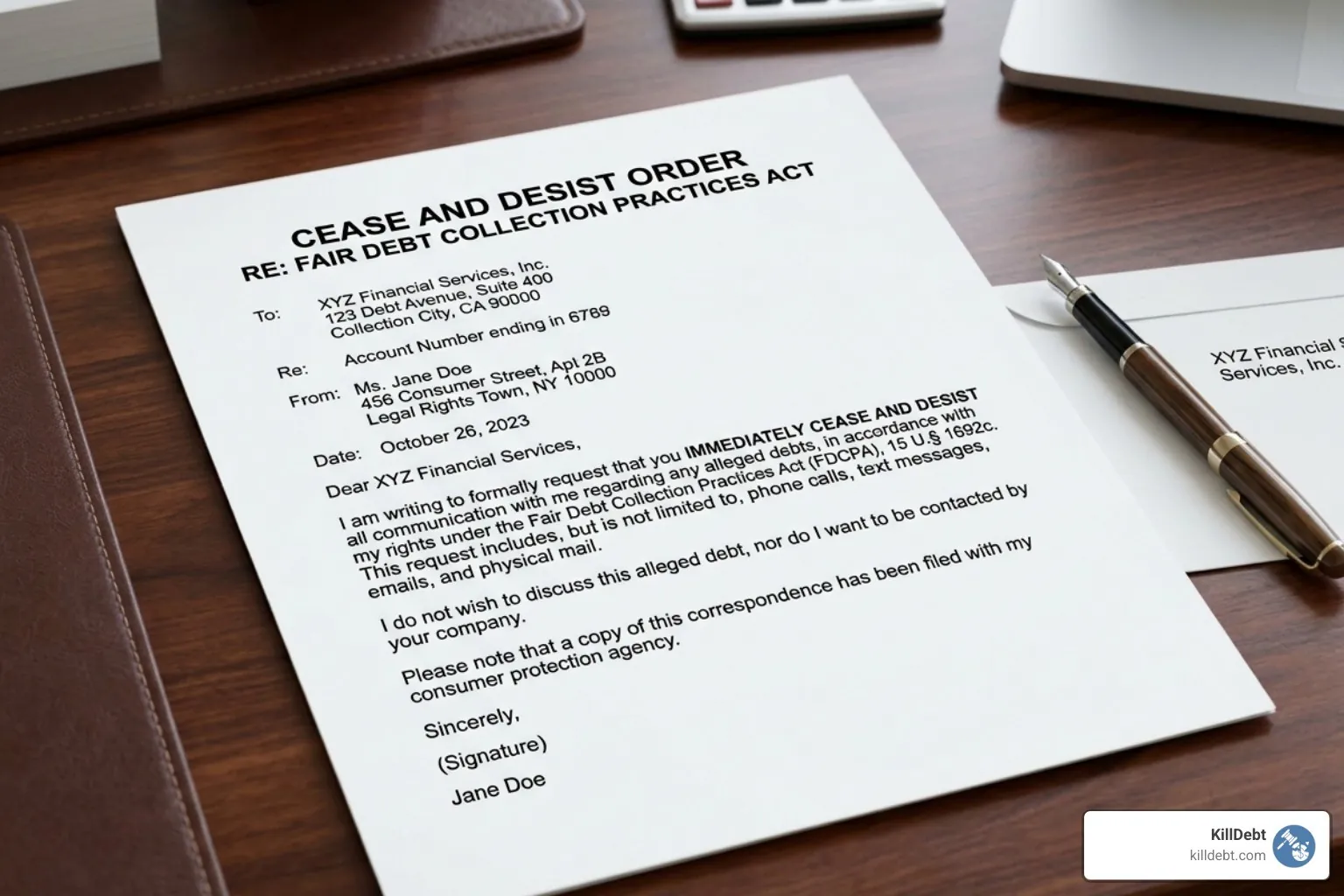
A cease and desist creditor letter is your formal "no-contact" order. It is backed by federal law, specifically the Fair Debt Collection Practices Act (FDCPA), codified at 15 U.S.C. § 1692c(c). This statute is very clear: if a consumer notifies a debt collector in writing that they refuse to pay a debt or that they wish the debt collector to cease further communication, the collector must stop.
Think of it as a legal communication ban. When we help people at KillDebt, we emphasize that this is a procedural right. You don't need a judge to sign off on it. You don't need a lawyer to draft it. You just need to put your demand in writing and send it to the right person.
It is important to understand the landscape of debt law to use this tool effectively. You can learn more about how these laws work in our guide on fdcpa explained. This law was designed to protect you from the psychological warfare debt collectors often use to pressure you into paying money you might not even owe. For a deeper dive into who these people are, check out what is a debt collector under the fdcpa your rights explained.
Not every company that sends you a bill is legally required to stop calling just because you ask. The FDCPA primarily applies to third-party debt collectors. This includes:
However, there is a catch. Original creditors — like the credit card company or bank you originally signed the contract with — are generally not covered by the federal FDCPA's cease and desist requirements. They are often governed by different state-level consumer protection acts. In Florida and Michigan, where we focus our efforts, the rules can be nuanced. While the federal cease-and-desist right is specific to third-party collectors, original creditors still cannot harass you. If you are dealing with a bank directly, you might use a Sample Cease Communications Letter To Creditor to request they stop, though their legal obligation to comply is different than a collection agency's.
As of May 2026, we are operating under "Regulation F," which gave the FDCPA more "teeth." One of the biggest wins for consumers is the 7-in-7 rule. Under this rule, a debt collector is presumed to be harassing you if they:
Furthermore, once they actually speak to you on the phone, they have to wait another seven days before calling you again about that debt. Regulation F also covers digital communications like emails and texts. If a collector ignores your cease and desist creditor letter and continues to blow up your phone, they are likely racking up violations that could lead to you getting paid. You can read more about stopping this behavior at Debt Collector Harassment Stop.
Knowing when to send the letter is just as important as knowing how. If a collector is calling you at your place of employment after you've told them your boss doesn't allow it, or if they are calling you at 10:00 PM, they are already breaking the law.
You should send a cease and desist creditor letter when:
For a specific breakdown of the letter itself, visit our page on the cease debt collection letter.
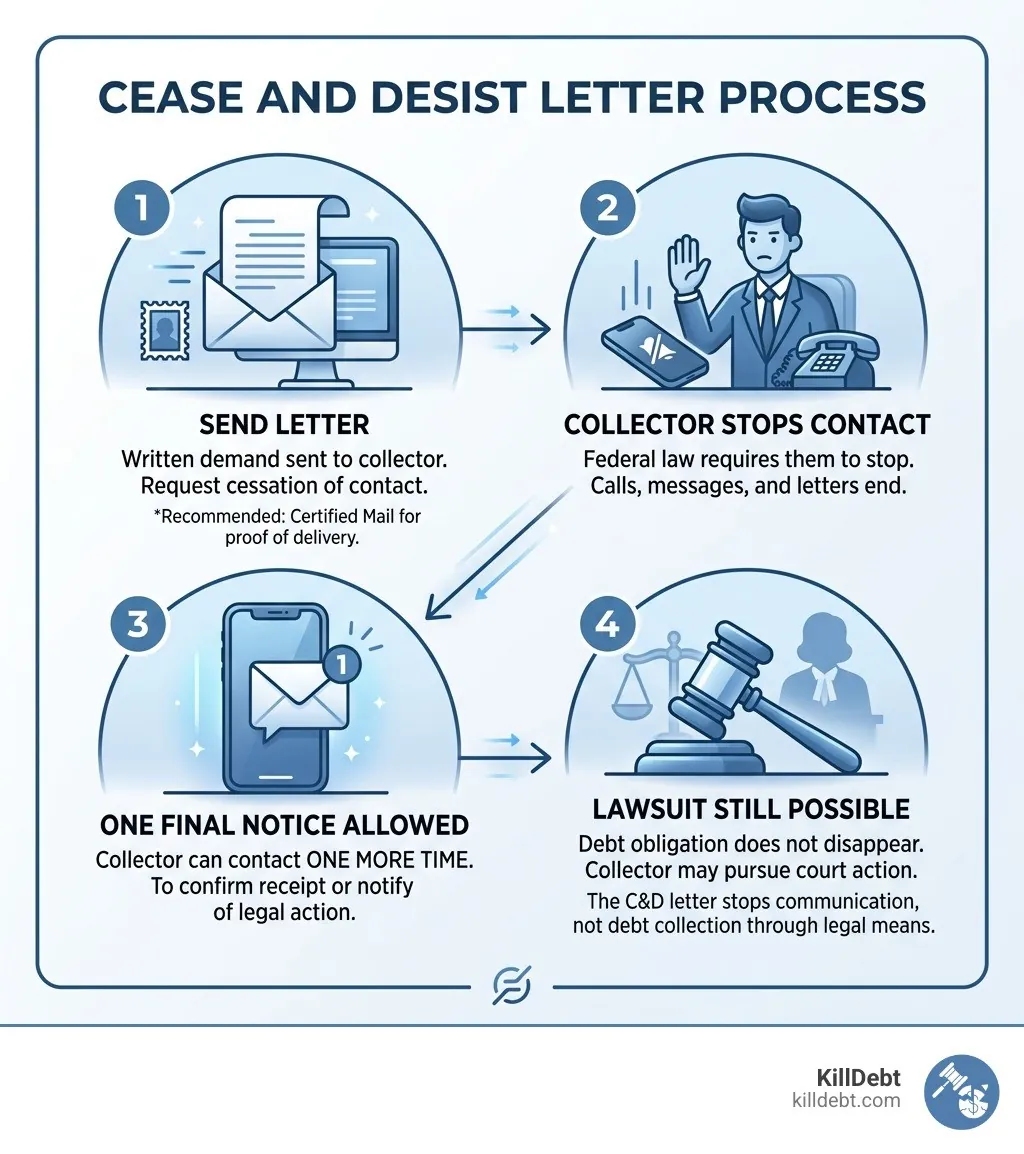
If you send your letter via regular mail, the debt collector will likely "lose" it in the shredder. To make this stick, you must create a paper trail.
For more tips on drafting these, you can look at resources like Write a Cease & Desist Letter That STOPS Debt Collector ... - Upsolve.
Your cease and desist creditor letter should be professional and assertive. Do not be rude; just be firm. Essential elements include:
We often recommend combining this with a letter of debt validation if you are within the first 30 days of contact.
This is the most important part of the guide. A cease and desist letter is NOT a "Get Out of Debt Free" card.
In fact, sending this letter is often called the "nuclear option." Why? Because if a collector is legally barred from calling or writing to you, they only have one tool left in their toolbox: suing you.
| Feature | Cease and Desist Letter | Debt Collection Lawsuit |
|---|---|---|
| Stops Phone Calls | Yes | No (but usually transitions to legal service) |
| Erases the Debt | No | No |
| Forces Proof | No | Yes |
| Risk Level | Low (stops harassment) | High (can lead to garnishment) |
If you send a cease and desist creditor letter for a valid, large debt that is still within the statute of limitations in Florida or Michigan, you might actually accelerate a lawsuit. The collector realizes they can't talk you into paying, so they hand the file to a lawyer. If you get a summons after sending this letter, don't panic. You'll need to look into legal letters for debt collection to see how to respond to a court filing.
Before you go nuclear with a cease and desist, we almost always recommend sending a Debt Validation Letter first. By law, you have a 30-day window after the first contact to demand proof that you actually owe the money, that the amount is correct, and that the collector has the legal right to collect it.
If you send a cease and desist without validating the debt, you might be silencing the very person who is required to send you the evidence you need to win a case later. Debt buyers often don't have the original paperwork. If they can't validate the debt, they have to stop collecting anyway.
Check out debt validation letters your first line of defense against collectors and our debt validation letter template to start there first.
Once that green return receipt is signed, the "one final contact" rule kicks in. Under the FDCPA, the collector may contact you one last time to:
If they call you a week later just to "check in" or "see if you've changed your mind," they have violated federal law.
If a collector ignores your cease and desist creditor letter, they aren't just being annoying — they are potentially becoming a source of income for you. The FDCPA allows you to sue a collector for violations and recover:
Keep a "Violation Log." Write down the date, time, and name of anyone who calls after the letter was received. Save your voicemails. Take screenshots of your call logs. This is how we build a defense that turns the tables on the collectors.
A cease and desist creditor letter is a powerful shield, but it isn't a magic wand. It stops the noise so you can think clearly and plan your next move. Whether you are dealing with a simple mistake of identity or a massive debt buyer, knowing how to silence the phones is the first step toward taking back your life.
At KillDebt, we believe that nobody should be bullied by a multibillion-dollar collection agency. That's why we created ParkerGPT, our AI legal defense system. Trained by me, Brian Parker, with over 30 years of real-world trial experience, ParkerGPT can help you analyze collection letters, identify FDCPA violations, and even help you draft court-ready responses if you get sued.
If you are worried that your cease and desist letter might trigger a lawsuit, we've got you covered there, too. Our brand-new Court Tester tool allows you to upload your legal filings and argue your case in an AI courtroom simulation. You'll face an AI judge and opposing counsel, while your private AI co-counsel whispers winning strategies in your ear.
Don't let debt collectors dictate the terms of your life. Take action today, send your letter, and if they decide to take it to court, we'll be right there with you. Visit us at https://killdebt.com/ to start your DIY legal defense.

About the author
Brian Parker
I have over 30 years of experience defending consumers against debt collection lawsuits and have seen every tactic, threat, and pressure play that collectors use. Through KillDebt and ParkerGPT, I have systematized the proven defense strategies that actually work - so consumers can respond from a position of knowledge, not fear. My approach focuses on aggressive legal defense based on documented case success rather than false hope that leads to default judgments.