News Break
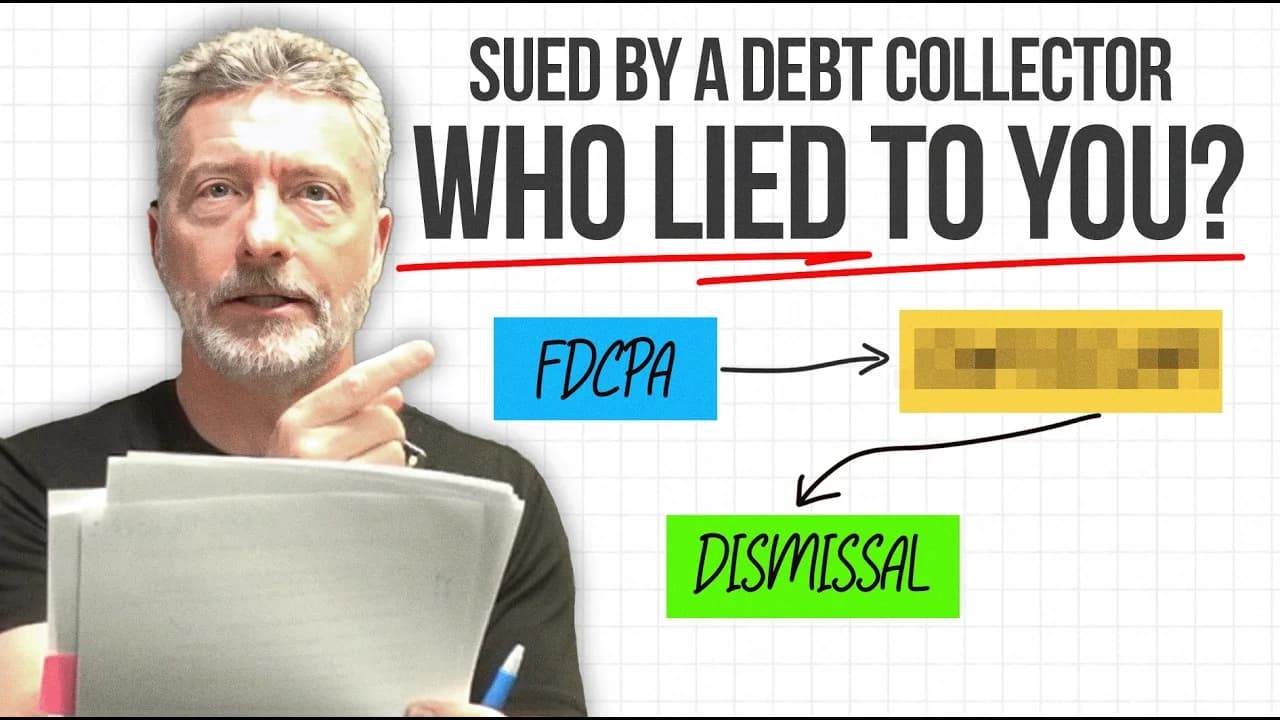
FDCPA Violations: Turning the Tables on Bullying Debt Collectors
June 30, 2026
Blog / News Break
Master debt case document review to uncover deficiencies, block default judgments, and win your lawsuit.

If you've just been handed a court summons or received a threatening collection letter, debt case document review is the single most important skill you can develop right now.
Here's the quick answer to what it involves:
What debt case document review means in practice:
This process isn't just for lawyers. It's something you can do — and it can be the difference between a default judgment and a dismissed case.
Debt collection lawsuits are filed by the millions every year. Most defendants lose — not because they owe the money, but because they never respond or never examine what the collector actually filed. Courts have repeatedly dismissed cases where debt buyers couldn't produce a proper original agreement, couldn't prove they owned the debt, or failed to authenticate records correctly. The documents tell the story. You just need to know how to read them.
I'm Brian Parker, a consumer defense attorney with over 30 years of courtroom experience fighting debt buyers and collection law firms — and I built KillDebt specifically to put debt case document review skills into the hands of everyday people facing these exact situations. I've seen cases won and lost entirely on what was — or wasn't — in the paperwork.
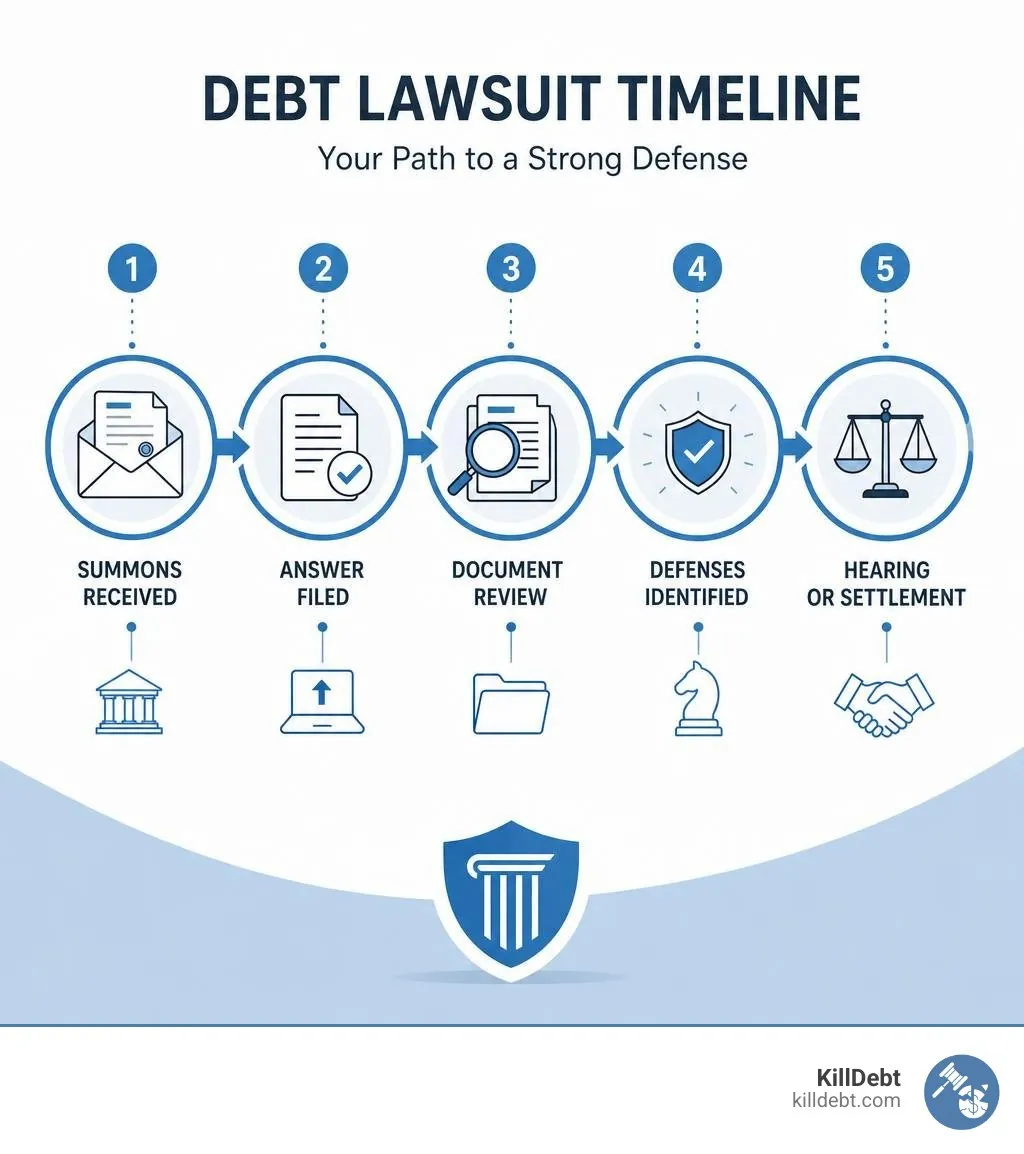
When a debt buyer or original creditor files a lawsuit against you, they do not automatically win. They carry the "burden of proof." This means they must prove to the court that you owe the money, that the amount is correct, and that they have the legal right (standing) to sue you.
This is where a meticulous debt case document review comes into play. Many third-party debt buyers purchase portfolios of charged-off debt for pennies on the dollar. When they buy these portfolios, they rarely receive the actual original paperwork, signed contracts, or complete billing histories. Instead, they get a digital spreadsheet.
If you do not challenge their evidence, the court will assume their claims are correct and grant a default judgment. However, by demanding to see the documents and reviewing them with a critical eye, you can expose massive gaps in their case.
Under the Fair Debt Collection Practices Act (FDCPA), you have the right to demand verification of any debt. If you dispute the debt within 30 days of receiving the initial validation notice, the collector must halt all collection activities until they provide written verification. You can learn how to leverage this crucial window in our guide on Debt Validation Letters: Your First Line of Defense Against Collectors.
| Document Type | Original Creditor Lawsuit | Third-Party Debt Buyer Lawsuit |
|---|---|---|
| Original Credit Agreement | Highly recommended; must show you agreed to the terms. | Absolutely critical; must link the original terms to the account. |
| Account Statements | Complete running balance showing charges and payments. | Must show the charge-off balance and how the final total was calculated. |
| Chain of Title / Assignment | Not required (they originated the account). | Mandatory; must show a complete, unbroken chain of bills of sale from the original creditor to the plaintiff. |
| Authentication Affidavit | Signed by an employee with personal knowledge of the account. | Signed by a custodian who can legally swear to the accuracy of the transfer records. |
If a debt buyer cannot produce an unbroken chain of title showing how they acquired your specific account, they lack standing to sue you. A simple "Bill of Sale" that references an unnamed "Exhibit A" or "Schedule 1" is not enough unless they actually produce the page showing your specific account number and balance.
One of the most powerful weapons in your defense arsenal is the rule against hearsay. In court, a party cannot simply present a document and say, "Look, this proves they owe us money." The document must be authenticated.
Under rules of evidence like Evid.R. 803(6) (the business records exception to the hearsay rule), a document is only admissible if it was made at or near the time of the event by someone with personal knowledge, kept in the course of regularly conducted business activity, and created as a regular practice.
This presents a massive hurdle for debt buyers. How can an employee of a third-party debt buyer swear under oath that the original bank's records are accurate?
The answer is they often can't — unless they meet very strict legal standards.
In the landmark case Portfolio Recovery Assocs., LLC v. Clougherty, the court vacated judgments because the debt buyer's records custodian lacked sufficient personal knowledge. The court ruled that a presenting witness must have detailed knowledge of the record-keeping practices of both the business that created the record (the original creditor) and the business that received it. A brief 60-minute training call on how the original bank stores files is not enough to qualify a witness to authenticate those records.
Similarly, in Jefferson Capital Sys., L.L.C. v. Darko, courts analyzed the "adoptive business records" doctrine. While an assignee can sometimes authenticate an original creditor's records if they integrate them into their own business and rely on them, they must still prove the records are trustworthy. If you challenge the custodian's familiarity with the original creditor's day-to-day record-keeping practices, you can successfully block these documents from being admitted into evidence. No evidence means no case.
The regulatory landscape has shifted heavily in favor of consumers who know how to use the rules. The Consumer Financial Protection Bureau (CFPB) enforces strict rules under Regulation F that dictate how debt collectors must behave:
Furthermore, state courts are enacting major reforms to stop debt collection "assembly lines." In Michigan, for example, the State Court Administrative Office has pushed for enhanced filing requirements and pre-default judicial reviews. You can read the details in the report Advancing Justice for All in Debt Collection Lawsuits.
These reforms require plaintiffs to submit actual documentation of the debt at the time of filing rather than waiting for a default. If the court's checklists are not met, judges are instructed to deny default judgments. As a self-represented litigant, you can use these state-specific checklists to audit the collector's initial filings and point out exactly where they failed to meet the court's standards.
When you perform a debt case document review, you are acting like a detective. You are looking for the missing pieces, the contradictions, and the outright errors that can blow the plaintiff's case apart.

Here is a checklist of common deficiencies to look for when auditing the lawsuit paperwork:
Does the bill of sale actually mention your name or account number? Or does it just say they bought "a portfolio of accounts"? If the specific attachment linking your account to the transfer is missing, they cannot prove they own your debt.
Did they attach a generic, modern credit card agreement from 2026 for a debt that was allegedly opened in 2018? The terms of service change constantly. They must produce the agreement that actually governed your account, complete with proof that you accepted those terms.
Every state has a strict time limit on how long a creditor has to sue you.
The clock typically starts ticking from the date of your last payment or the date the account went into default. If they are suing you past this window, the lawsuit is legally dead. However, be careful: making even a tiny partial payment or acknowledging the debt in writing can reset the statute of limitations clock in some jurisdictions.
If you previously filed for bankruptcy and this debt was discharged, the collector is in severe violation of the bankruptcy court's permanent discharge injunction. Trying to collect on a discharged debt is a major violation of the FDCPA.
Did you actually open this account? If you have police reports, FTC identity theft affidavits, or credit dispute records showing the account was fraudulent, these documents are your golden ticket to a dismissal.
If the collector refuses to provide the complete account history or the contract during the initial phases of the lawsuit, you do not have to throw up your hands. You have the legal right to force them to hand over these files. Learn the exact process in our guide on How to Compel Discovery Debt Case.
The absolute worst thing you can do when sued by a debt collector is nothing. Over 90% of debt collection lawsuits end in a default judgment simply because the consumer failed to file an Answer.
A default judgment gives the debt collector extraordinary legal powers. With a judgment in hand, they can:
Many consumers mistakenly believe that enrolling in a passive "debt settlement" or "debt relief" program will protect them from a lawsuit. It won't. In fact, many of these operations use deceptive "attorney-model" debt settlement schemes.
These companies charge massive upfront fees, telling you they have lawyers on standby. In reality, as exposed by federal courts, these attorneys are often just rubber stamps who spend less than two minutes approving documents and never actually represent you in court when you get sued.
Passive programs do not stop lawsuits. The only way to stop a lawsuit is with an active, aggressive legal defense. You must file a formal Answer with the court within your local deadline (usually 20 to 30 days from the date you were served).
If you are facing thousands of pages of records or complex court filings, you need a structured strategy to review them without getting overwhelmed.

When attorneys handle high-volume document reviews, they rely on three core pillars:
Once you have completed your review and spotted the flaws, you must draft your response. You can see how to structure your formal court response by reviewing our Sample Answer to Debt Collection Lawsuit.
If you are representing yourself, follow these professional steps to audit your lawsuit documents:
Historically, conducting a thorough document review required hiring an expensive attorney or spending dozens of hours reading dense legal jargon. Today, technology has leveled the playing field.
At KillDebt, we provide a DIY legal defense system powered by ParkerGPT, an AI trained specifically on consumer debt law and real-world court strategies developed over 30+ years by defense attorney Brian Parker.
Instead of guessing what a document means, you can upload your collection letters, court summons, or debt portfolios directly into the platform. Within minutes, ParkerGPT:
Furthermore, we recently rolled out our brand-new tool: the Court Tester. This is an AI courtroom simulation built directly on the facts of your actual case. You simply upload your real lawsuit filings, and within minutes, you can practice arguing your motion in front of an AI judge, face off against an AI opposing counsel, and receive private, real-time strategy tips from an AI co-counsel. It is the ultimate way to eliminate courtroom anxiety and prepare your defense.
You do not have to let debt collectors bully you into a default judgment. When you understand how to perform a debt case document review, you hold the keys to your own defense. By auditing their paperwork, demanding a clear chain of title, and forcing them to meet strict evidentiary standards, you can beat them at their own game.
You don't need to spend thousands of dollars on a defense attorney to protect your hard-earned money. With KillDebt's AI-powered platform, you get access to ParkerGPT's document analysis, custom defense templates, and our Court Tester courtroom simulator.
Take control of your case today. Check out our affordable, transparent options on the KillDebt Pricing page and start building your winning defense in minutes.
IMPORTANT LEGAL DISCLAIMER
This educational content is based on general legal principles and my experience in debt collection defense. It is provided for informational purposes only and does not constitute legal advice. Laws vary by state and by local court. For specific legal advice, consult a qualified attorney licensed in your jurisdiction. No attorney-client relationship is created by reading this guide.
Critical Multi-State Variations: FDCPA applies uniformly at the federal level, but state consumer protection laws may provide additional rights and remedies. Statute of limitations periods vary significantly by state and debt type. What constitutes sufficient debt validation varies in practice across jurisdictions. State-specific rules on call frequency, written notice requirements, and permissible collector conduct may differ from federal minimums.

About the author
Brian Parker
I have over 30 years of experience defending consumers against debt collection lawsuits and have seen every tactic, threat, and pressure play that collectors use. Through KillDebt and ParkerGPT, I have systematized the proven defense strategies that actually work - so consumers can respond from a position of knowledge, not fear. My approach focuses on aggressive legal defense based on documented case success rather than false hope that leads to default judgments.