News Break
The Ultimate Guide to Compelling Discovery in Debt Lawsuits
May 27, 2026
Blog / News Break
Protect your wages with the head of household exemption. Learn eligibility, claim it to stop garnishment, and defend against debt collectors now.

The head of household exemption is a legal protection that can shield your paycheck, reduce your tax bill, or lower your property taxes — depending on where you live and what situation you're in.
Quick answer: What does it do?
| Context | What It Protects | Key Threshold |
|---|---|---|
| Wage garnishment (Florida) | 100% of your earnings | Earning $750/week or less in disposable income |
| Property tax (New Mexico) | Up to $2,000 of taxable property value | Must be a qualifying head of family and NM resident |
| Federal income tax filing | Higher standard deduction ($23,625 in 2025) | Must be unmarried and support a qualifying person |
These three protections share the same name but work very differently. And if a debt collector is threatening to garnish your wages right now, the wage garnishment version is the one you need to understand immediately.
If you're staring down a garnishment notice, here's the short version: in states like Florida, if you provide more than half the financial support for a child or other dependent, a creditor may not be able to touch your paycheck at all. But this protection is not automatic — you have to claim it, and you usually have a very short window to act.
I'm Brian Parker, and for over 30 years I've been fighting debt collectors and collection law firms in courtrooms across the country — using the head of household exemption as one of the most powerful tools to protect my clients' income. In the guide below, I'll walk you through exactly how this exemption works, who qualifies, and what steps to take before your next paycheck is at risk.

When we talk about the head of household exemption, we are actually talking about three distinct legal "shields" that protect your money from different entities. It is vital to understand which one you are trying to use, as the rules for the IRS aren't the same as the rules for a Florida sheriff or a Michigan court.
At its core, the Head of household (opens in a new tab) status was created to acknowledge the extra financial burden carried by those who support others. Whether it's the IRS giving you a break on your 1040 or a state law preventing a credit card company from taking your grocery money, the goal is the same: keeping families afloat.
In Florida, this exemption is found under Florida Statute §222.11 (opens in a new tab). This law is a powerhouse for asset protection. It essentially says that if you are the "head of family," your wages are off-limits to most creditors. In Michigan, while the terminology might differ slightly, there are still robust protections for income that is "necessary for the care and support of your family."
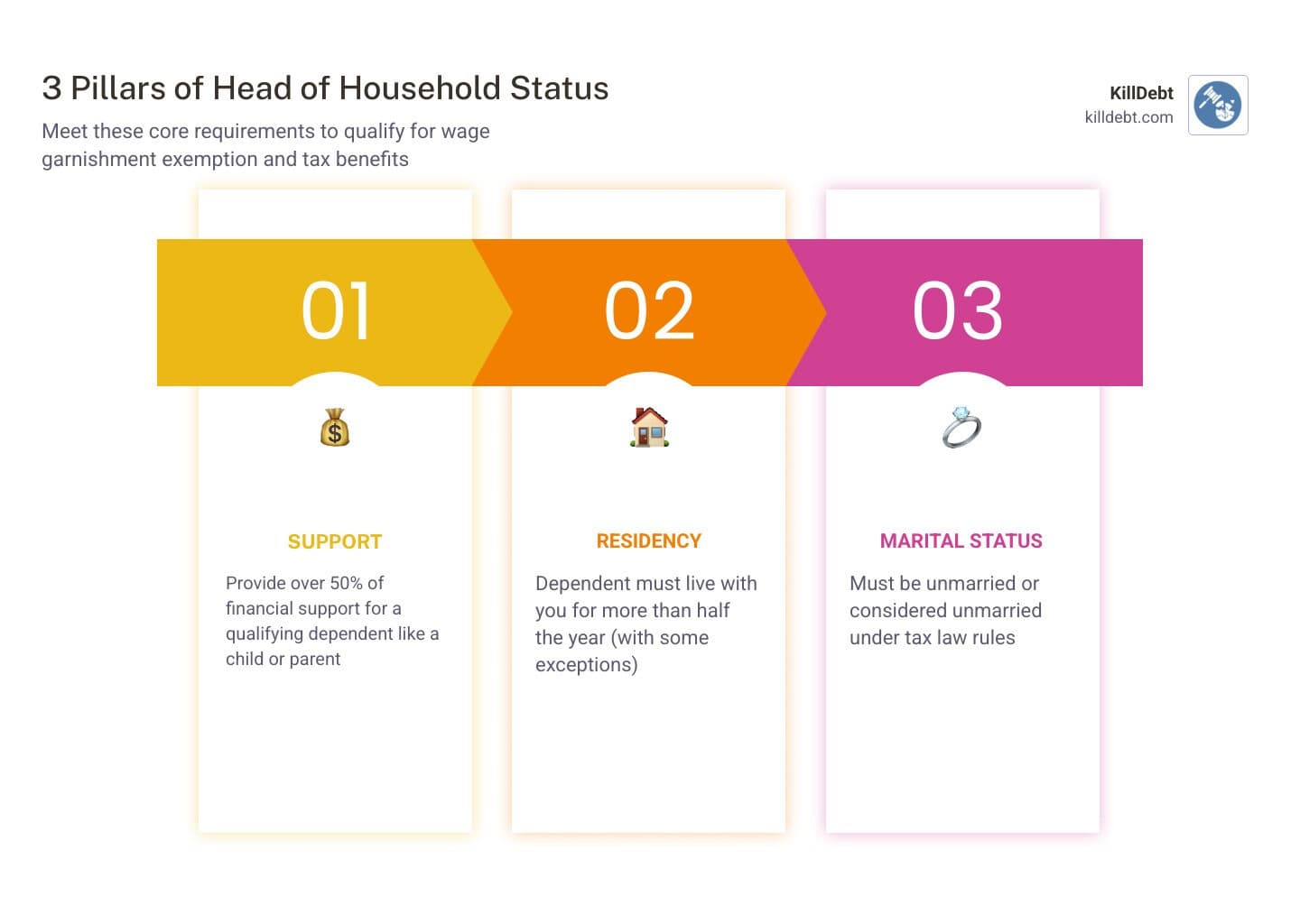
To claim this status, you generally have to pass three main tests. If you fail one, the shield might not hold.
According to the Census Population Survey, as of 2015, roughly 76% of those filing with this status were women, highlighting how often single mothers serve as the primary financial anchors for their families. For a deep dive into the tax-specific side of this, check out this Guide to Filing Taxes as Head of Household - TurboTax Tax Tips & Videos (opens in a new tab).
Since we operate in Florida and Michigan, let's look at how these protections manifest locally.
In Florida, the head of household exemption is incredibly generous. If you earn $750 or less per week in disposable earnings (that’s your take-home pay after legally required deductions), you are fully exempt from garnishment. If you earn more than $750, you are still exempt unless you have signed a very specific written waiver. And even then, that waiver has to meet strict formatting rules—like being in 14-point type—to be valid.
In Michigan, the focus is often on protecting a specific amount of income needed for basic necessities. While the "Head of Family" terminology is less prominent in Michigan statutes than in Florida, the principle remains: creditors cannot strip you of the ability to support your dependents. You often have to provide a "financial statement" to the court to show that the money they want to take is actually required for your family's survival.
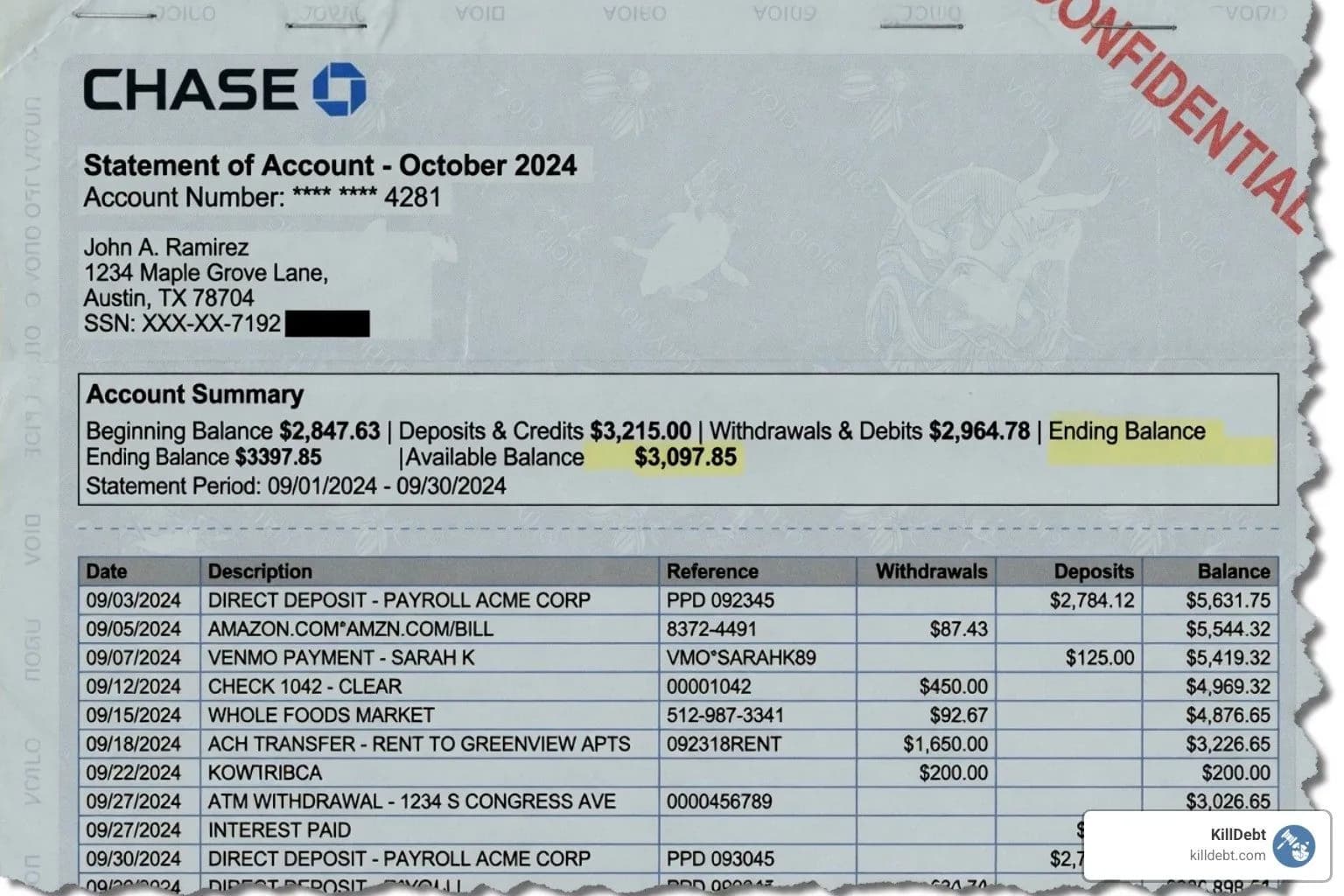
Wage garnishment is a terrifying prospect. You work 40+ hours a week, but when you check your bank account, a chunk of your hard-earned money is missing. Under federal law, creditors are generally limited to taking 25% of your disposable earnings. However, the head of household exemption can often bring that number down to 0%.
In Florida, this protection is "reactive." This means you don't file for it ahead of time like a tax return. Instead, you use it as a defense once a "writ of garnishment" has been served on your employer. If you qualify, 100% of your wages can be protected.
It's important to know that "disposable earnings" are what's left after things like federal taxes and Social Security are taken out. Voluntary deductions, like your 401(k) contribution or health insurance, don't count toward lowering that number in the eyes of the court. You can find more details on this process in this guide on What Is the Head of Household Exemption for Wage Garnishment? (opens in a new tab).
If you're going to tell a judge that you're the "Boss of the House," you need the receipts to prove it. Creditors will fight you on this, so come prepared with:
Time is your enemy here. In Florida, once you receive notice of a garnishment, you typically have only 20 days to file a "Claim of Exemption." If you miss this window, the employer is legally required to start sending your money to the creditor.
Here is the step-by-step process we recommend:
For more on the mechanics of this, read our detailed breakdown: Can Debt Collectors Take My Wages And Bank Account.
Many people confuse the "Head of Household" filing status on their taxes with the legal exemption that stops garnishment. While they often overlap, they are not the same thing.
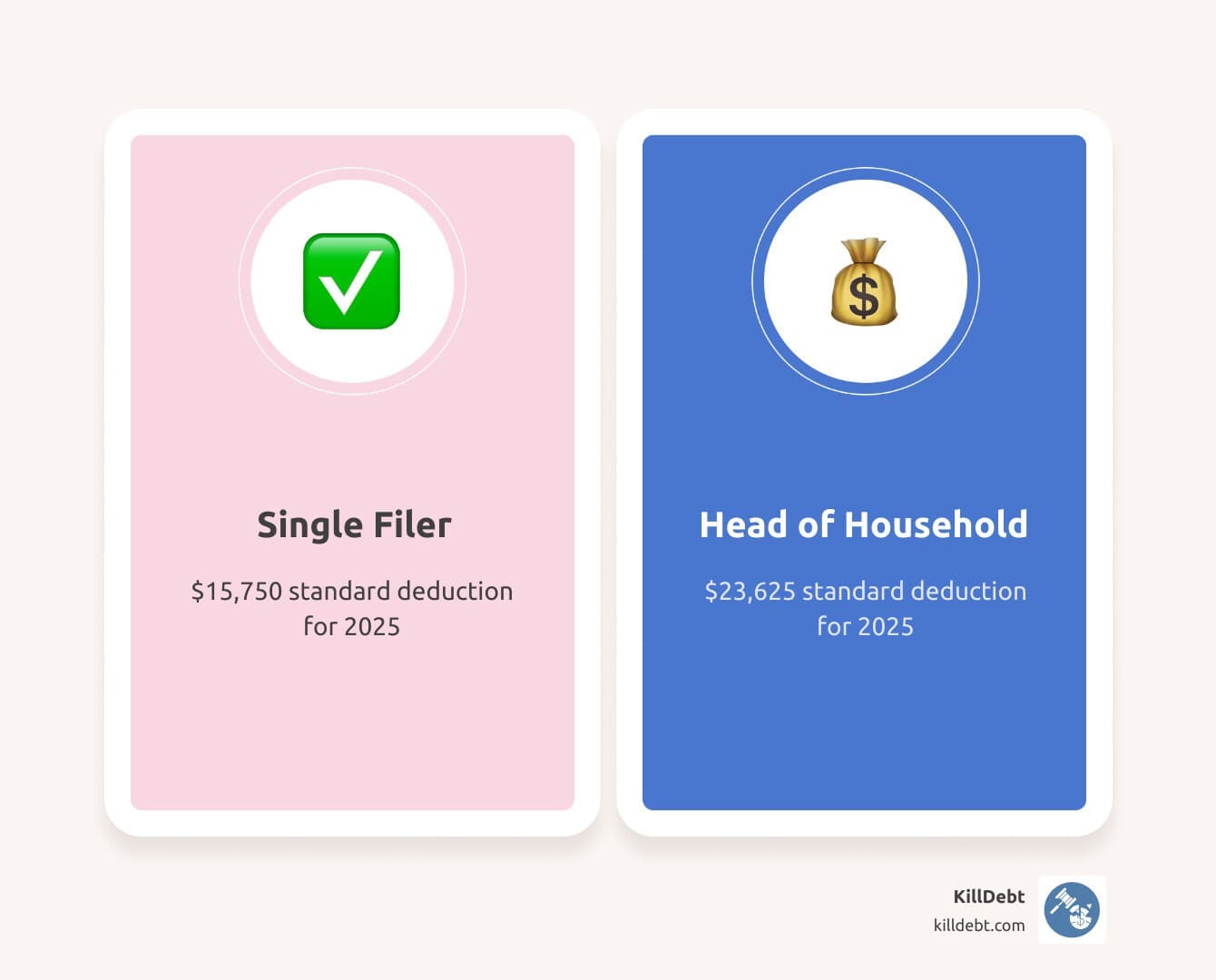
For the tax year 2025 (filing in May 2026), the standard deduction for a Head of Household is $23,625. Compare that to just $15,750 for single filers. That’s nearly $8,000 in income you aren't taxed on just for being the primary supporter of your home.
You can even qualify as "considered unmarried" by the IRS if you are still legally married but have lived apart from your spouse for the last six months of the year. This is a vital loophole for those in the middle of a long separation who are still footing all the bills. States like California have their own specific rules, which you can see at Head of Household | FTB.ca.gov (opens in a new tab), but for our friends in Florida and Michigan, the federal guidelines are the primary focus.
The benefits are massive. Beyond the higher standard deduction, you also get access to wider tax brackets. This means more of your money is taxed at the 10% and 12% rates before you jump into higher percentages.
For a single parent earning a modest income, this status can save hundreds, if not thousands, of dollars. In fact, eliminating this status would cost American families an estimated $16 billion per year.
Defending your home and your income from debt collectors doesn't require a law degree, but it does require the right tools. The head of household exemption is one of the strongest shields in your arsenal, but you have to know when and how to lift it.
At KillDebt, we’ve taken the 30+ years of courtroom experience from attorney Brian Parker and built it into ParkerGPT. We don't just give you generic templates; our AI analyzes your specific lawsuit or garnishment documents to find the "cracks" in the creditor's case.
Ready to see if you can win? Our brand new Court Tester allows you to upload your filings and practice your defense in an AI courtroom simulation. You'll face an AI judge and opposing counsel, while a private AI co-counsel whispers the winning strategy in your ear. Don't let a debt collector take what you've earned for your family.
Take action today. Use ParkerGPT to protect your paycheck and your peace of mind. More info about debt defense services

About the author
Brian Parker
I have over 30 years of experience defending consumers against debt collection lawsuits and have seen every tactic, threat, and pressure play that collectors use. Through KillDebt and ParkerGPT, I have systematized the proven defense strategies that actually work - so consumers can respond from a position of knowledge, not fear. My approach focuses on aggressive legal defense based on documented case success rather than false hope that leads to default judgments.