News Break
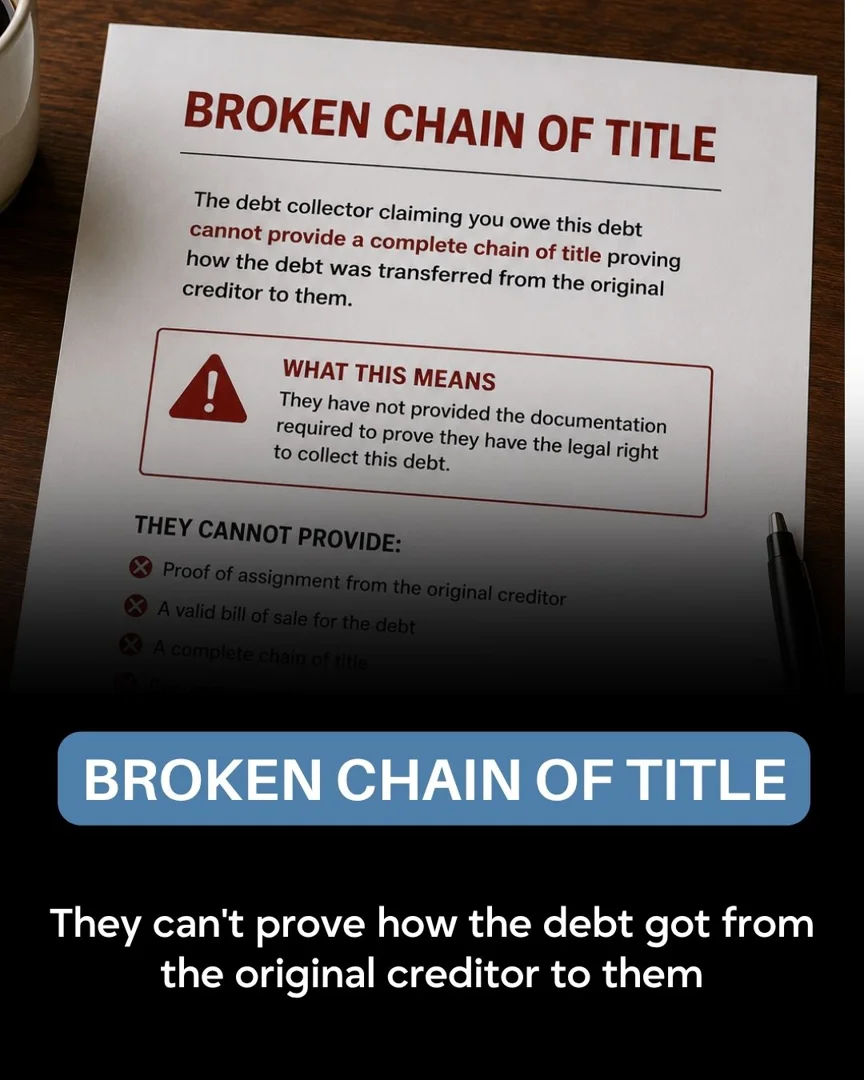
Unbroken Chains: Proving the Debt Collector Doesn't Own Your Debt
July 2, 2026
Blog / News Break
Master Florida rules of court: timelines, defenses, discovery & FAQs for beginners defending debt lawsuits.
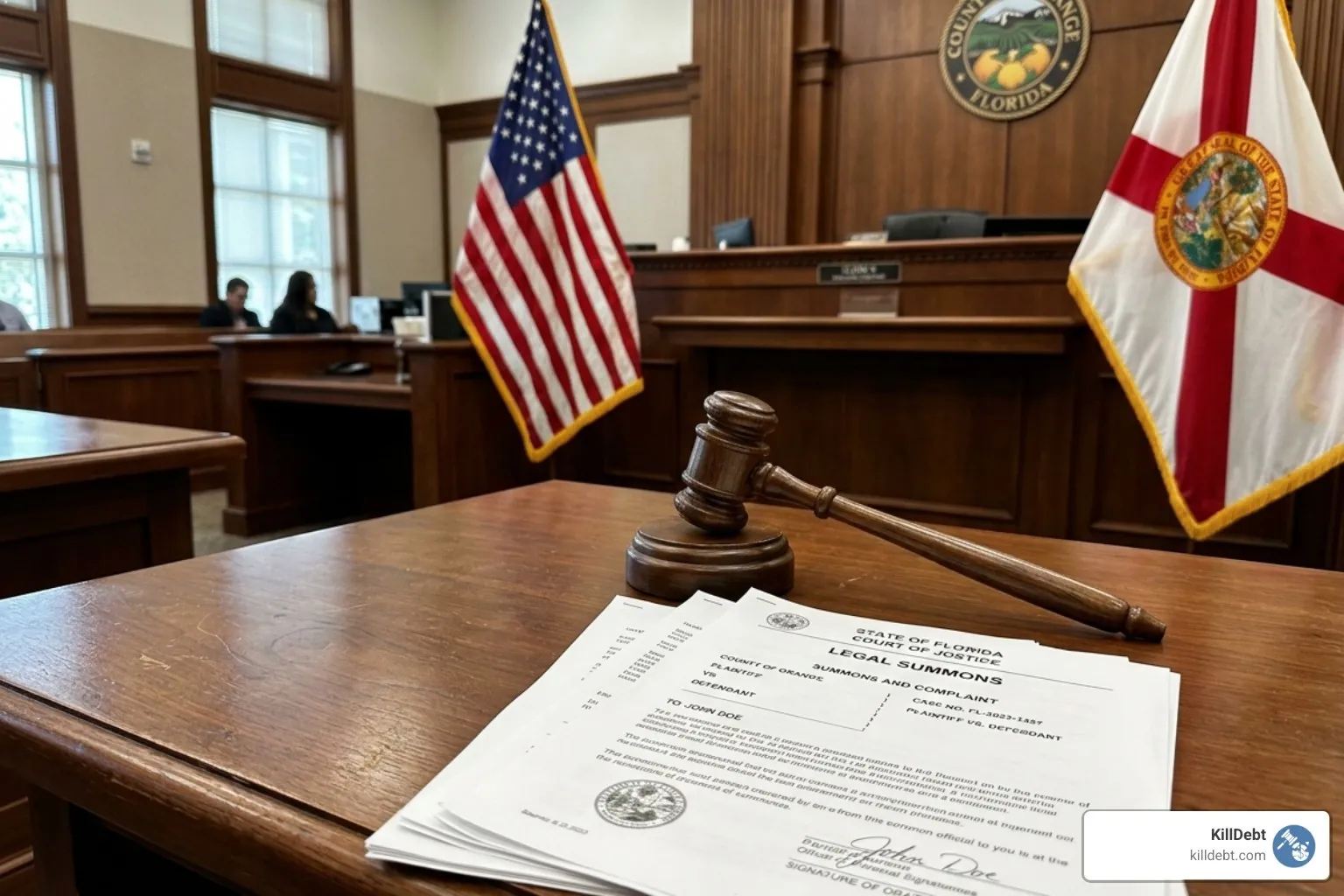
The Florida rules of court are the official procedural framework that governs how every civil lawsuit in the state is filed, served, fought, and resolved. If you've just received a summons or a debt collection lawsuit, these rules are the "rules of the road" — and knowing them could be the difference between winning and losing your case.
Here's a quick overview of the key Florida Rules of Court:
| Rule Area | What It Covers | Why It Matters to You |
|---|---|---|
| Rule 1.010 | Scope of civil procedure | Applies to nearly every civil lawsuit |
| Rule 1.050 | Commencement of action | Your case clock starts at filing |
| Rule 1.140 | Defenses and motions | You have 20 days to respond or risk default |
| Rule 1.280 | Discovery | How evidence is gathered before trial |
| Rule 1.510 | Summary judgment | Can end a case before trial |
| Rule 2.120 | Judicial administration | Defines local vs. statewide rules |
Missing a single deadline can result in a default judgment against you — even if you have a valid defense.
Florida's civil rules were originally adopted on January 1, 1967, and are maintained by the Florida Supreme Court. They are updated regularly — the most recent civil procedure chapter was updated April 1, 2026. There are currently over 108 rules and forms, covering everything from how a lawsuit begins to how a judgment is enforced.
Beyond statewide rules, Florida's 20 Judicial Circuits each have their own local rules and administrative orders. That means the rules in Miami-Dade (11th Circuit) can differ from those in Pinellas County (6th Circuit) — adding another layer of complexity for anyone navigating this system alone.
I'm Brian Parker, founder of KillDebt, and for over 30 years I've used the Florida rules of court to fight creditors, debt buyers, and collection law firms — winning cases that most people assumed were already lost. In this guide, I'll break down exactly what these rules mean for you so you can defend yourself with clarity and confidence.
When we talk about the Florida rules of court, we are looking at a massive ecosystem of regulations. It isn't just one book; it’s a living set of requirements that ensures "just, speedy, and inexpensive determination of every action."
As of May 2026, the LexisNexis Florida Rules of Court Annotated has grown into a 7-volume set. This illustrates just how much detail is involved in practicing law in the Sunshine State. For most people facing a debt collector, the most critical section is the Florida Rules of Civil Procedure, which contains 108 rules and forms ranging from Rule 1.010 to Form 1.999.
Not all rules are created equal. In Florida, there is a clear hierarchy you must follow:
Pro Tip: If a local rule conflicts with a statewide rule, the statewide Florida rules of court take precedence. However, you must still check your specific circuit's website for administrative orders that might dictate how a particular judge wants motions formatted or hearings scheduled.
To stay current, we recommend using official repositories. The Florida Bar and the Florida Supreme Court websites provide the most up-to-date PDF versions of these rules. Because these rules are amended frequently—with over 150 opinions amending them since 1967—checking the "last updated" date is vital.
If you happen to be dealing with a federal case in the Eastern Michigan District, the rules will be entirely different (Federal Rules of Civil Procedure), which is why knowing your jurisdiction is the first step in any legal defense.

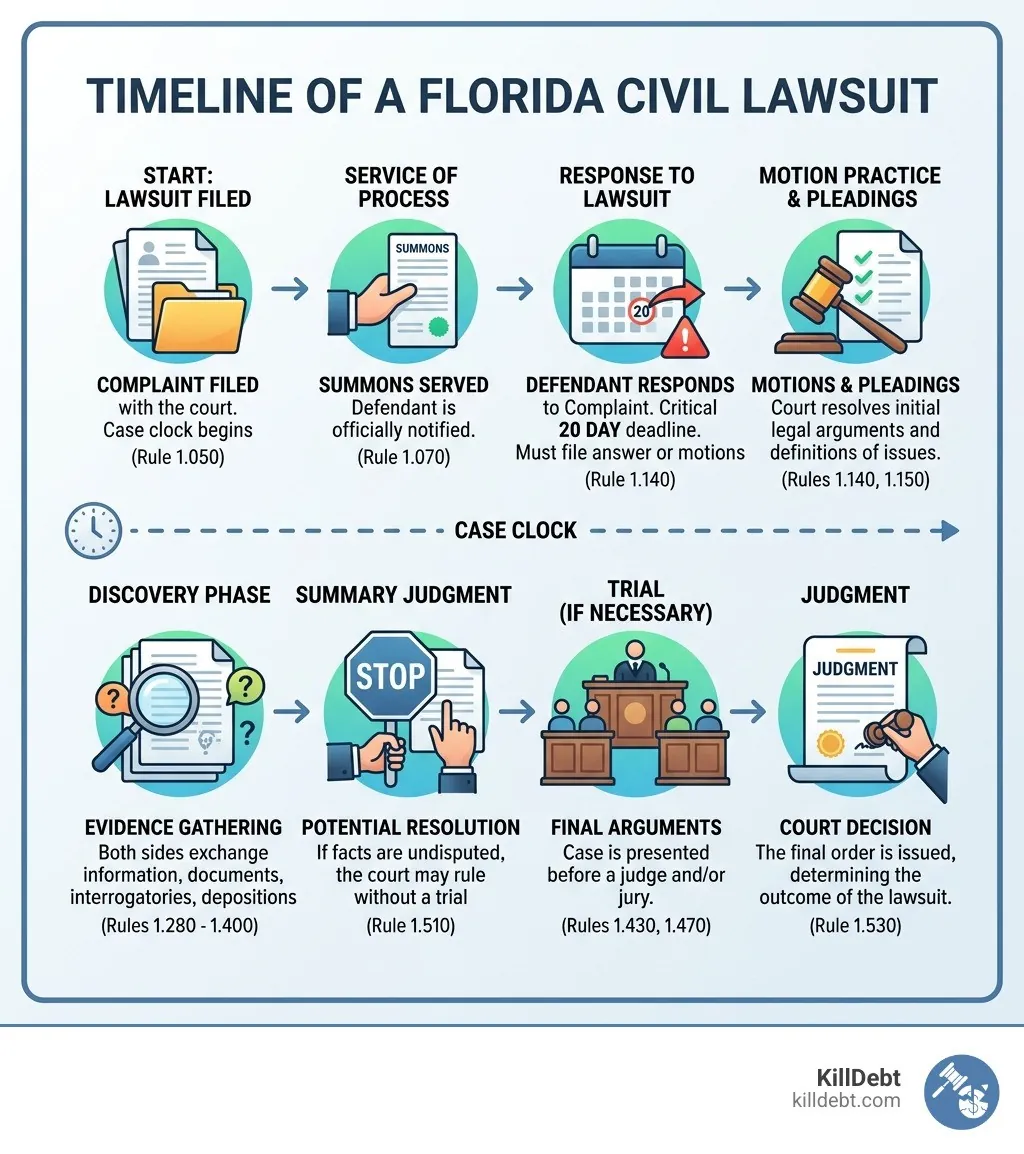
How does a lawsuit actually start? Under Rule 1.050, a civil action is "commenced" the moment the complaint or petition is filed with the clerk of court. This is a critical moment because it sets the entire legal machinery in motion.
Once the lawsuit is filed, the plaintiff (the person suing you) has a deadline to let you know about it. This is called Service of Process.
This is where most people get into trouble. Once you are served, the clock starts ticking immediately.
If you fail to respond within that 20-day window, the plaintiff can move for a Default Judgment. This means you lose automatically, and the debt collector can begin garnishing your wages or seizing bank accounts without you ever getting to tell your side of the story.
A debt collector can't just say "you owe us money" and win. Under Rule 1.110, a complaint must contain:
In debt cases, we often find that complaints are missing "ultimate facts," such as the original contract or proof that the debt buyer actually owns your specific account.
Before you even file an "Answer," the Florida rules of court allow you to challenge the lawsuit itself using motions. Rule 1.140 is your best friend here. It lists specific defenses you can raise by motion before you ever admit or deny the allegations in the complaint.
Common Rule 1.140 Defenses:
Sometimes, the best defense is a good offense. Rule 1.170 governs counterclaims.
If you are facing a foreclosure, Rule 1.115 adds extra layers of protection. Plaintiffs in foreclosure actions must verify their complaints under oath, specifically stating they are the holders of the original note. The 2026 amendments have further tightened these requirements to prevent "robo-signing" and ensure homeowners are treated fairly.
Discovery is the "fact-finding" phase of the lawsuit. This is where you get to demand evidence from the debt collector. Rule 1.280 defines the scope of discovery: you can ask for anything "relevant to the subject matter of the pending action."
| Discovery Tool | What It Is | How We Use It |
|---|---|---|
| Interrogatories | Written questions the other side must answer under oath. | Ask them to list every payment they claim you made. |
| Request for Production | A demand for physical documents. | Demand the original signed contract and the "chain of title." |
| Depositions | Out-of-court testimony recorded by a court reporter. | Force the debt collector's witness to answer questions in person. |
| Request for Admissions | Asking the other side to admit or deny specific facts. | Force them to admit they don't have the original paperwork. |
While Florida has its own robust discovery rules, if you are looking for comparisons in other states like Michigan, you would look at the Michigan Court Rules Chap 2. Civil Procedure. In Florida, Rule 1.370 (Admissions) is particularly powerful; if the other side doesn't respond to a Request for Admissions within 30 days, those facts are "deemed admitted" automatically.
Most debt lawsuits never make it to a full trial. They are decided at the Summary Judgment stage (Rule 1.510). A judge will grant summary judgment if there is "no genuine dispute as to any material fact."
If the case does go to trial, you must be aware of:
Navigating the Florida rules of court can feel like walking through a minefield. One wrong step—a missed deadline, a poorly phrased motion, or a failure to respond to discovery—can cost you thousands of dollars in a default judgment.
At KillDebt, we believe you shouldn't have to be a lawyer to defend yourself like one. Our DIY legal defense system is powered by ParkerGPT, an AI trained on over 30 years of consumer debt law and real-world strategies. We don't just give you generic templates; we analyze your actual lawsuit documents and generate court-ready responses tailored to Florida's specific rules.
We’ve also just rolled out our Court Tester—an AI courtroom simulation. You can upload your filings and practice arguing your motion in front of an AI judge and opposing counsel before you ever step foot in a real courtroom. It’s like having a private co-counsel whispering strategy in your ear.
Don't let debt collectors use the rules of court as a weapon against you. Use them as your shield.
Protect your rights with KillDebt
Get started with KillDebt pricing
Important Legal Disclaimer
This educational content is based on general legal principles and my experience in debt collection defense. It is provided for informational purposes only and does not constitute legal advice. Laws vary by state and by local court. For specific legal advice, consult a qualified attorney licensed in your jurisdiction. No attorney-client relationship is created by reading this guide.
Critical Multi-State Variations: FDCPA applies uniformly at the federal level, but state consumer protection laws may provide additional rights and remedies. Statute of limitations periods vary significantly by state and debt type. What constitutes sufficient debt validation varies in practice across jurisdictions. State-specific rules on call frequency, written notice requirements, and permissible collector conduct may differ from federal minimums.

About the author
Brian Parker
I have over 30 years of experience defending consumers against debt collection lawsuits and have seen every tactic, threat, and pressure play that collectors use. Through KillDebt and ParkerGPT, I have systematized the proven defense strategies that actually work - so consumers can respond from a position of knowledge, not fear. My approach focuses on aggressive legal defense based on documented case success rather than false hope that leads to default judgments.